Empowering Local Communities through Sustainable Forest Management in Chinko, CAR
The Chinko Carbon Project in the Chinko Conservation Area (CCA) in the Central African Republic (CAR) serves as a useful case study for community management and allocation of carbon credit revenues.
When we first heard about carbon credits, the idea seemed quite far-fetched… but today, it is becoming a reality.
Marcel Kogoro – Mayor of Rafai and Authorising Officer of the Community Fund Management Committee of Rafaï commune
Through the Chinko Carbon Project and the Chinko Community Fund, local people are paid dividends that provide additional motivation to conserve their natural heritage.
Hassan Moudjiaye, African Parks’ Liaison Assistant for the Community Fund Office of the CCA, explains the Chinko Carbon Project:
It’s the result of environmental protection activities set in motion through collaboration with local communities. Our forest plays a very important role in reducing greenhouse gas emissions. We want to transform our forests into an answer to global concerns.
The value of stored carbon
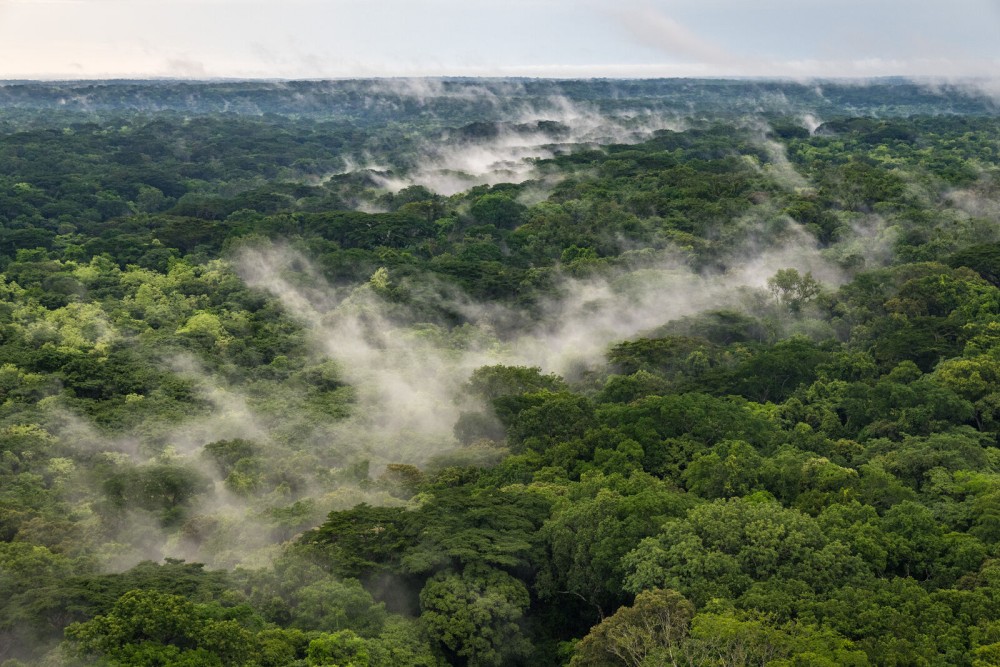
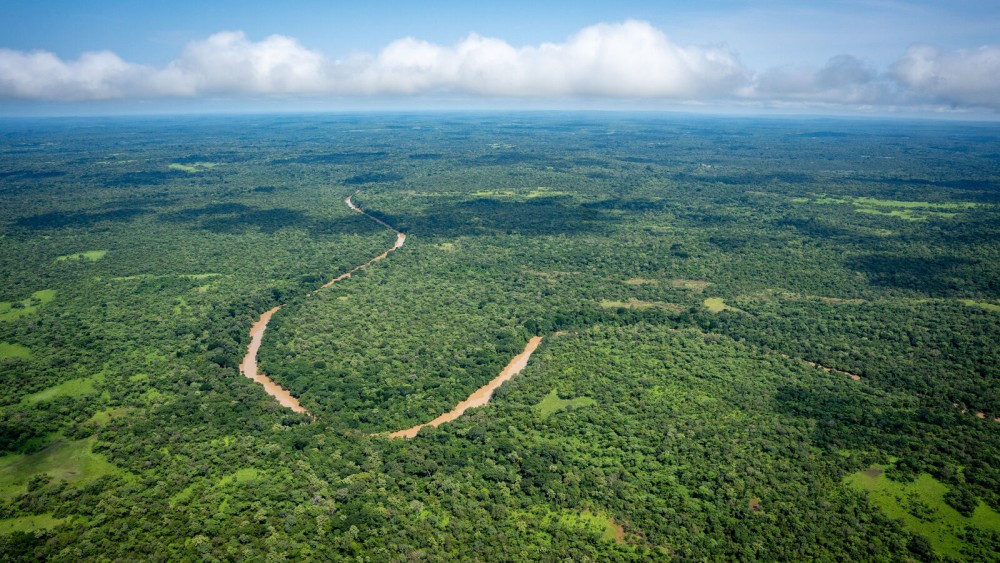
The open woodland savannah, which comprises more than half the area of the CCA, and the closed canopy forest, which accounts for well over 25% of the area of Chinko are particularly effective at storing carbon. This creates opportunities to sell carbon credits and generate revenue that benefits people living in the ecosystems where the carbon is stored.
“Chinko has greatly helped the Sub-prefecture of Rafaï with carbon credits. Through the Community Fund management committee, we have taken the initiative in terms of addressing people’s concerns.” – Simon Pierre Gbake, Sub-prefect of Rafaï
The Chinko Community Fund
Funds raised from the sale of carbon credits are managed by community members themselves via the Chinko Community Fund. Established within the framework of the Chinko Carbon Project, the fund allows for stronger links between forest conservation and community development, and recognises the rights and responsibilities of local stakeholders. Guidance materials are provided, and structures put in place to build capacity and promote self-reliance and autonomy.
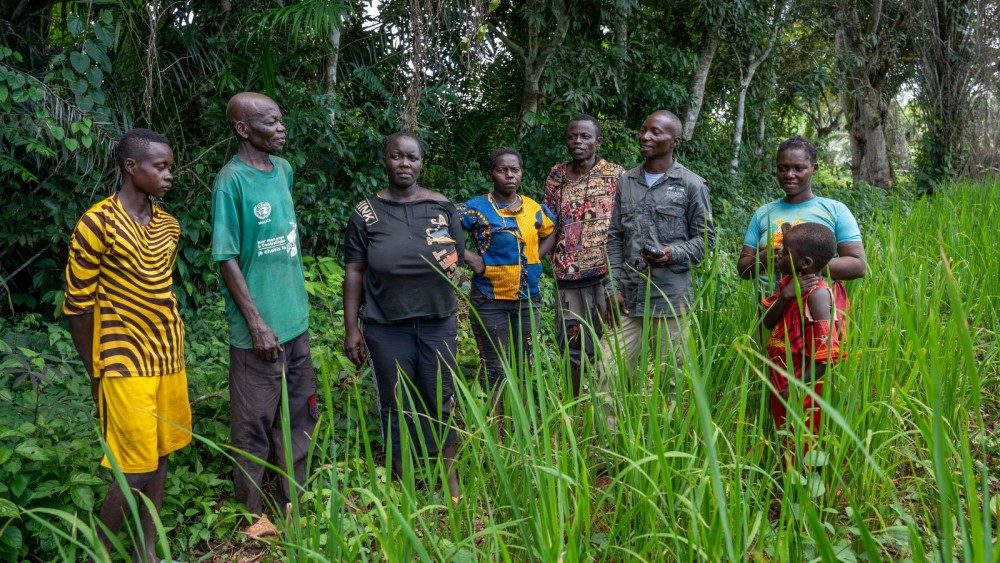
Revenues received by the Community Fund are apportioned between qualifying communities based on specific criteria. These include proximity to the CCA, commitment to conservation (determined by the area of each commune allocated to conservation), and the demographic make-up of each community.
An example of a priority project selected by the communities was the extension of the medical centre in the village of Agoumar, entirely funded by the Chinko Community Fund.
“We chose the extension of the Agoumar medical centre as a priority project for the Community Fund because the population keeps growing, and the previous centre did not have the capacity to deliver the necessary care.” – Jean Fidèle Kamodoussa, Secretary General of the Agoumar Community Fund Management Committee (Rafaï)
Spending decisions are made by committees composed of volunteers from civil society, traditional and religious leaders, and representatives of diverse interest groups.
Transparency and accountability are maintained through an open and consultative approach to establishing priorities and selecting qualified operators for project implementation. Regular monitoring of all initiatives supported by the Chinko Community Fund, as well as assessment of the quality of technical assistance provided by African Parks, is essential for evaluating project effectiveness and ensuring long-term sustainability.
To protect the forest means developing the village
“By protecting the forest, we are contributing to the development of our country, exactly as it says in the slogan of the Community Funds Committee: To protect the forest is to build the community.
My main message to everybody is to avoid participating in deforestation. Let’s combine our efforts with Chinko to continue to protect our forest. If we don’t do that, we risk experiencing the effects of climate change, with consequences for our lives and for the development of our community.” Jean Fidèle Kamodoussa
The future – spreading the message
The Chinko Carbon Project is designed to deliver long-term benefits, and key figures in its implementation are working to raise awareness and promote participation, especially among the next generation who will bear the responsibility for the project’s long-term future.
Simon Pierre Gbake, Sub-prefect of Rafaï, believes it is the shared duty of everyone in the community to support the Chinko Conservation Area and to protect biodiversity – and never to miss a chance to share this message far and wide.
As an educator, Jean-Christophe Pata, headteacher of the Yongofongo school, explains how he and his colleagues are teaching children about the importance of the environment, given that they are surrounded by nature. They explain that it is vital not just to cut wood anywhere, but to protect the forest for future generations.
Simon outlines how, in his village, carbon credit revenues have been channelled towards education projects, including paying teachers’ salaries so they can pursue education as a career, and towards improving access to health services for community members.
The last word on the Chinko Carbon Project belongs to Hassan Moudjiaye, who describes the project’s mission in compelling terms: “Together with the communities, we want to continue to protect our forest with the goal of developing neighbouring communities.”
It is therefore a win-win situation, with benefits for the Chinko Conservation area, for local communities, for the Central African Republic government and, ultimately, for the conservation of forest ecosystems, as conserving them becomes a more viable option than destroying them.
Source: African Parks