Sacred Spears & Mountain Burdens: Inside Mauritius’ Thaipoosam Cavadee
Mauritius is a remarkable multicultural melting pot, with a fascinating blend of Indian, Chinese, British, French, and African influences. Peaceful coexistence among its people has created a harmonious society, while this diversity has enriched the island through vibrant cultural activities and religious festivals.
Thaipoosam Cavadee is one of the most spectacular festivals celebrated among Tamil descendants in Mauritius. Along with fire-walking ceremonies, Cavadee ranks among the most awe-inspiring events on the island. It is typically celebrated in the 10th month of the Tamil calendar, which falls between January and February.
Kodi Etram: The 10-Day Purification Period
Ten days before Cavadee, a flag-hoisting ceremony known as Kodi Etram is celebrated in grand style with incantations, devotional music, and pageantry. Rituals are performed in kovils (temples) throughout the island, while the flag remains flying until the festival concludes. During this time, devotees observe a 10-day period of soul cleansing through fasting, penitence, and prayer. Family members also participate by following a rigorous vegetarian diet. Prayers and texts from Hindu scriptures are recited daily at home and in kovils for the purification of passion and desire.
Kavadi: The Burden of Devotion
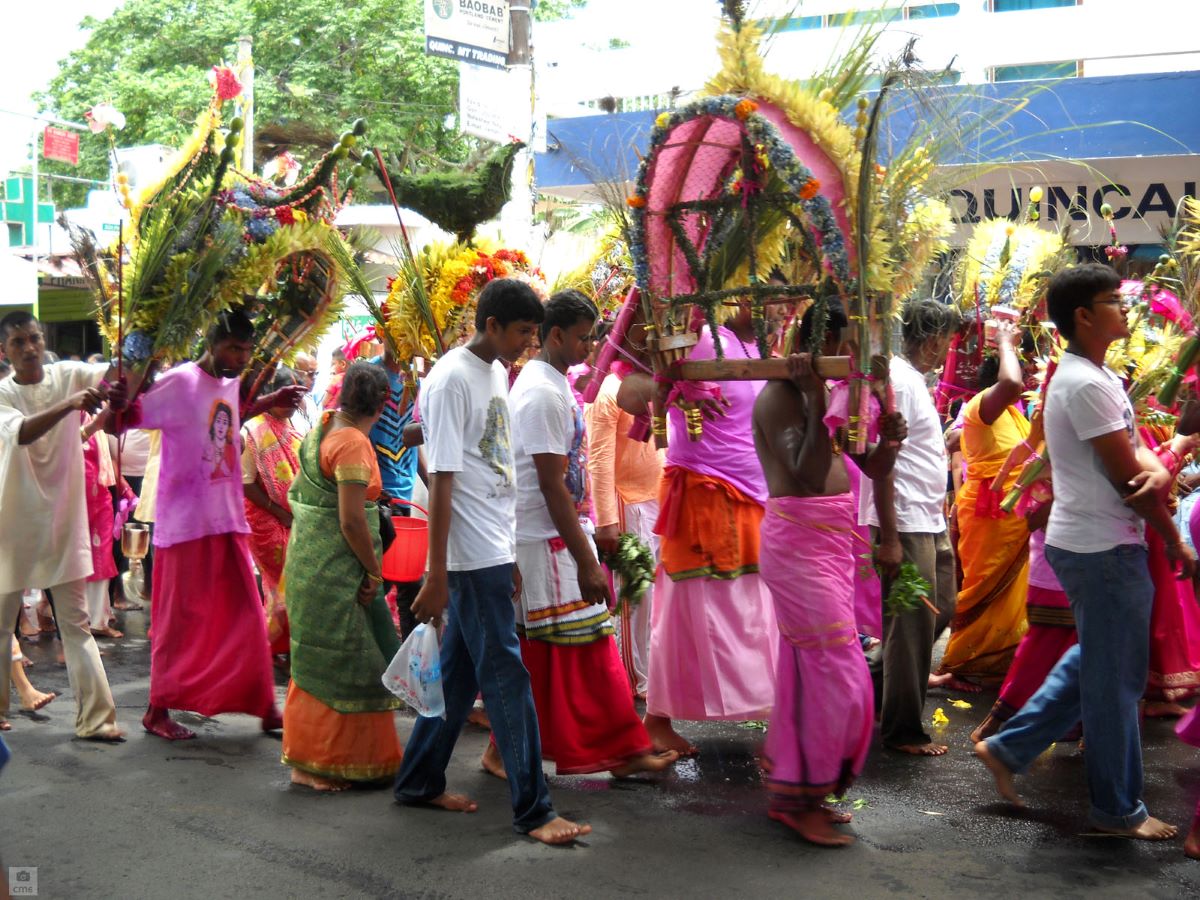
The kavadi symbolizes the sacred mountains and represents a physical burden borne by devotees on their shoulders to the kovil to entreat Lord Muruga, the Tamil Hindu deity, for help and solace. Made by the devotees themselves, the kavadi is an arched bamboo structure reinforced with rods and decorated with flowers, coconut leaves, limes, peacock feathers, and other adornments, with pots of milk hanging at each end.
On the main day, devotees dress in fuchsia or saffron, while men are often bare-chested, wearing only a loin cloth. They are accompanied by relatives to river banks or the sea for ablution rituals, where officiating priests join them. Fires are lit for self-purification and to sanctify the kavadis, while offerings of fruit, milk, rose water, and incense are made.
A chariot carrying the image of Muruga is then pulled back to the kovils in a procession, while kavadi carriers gyrate hypnotically to the sound of devotional trance music. Instead of kavadis, women and children carry brass pots of ‘sacred milk.’ Most devotees have their cheeks and tongues pierced with tiny spears known as vels, while some men have additional piercings on their chests, legs, abdomen, and backs.
Those who choose not to be pierced cover their mouths with a scarf to maintain their vow of silence, devotion, and meditation. At the kovils, once the vels have been removed and offerings brought to the feet of the deities, devotees and visitors are served a blessed vegetarian meal called prasadam on banana leaves.
About the Name: Thaipoosam is derived from two Tamil words: Thai or Tai (the 10th month) and Poosam (the highest position of a star).