
De Lille Pushes R3.5bn Tourism Pipeline as Sector Outperforms Agriculture, Construction
Minister De Lille pitches tourism as a primary economic engine at the 2026 Investment Summit, highlighting a growing pipeline of bankable projects and record-breaking international arrivals.
Johannesburg, South Africa — Tourism Minister Patricia de Lille in her keynote address at the ongoing South African Tourism Investment Summit (SATIS) 2026, holding at the Four Seasons Hotel The Westcliff today, Thursday October 1, argues that the sector must be treated as a primary economic driver, unveiling a growing pipeline of infrastructure projects valued at R3.5 billion.
Speaking under the theme “Invest in Tourism Infrastructure. Invest in Growth,” De Lille addressed financiers, project owners, and government officials with a specific mandate: to connect the country’s surging visitor demand with the capital required to expand it.
Reiterating her mantra, “Tourism policy is economic policy,” De Lille told delegates, referencing her recent role as Co-Chair of the inaugural Beyond Tourism Day at the World Economic Forum in Geneva, noting that global development institutions, including the World Bank, increasingly recognise tourism as one of five sectors capable of generating jobs at scale.
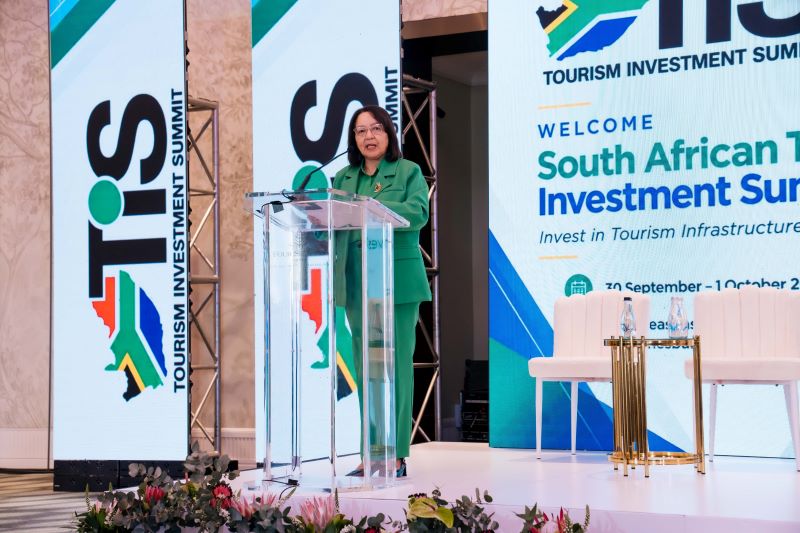
“For too long, economic development discussions have been dominated by industrialisation and manufacturing. That is changing,” she said.
A Shift in Economic Weight
The Minister’s push comes as domestic data cements tourism’s financial weight in the local economy. According to Statistics South Africa, the sector directly employed 953,981 people in 2024—representing 5.7% of total employment—and contributed 4.9% to the GDP. This direct contribution now exceeds those of agriculture, utilities, and construction. When indirect and induced impacts are included, the World Travel and Tourism Council (WTTC) estimates tourism contributes 10% to South Africa’s GDP.
This economic reality has been reflected in high-level policy shifts. In August, President Cyril Ramaphosa elevated tourism alongside mining, infrastructure, and agriculture as four key focus sectors under Phase Three of the Government-Business Partnership.
“This is the economic context in which we must consider tourism infrastructure investment,” the Minister stated.
Record Demand Drives New Projects
De Lille pointed to robust growth in both domestic and international markets to justify the urgent need for capacity expansion. In 2025, South Africa welcomed a record 10.5 million international arrivals who spent R102.2 billion, while domestic overnight trips reached 44.7 million with an expenditure of R111.6 billion.
Momentum has accelerated this year. Between January and August 2026, international arrivals surpassed 7.5 million—an 11.7% increase year-on-year. Stats SA confirmed just yesterday that August alone saw over 1 million international tourists enter the country. Consequently, UN Tourism is set to recognise South Africa as the strongest-performing African destination for the first half of 2026.
To meet this rising demand, the Department of Tourism has expanded its investment pipeline from eight initial bankable projects worth R1 billion to fifteen projects valued at R3.5 billion, with three already securing funding commitments. The portfolio spans public and private ventures across accommodation, heritage spaces, entertainment facilities, and tourist attractions.
Expanding Global Connectivity
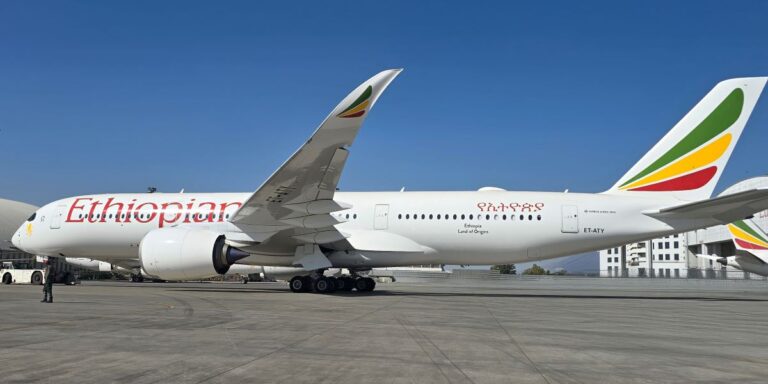
The surge in arrivals is being supported by aggressive air access strategies, heavily aided by the new Electronic Travel Authorisation Digital Visa launched in August. Currently live in over 30 countries, the system utilises machine learning to process visa applications within 24 hours without paperwork or queues.
Global carriers have responded to these easing access barriers with increased route capacities:
- Air Europa launched direct Madrid–Johannesburg flights in June.
- LATAM Airlines inaugurated São Paulo–Cape Town services in July, pulling the launch forward due to passenger demand.
- Turkish Airlines will increase its weekly flights from 14 to 20 starting in October.
- Air China is expanding its Beijing–Shenzhen–Johannesburg routing later this month.
- Air India is expected to announce imminent direct flights to South Africa.
Heavyweight Capital Commitments
Private sector confidence is already materialising in major developments along the coast and in urban hubs. De Lille highlighted the recently opened Club Med Beach & Safari Resort in KwaZulu-Natal, representing an investment exceeding R2 billion. Further up the Indian Ocean coastline, construction continues on the R1.5 billion Oceans Umhlanga North Tower.
In the Western Cape, massive expansions are underway, including a R24 billion investment by the V&A Waterfront into Granger Bay and the development of the R8 billion Cape Winelands Airport.
To facilitate further capital deployment, the government established a Tourism Infrastructure Facilitation Unit designed to remove bureaucratic barriers for investors. This unit operates alongside a three-year Memorandum of Agreement with Infrastructure South Africa and leverages financing from institutions like the Industrial Development Corporation.
De Lille closed her address by outlining ten core reasons to invest in South African tourism infrastructure, emphasising the nation’s diverse year-round appeal, its sophisticated financial systems, and the vast potential for green and smart-tourism investments.
She also announced that South Africa will receive the Global Tourism Champion award at next week’s WTTC conference in Malta, recognising the nation’s dedication to advancing the global travel economy.