
Remembering Dr. Carmen Nibigira (10.15.1978 – 16.11.2024)
Intro by Anniey (Ann) Mwangi
Born on 15 January 1978, Dr. Carmen Nibigira was a visionary leader and luminary in the firmament of African tourism. During her tenure as Coordinator of the East Africa Tourism Platform from 2015 to 2017, she was instrumental in positioning East Africa as a unified destination and fostering regional collaboration.
As a former Director General of the Burundi National Tourism Office and a passionate advocate for sustainable tourism, she championed the empowerment of young professionals and innovative approaches to the industry.
Her passing on 16 November 2024 sent shock waves through the entire tourism world; and it’s such a profound loss for African Tourism in particular.
Someone who’s selling tomatoes to a hotel, needs to understand the role he or she plays in the sector. Our contribution towards GDP needs to be understood through what we’re writing. It’s not just about having a good time. It’s not just about discovering people, beautiful destinations. We are creating jobs.
The Interview:
My name is Carmen Nibigira. I am the Regional Coordinator for East African Tourism Platform. Our organization has probably an amazing job, because what we do is promoting East Africa as one destination. First of all, to East African and then the rest of the world, starting from the continent of Africa. We play the role of a mediator and moderator and also facilitator into the integration of East Africa through tourism.
So, our job is to work with public sector in promoting this region, through policy, through regulations, and also helping the private sector to collaborate and work together. Our long-term goal is to see the tourism sector, really taken seriously.
***
Oh, I started from a long, long time ago. I felt like I was privileged enough when I was probably nine years old to travel around my country. I come from Burundi which is probably the same size, for those who are in the US, as the state of Maryland; or pretty much smaller than Switzerland, in sense of size for European context.
So, I went around the country and then I loved the countryside and I love nature. I adore traveling. So, my early memories of traveling came from there. Also, tourism for me is something I went to school for, I studied. I worked in the hospitality industry. I worked in tourism in East Africa, and also had an opportunity to continue my schooling in the US studying tourism, conservation and parks. So pretty much I would say, I’ve packed 15 years, 16 years of tourism experience under my belt.
***
Okay, the East Africa Tourism Platform was actually founded by the East African private sector. Five countries came together and they decided that it was high time that they start collaborating and working together. Because if we really believe one destination is a vision and a dream, then whether you are a tour operator working in Kenya or a tour operator working in Rwanda, or Burundi or Tanzania or Uganda, then you need to know how you can do business with your partners.
So, there was an element of our policies. There was an element of the loans, standards and also an element of bringing down the challenges and the barriers which were limiting tourism from the original context.
So, East Africa Tourism Platform plays a role of bringing together, private sector, public sector, together. To find solutions which are bettering and making sure that the tourism sector in the region can actually thrive.
Most of the things we do is looking at breaking down the barriers, how we do business at national level and then take it to the regional level. The destination, one destination, has to be driven, of course, by the private sector, but also supported by the public sector.
We have to have a structure in place. We have to have facilitations in terms of how we do business in this region. We have to have our airlines competing, not just because they want to manipulate one market, but also open the business for East Africa.
So, our mandate is to see East Africa positioning itself as one destination, and then competing on the global stage as a strong destination through products, services and also, I’ll say, through people who we are here, we can actually be the agents of change when it comes to tourism in East Africa.
***
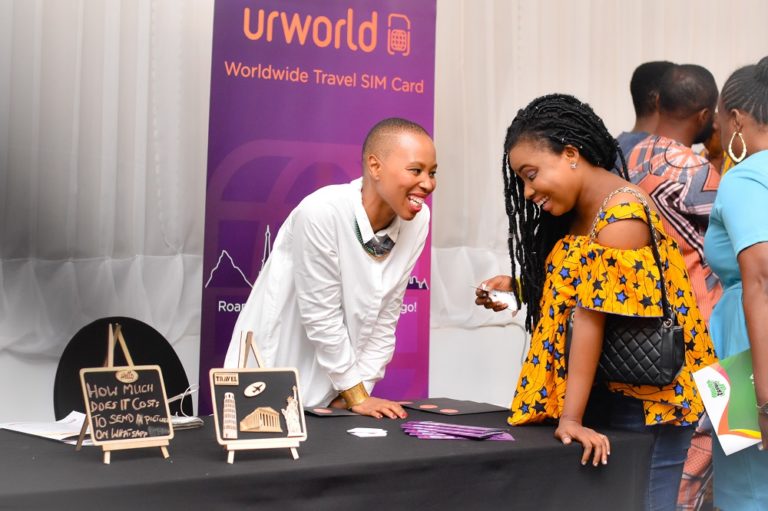
The expo we are attending, this is the third expo of Uganda, and in the region we have five actually four expos, starting from Magical Kenya, which has been on for five years now. And this is the third time Uganda is doing the expo. And Rwanda, they have the own which is more focusing on conservation and environmental aspects. And last year they started adding a component of business, and of course we know the KILI-Fair of Tanzania and Karibu Fair of Tanzania as well.
So I salute such activities because for us, East Africans, we believe that we will like to see more complementarity in terms of our products. Uganda, what they have to offer here is probably complementing the product Kenya has to offer. Bringing tour operators here, hoteliers, travel agents to exchange, and also go beyond the exchanging of business cards, that’s the essence.
And also the fam trip, organized prior to the expo, helps the tourism board to educate, whereas awareness, and also give first-hand experience to those who are going to sell the products. Whether you are based in Nairobi, whether you are based in Kigali, whether you are based in the US, or any market. So we believe that through such activities we can actually bring closer the selling agents to the products.
Once you know and you’re convinced the product is useful and it’s bankable, and you can take it and sell it, whether through your online platform or through your brochures and magazine anywhere the world, they’re better for us. But what is amazing also is to see tour operators from the region, Kenya is coming here to the expo, Rwanda is coming to the expo. People from all over the country.
What is commendable and also we appreciate very much is to see such regional expo attended by our partners in Kenya, our partners in Rwanda, our partners in Tanzania; and then vice versa when we have the next one is going to be Tanzania, tour operators from Kenya will go there. Tour operators from Rwanda will also exhibit in these events.
Whereas before we use to see lower attendances and also there was no need for them to market because we believe that the domestic market, regional market for us is number one. It has a high priority. Before we fly to the WTM in London or ITB in Berlin, Germany, it makes sense that you start doing your homework from home, and then convince your partners you are working with from this region; because we have seen from experience – and Kenya is a fantastic example. Once you focus on your domestic market, you educate them, your products match the demand on the market; definitely you have the right formula. So such events are example of what we need to continue supporting in the region.
***
Tourism in Africa in the next 10 years? I see an industry which is growing. I would like to paint a picture of where we have a white canvas and then we are the owner of whatever we are going to put on that canvas. Tourism has fully been in the mind and the spirit of many people from the continent of Africa. A service, a product designed; we market that product outside the continent. I see few companies spending money, marketing their destinations in Africa.
If you ask and you look, and actually do a good investigation you’ll find out that the biggest budget for marketing for any tourism board in Africa, in many countries is still highly skewed towards the American market and European market. If we shift our efforts, our marketing efforts, our financial muscles and start marketing effort for Africans, first of all, doing research: who is an African? Who’s struggling? What the purpose? How can I build my business around that consumer?
We know little about, for instance who a Nigerian is as a person. We know Nigerians travel with big families. Do we know what they like? How they spend their money? We probably know more about Americans and Europeans than we do know of Africans. The story of Africa tourism and travel will have to be defined today; not tomorrow, because the market is here but few people are really focusing on that market. From the tourism standpoint, whether it’s from the tourism board, business operators, airlines, start connecting Africa.
It’s still a pain to see that you have to fly out of the continent to enter the continent. Affordability is still an issue, and also issue of visa on arrival. To ask a visa, I am a Burundian passport holder; to go to Nigeria, I was told I have to have to wait for two weeks, you need to bring ABCD… already, that’s too much me.
I will rather choose Seychelles where I don’t need a visa on arrival. So basically who’s losing out? So we have to have a candid conversation between the private sector and public sector. There’s a business to be made here. Probably we have been looking at the wrong market and doing little efforts to support the African market.
Time to shift our spirit, our money, our vision, and our strategies to Africa, because this is where things are happening. The middle class is growing. We are travelling. We know what we want. And also, we are educated through social media. We see what’s happening, so we are so much connected to what’s going on anywhere in the world. So, it’s not hard, it’s just a matter of understanding where we need to put our effort.
***
I believe that this is exactly what we are talking about because even the cover focus on Zimbabwe. This is your last edition. And then I hear now your next one, we are Uganda. Once again, thank you for choosing destination East Africa. I remember when I was growing up, it was very hard to find magazine or a newspaper covering Africa extensively. Maybe one or two pictures. If we don’t write our own story, honour our own narrative and have Africans write it for Africans; and then share our experience through print media or social media, then we are not going to go anywhere.
And the fact that now you’re visiting Uganda, you’re reporting from Uganda, when you write here in this magazine, the story will be a reflection of your true authentic story. We are not only seeing reporters coming from outside to come and tell the story of Africa. So, I really like the fact that we are seeing more of such initiatives and the investment is going in publishing, writing and telling the story of Africa.
I just give you an example. Whenever I travel, I like to just grab an inflight magazine and browse through. If you fly with a local or national carrier from Africa, most likely you find that they have more about the country or the region of Africa.
If you fly in a carrier, probably doesn’t do more Africa, but is an international one, of course, a little bit of Africa is inside. But remember, there are so many of us on the continent who are not flying, who are not traveling by flight, and who probably need to have a copy of this. I think, for women we know very well that when you’re sitting in the hair dresser, you’re just browsing magazine.
So, we start educating. We start putting money in good print, good paper, something which is appealing. Our news writer needs to have a sense of who is the audience. Writing all the languages from Swahili in East Africa, from French, from English, from any local language. I think as you saw yesterday when we were launching the TV commercial and then the documentary, they would be aired on national TV in local languages.
Because traveling is no longer… it has to be demystified. It has to be a sense of what tourism is to the touch point of every single sector. Value. It is a value chain. Someone who’s selling tomatoes to a hotel, needs to understand the role he or she plays in the sector. Our contribution towards GDP needs to be understood through what we’re writing. It’s not just about having a good time. It’s not just about discovering people, beautiful destinations. We are creating jobs. Taxes have to be paid. Industries are growing. Our contribution is not just about going places. It’s every single dollar spent in tourism in Africa, which will probably be to the benefit of Africans.
So, we need to see more of this and I’m looking forward to see the one you’re publishing on Uganda. This is an amazing opportunity and I’m looking forward to very much towards your writing about Uganda. And please send a message to all Africans who are going to read that destinations Africa is open for business.
This interview took place on 18 February at the Kampala Sheraton Hotel during the 2017 Pearl of Africa Tourism Expo (POATE). It was first published as the cover story of the maiden edition of Travels & Thrills magazine.