Kokerboom Wood: The Quiver Tree Forest
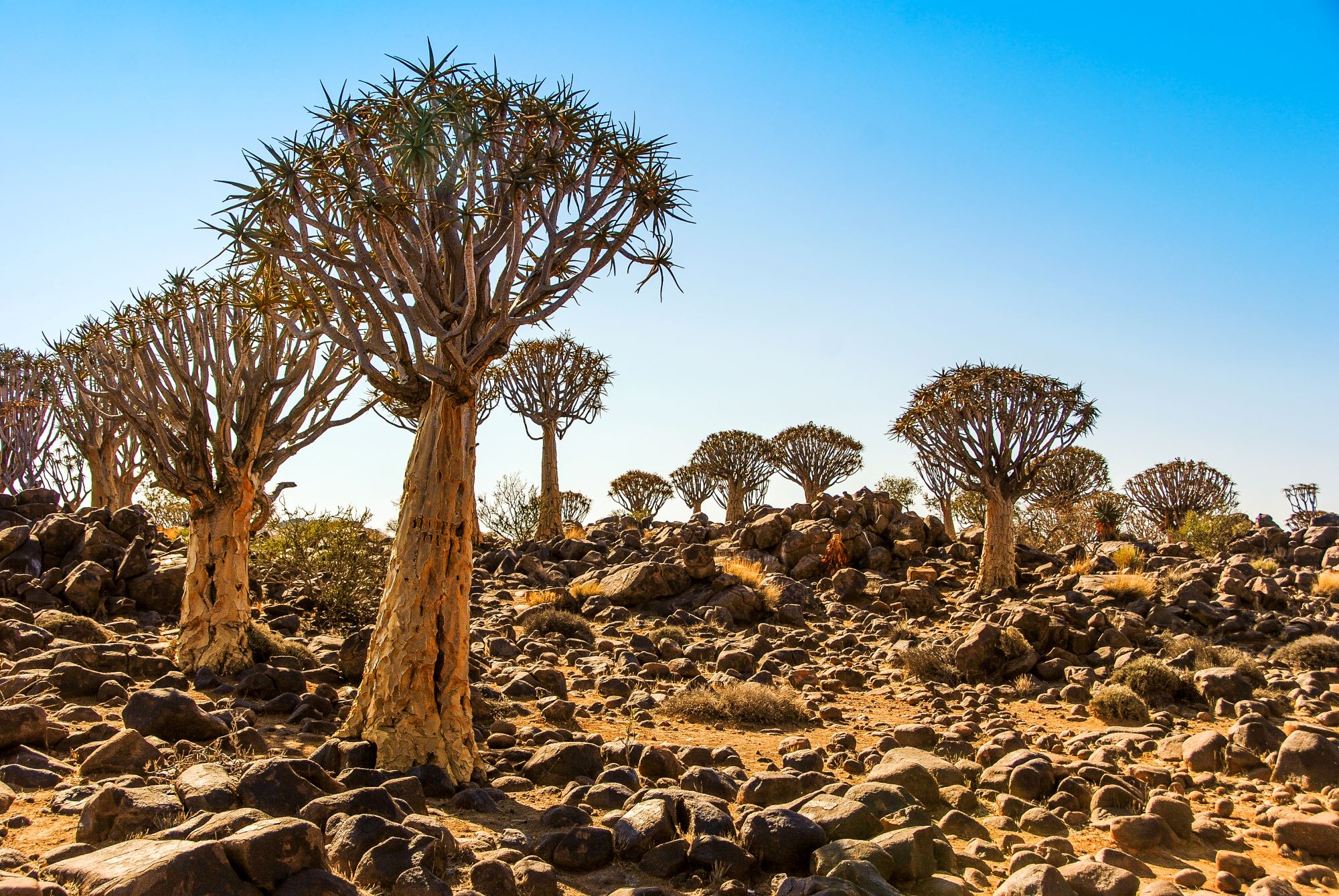
The Quiver Tree Forest, known as Kokerboom Wood in Afrikaans, is a unique and captivating natural wonder located in the southern part of Namibia, near the town of Keetmanshoop. This extraordinary forest is home to approximately 250 specimens of Aloidendron dichotomum, a striking species more commonly known as the quiver tree, or kokerboom in Afrikaans. These trees hold significant cultural, historical, and ecological importance, making the forest a popular tourist destination and a celebrated national monument of Namibia.
Cultural Significance and Traditional Uses
The quiver tree derives its name from the traditional practice of the indigenous San people, who used the hollowed-out branches of the tree to craft quivers for their arrows. This practice is emblematic of the deep connection between local communities and the natural environment, as the quiver tree has provided not only practical tools but also a sense of cultural identity. The San people’s reliance on the tree for hunting has embedded the species in local folklore and traditions, adding to the reverence with which it is regarded in the region.
A Living Monument to Time
The Quiver Tree Forest is not a cultivated forest but a spontaneous one, where the trees grow naturally and have thrived for centuries. Some of the tallest quiver trees in the forest are estimated to be between 200 and 300 years old, standing as living monuments to the passage of time. In 1995, recognizing the forest’s ecological and cultural importance, the Namibian government declared it a national monument. This status has helped to protect the trees and preserve the forest as a vital piece of Namibia’s natural heritage.
The Unique Characteristics of the Quiver Tree
One of the most intriguing aspects of the quiver tree is its unusual appearance, which has led to the description that it looks as though it is “upside down.” This is because its long, spiky leaves bear a resemblance to roots, giving the tree a distinctive, otherworldly appearance. The quiver tree is well-adapted to its harsh, arid environment. It has thick, succulent leaves that store water, allowing it to survive in the dry, rocky landscapes of southern Namibia.
Locally, the tree is also believed to bring good luck to those who care for and nurture it. This belief has further cemented the quiver tree’s place in Namibian folklore and culture. Many people see the tree as more than just a natural feature, but as a source of spiritual significance, believing that it brings fortune to those who revere it.
Legends of Diamonds and Blessings
A curious myth that circulates in the region is that the quiver tree has a connection to the wealth of diamonds for which Namibia is known. Local legend holds that if someone were to dig up one of these sacred trees, they would find diamonds at some point in their lifetime. However, the quiver tree is considered blessed, and this has deterred anyone from testing the legend. The tree’s sacred status has helped to ensure its protection, as locals are reluctant to disturb these ancient giants of the Namibian landscape.
The Quiver Tree Forest is more than just a collection of trees; it is a natural, cultural, and historical treasure of Namibia. From its traditional uses by the San people to its designation as a national monument, the forest serves as a reminder of the deep connections between humans and nature. Visitors to the forest are not only treated to stunning vistas and the sight of towering quiver trees, but also to a glimpse into the cultural narratives that make this forest such an important part of Namibia’s heritage.
Joseph M. Kafunda has been a prominent figure in the Travel and Tourism industry since 2004, bringing over 20 years of expertise as a Travel and Tourist Guide, as well as a Lifestyle Content Curator. With a strong background in journalism, Joseph combines his passion for storytelling with his deep knowledge of African culture and heritage.