Magical Kenya Travel Expo 2025: A Landmark 15th Edition With Remarkable Successes
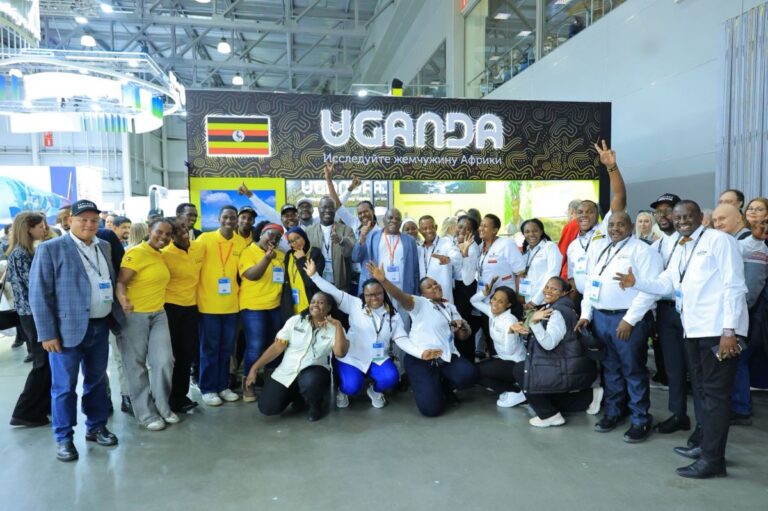
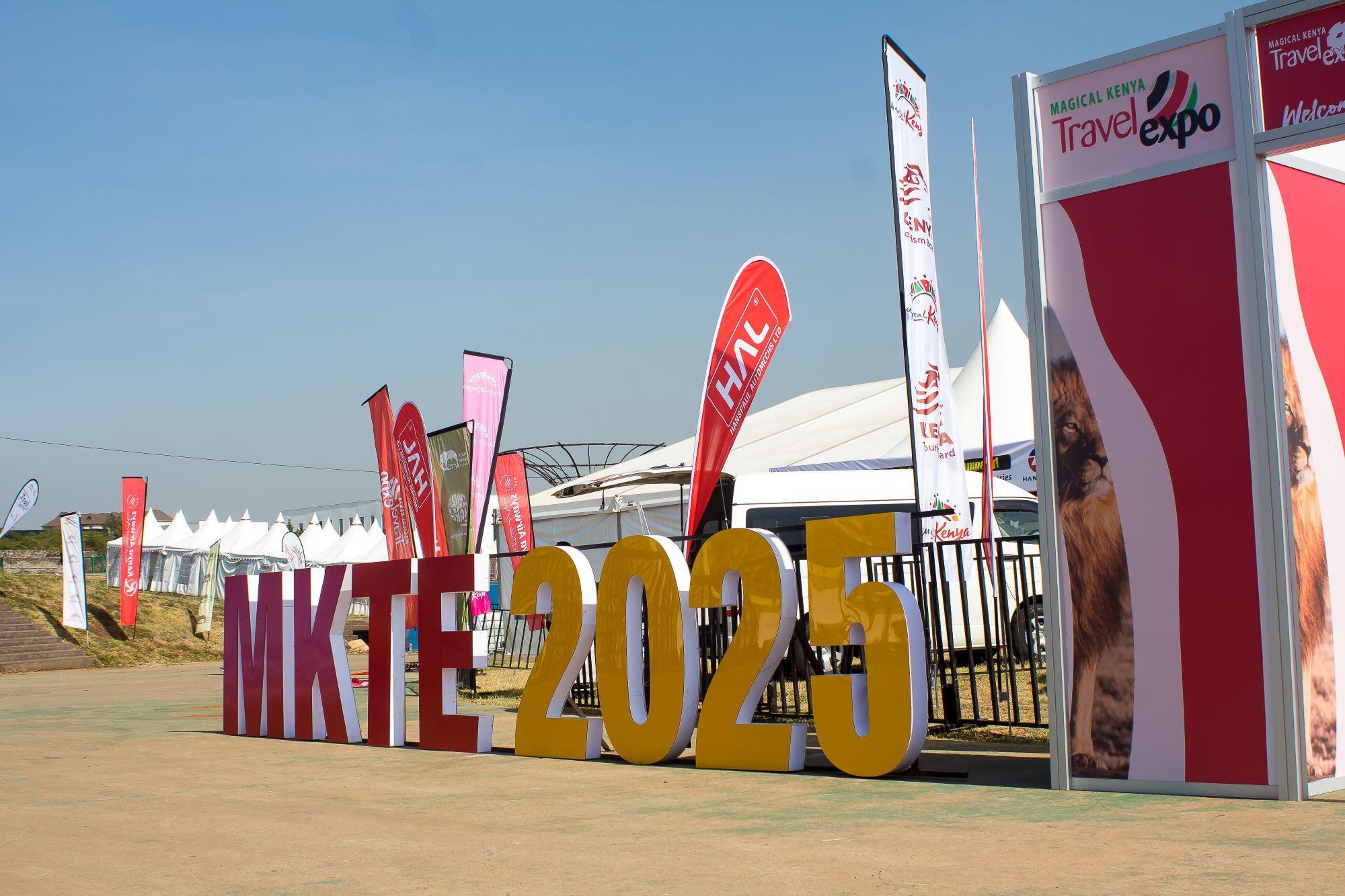
Going with the theme, Magical Kenya: Unlocking Africa’s Potential through Sustainable Tourism Growth, the 2025 Magical Kenya Travel Expo MKTE was a landmark 3-day event. It had to be. It was the 15th edition, making it the oldest and longest running travel and tourism trade show in the region. Kicking off on October 1, the Uhuru Gardens National Monument and Museum was a living beehive, buzzing with activities by mid-morning on Day one. Hosted buyers, numbering well over 200, fully catered for by the Kenya Tourism Board (KTB), and many others were shuttling back and forth from one exhibition booth to another, networking and concluding prescheduled meetings with exhibitors and service providers, such as: hotels and other accommodation properties, airlines and local carriers, tourism boards, conservancies, and many more.
Away from the massive exhibition hall, a couple of seminars took place in succession as time sped on, while the day culminated with a welcome cocktail of entertainment, drinks and finger foods which ran from 1800 to 2100 hours.
Opening Ceremony
The highlight of day two was the official opening of Magical Kenya Travel Expo 2025 by the Chief Guest of Honour, the Deputy President of Kenya, His Excellency, Prof. Kithure Kindiki.
In his welcome address, the Deputy President noted that, “Tourism is a critical anchor of Kenya’s economy and a pillar of Kenya’s Bottom-Up Economic Transformation Agenda (BETA).” He pointed out that Kenya welcomed close to 2.4 million visitors in 2024, which marks a more than 15 per cent increase from the previous year 2023.
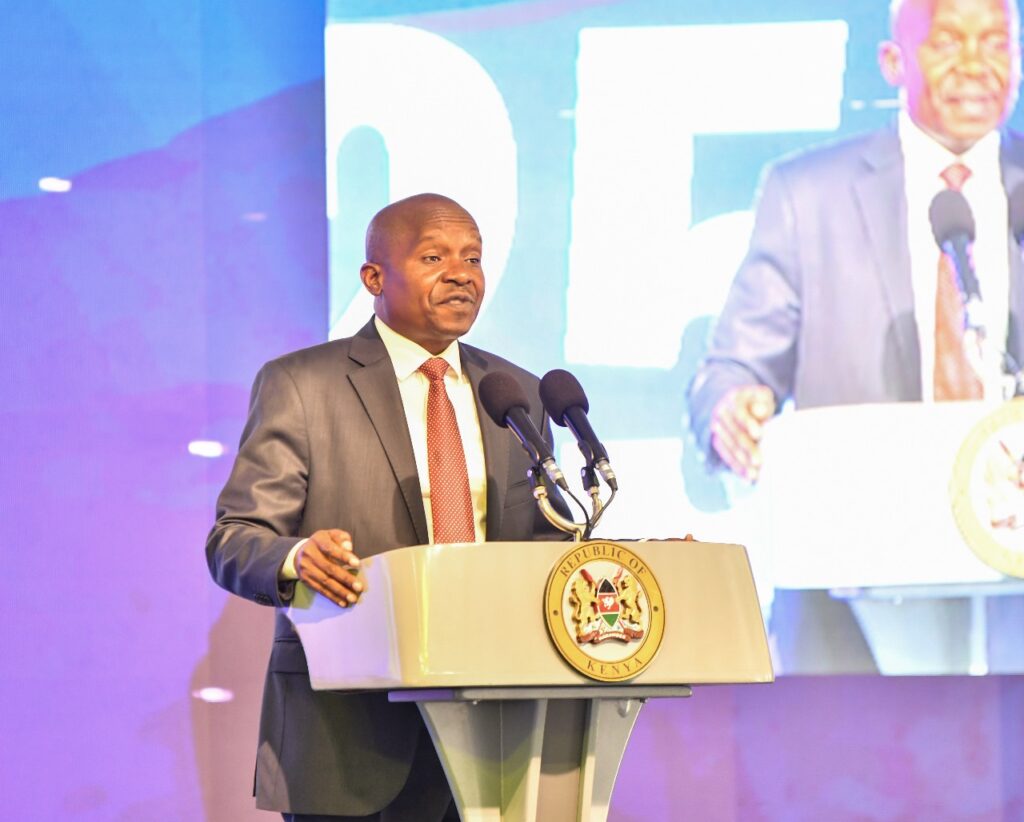
Speaking further, he stated that, “Revenue from tourism increased by 20% to 452 billion Kenyan shillings (USD 3.5 billion), with domestic tourism showing significant growth potential.” Citing the World Travel & Tourism Council (WTTC), Kenya’s tourism sector is expected to contribute a record KSh 1.2 trillion (USD 9.3 billion) to the economy in 2025, which is equivalent to more than 7% of national Gross Domestic Product (GDP). The sector, according to Prof. Kindiki is also expected to support 1.7 million jobs in 2025 – maintaining over 8% of total national employment – which translates “into jobs for our youth, markets for our farmers, and sustained customers for our Micro, Small, and Medium Enterprises (MSMEs).”
Emphasizing that the unique multiplier effect of tourism cannot be overstated, the Deputy President declared that within the government’s national agenda, “tourism is positioned as a fundamental business enabler and a platform that stimulates investment while driving foreign exchange and uplifting countless ancillary industries.”
Government’s Transformative Strides
Deputy President Kindiki went ahead to enumerate some key points and government’s transformative strides in improving infrastructure to show its commitment to boosting tourism. These include: the upcoming Nairobi–Nakuru–Mau Summit Highway which will dramatically ease travel from the capital into Western Kenya, while providing seamless access to iconic sites like Lake Nakuru National Park and the scenic tea highlands of Kericho.
He noted that the landmark Mteza Bridge and the Dongo Kundu Bypass have already revolutionised access to the South Coast, while the Lamu Port development, Standard Gauge Railway expansion, broadband internet and energy connectivity projects are all designed to create an enabling environment for tourism.
Moving on to aviation, the Deputy President announced that Kenya is opening up its skies. He stated that direct flights from global hubs such as New York and London, including the newly launched Gatwick route by the national carrier, Kenya Airways now ensures that visitors can reach the East African nation with unparalleled ease. In addition, he emphasized that visa-free access and upgraded hotel standards continue to augment these efforts, as Kenya enhances its position as an East African hub. However, he observed that more needs to be done to make operational the Bilateral Air Service Agreements that remain latent, especially with target constituent jurisdictions across the continent.
Proceeding, Prof. Kindiki enthused that, “We are witnessing the exciting rise of cruise tourism.” He reiterated that, the reception of the Norwegian Dawn in Mombasa earlier in the year, signalled Kenya’s readiness to capture a tourism potential of immense proportions. “The subsequent berthing of numerous liners at the modern Mombasa cruise terminal has reinforced this growth by bringing direct economic benefits to a wide array of local entrepreneurs,” he added.
The Need to do More
In spite of all these successes, the Deputy President admitted that the numbers could be better, stating that although Kenya towers above when ranked against its East African brothers, it struggles when compared to destinations in North and Southern Africa. He acknowledged that, numbers are rapidly rising in Tanzania and Uganda, at 2.14 and 1.37 million visitors respectively in 2024, within the same period of review. In comparison to the global giants in Asia and Europe, who rake in numbers in the double digits, this significantly pales; and with Africa emerging as one of the strongest-performing regions in global tourism recovery for the year 2025, Kenya must do more to tap into this growth, and drive performance.
Noting that Kenya’s traditional offerings of wildlife safaris, cultural heritage and coastal retreats may continue to draw international visitors, His Excellency insisted that these must be complimented by new and innovative products. He commended the Ministry of Tourism’s recent efforts to drive the astro-tourism initiative, which takes advantage of Kenya’s equatorial positioning. Also, he observed that desert safaris in areas such as Chalbi are emerging as significant tourism opportunities to rival the Middle East and Asian markets. The same, he pointed out, can be said for the mobilization of Kenya’s reputation as a technology innovation powerhouse and the continent’s “silicon savannah”, positioned to drive tech-driven tourism solutions, targeting young technology entrepreneurs as principal actors.
Deputy President Kindiki reiterated the need to develop new tourist products and exploit untapped potential in non-traditional attractions and regions to spur the sectors’ growth. “We must capitalise on the opportunities that intra-Africa tourism can provide within the context of the African Continental Free Trade Area (AfCFTA). For this to happen, the tourism sector must become a critical interlocutor in the transport, logistics, trade and investments, land and environment, MSME, labour and social protection sectors, driving the policy focus towards synergized outcomes.
“We must also be deliberate in how we market Kenya and the nuances that characterise the Kenyan experience. Over and above the Kenya of the Big 5 is the Kenya of MPESA and mobile money. The Kenya of Twitter (now X). The Kenya of Eliud Kipchoge. The Kenya of Wangari Maathai. The Kenya of Innovation and Leadership. The Kenya of the United Nations. The Kenya that is young and resourceful. Kenya’ identity is one of profound diversity. We are the Cradle of Humankind, with Turkana and the Rift Valley hosting sites of unparalleled archaeological significance. We are also home to over forty vibrant communities, each with unique traditions, cuisines, and art. By diversifying our offerings into culture, sports, faith, and heritage tourism, we shall continue to ensure that Kenya holds a compelling appeal for every visitor, from the thrill-seeker to the pilgrim.”
Unwavering Commitment to Sustainability
Furthermore, the Deputy President called for an unwavering commitment to sustainability, stating that; “We must remain determined to protect the very treasures that attract the world to our shores including our wildlife, landscapes, and rich culture. Our 15 billion tree planting national initiative is fighting climate change while enhancing eco-tourism. Through the Kenya Wildlife and Forest Services, we remain committed to protecting endangered species and supporting communities through conservancy programmes.
“Our vision for sustainability also means that the benefits of tourism are shared widely. From our villages and counties to our wildlife parks and coastal resorts. This concept is not abstract. It is visible when a family-owned guesthouse in Rusinga Island is fully booked. When local community groups have scheduled hiking tours around the Nzambani Hill in Kitui. When a local uji spot on Kirigiti Road, Kiambu joins the list of must visit establishments. This is how tourism will build Kenya’s economy, going forward. This is how tourism will forge a nation.”
As he rounded off, the Deputy President recognised Magical Kenya Travel Expo as a dynamic marketplace of ideas, a platform for business, and a meeting point for cultures, while acknowledging that the success of tourism hinges on partnerships for which reason the Government of Kenya will continue to provide an enabling environment. He called upon all to make tourism the bridge between Kenya, Africa and the world and the sector that empowers the Kenyan people. “This is the sector that is best suited to tell the world who we are.” He concluded as he declare the 15th Magical Kenya Travel Expo officially open.
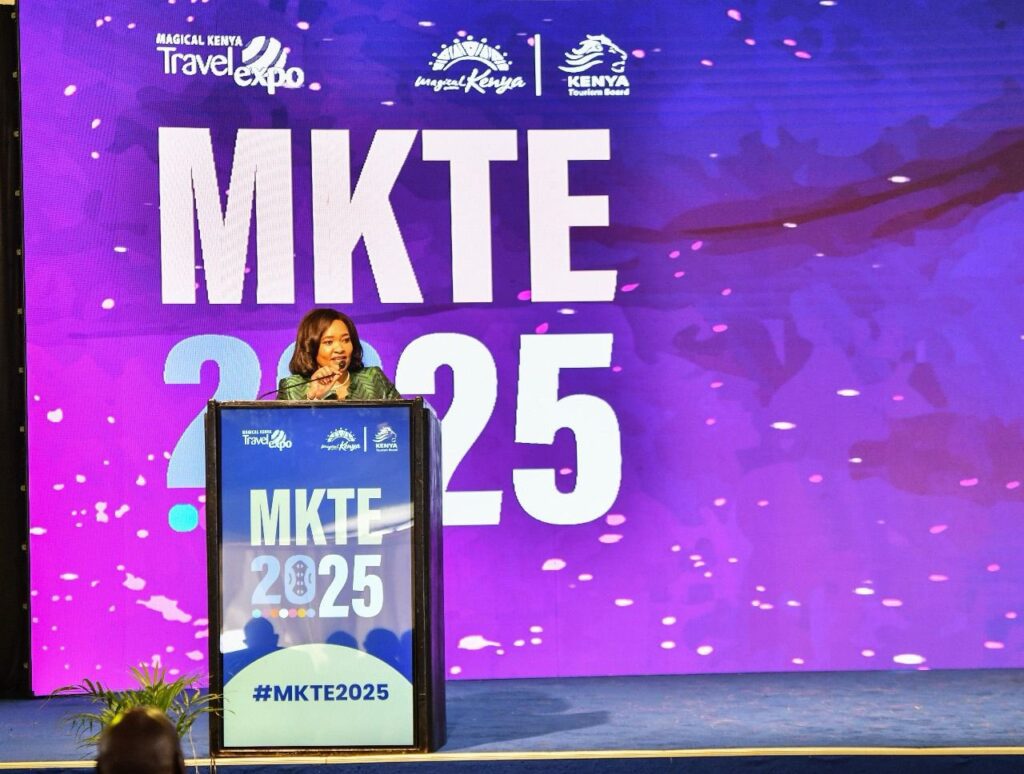
Earlier on, before the Deputy President took the podium, Cabinet Secretary for Tourism and Wildlife, Hon. Rebecca Miano EGH in her welcome speech stated that the landmark occasion reaffirms Kenya’s position in Africa’s tourism marketplace.
Timeliness and Immense Potential
Reflecting on the timeliness of the event’s theme, Hon. Miano stated that, it is a reminder that “tourism is about the future of our communities, the health of our environment, and the enduring prosperity of generations to come.”
Emphasizing Africa’s immense potential, and how tourism is one of the most potent treasure troves of the continental economy as long as its power is wisely and sustainably harnessed, the Cabinet Secretary stated that the exponential growth of the expo reveals the confidence the world places in Kenya with regard to tourism.
She noted that over 6,500 delegates from 40 countries were being hosted by Kenya, while bringing together more than 400 exhibitors and over 5,000 travel professionals. “With more than 10,000 pre-arranged business meetings scheduled, this event has evolved into a crucial driver of tourism and investment, far beyond a mere networking platform.”
Integration of the Africa Tourism Investment Forum
Hon. Miano EGH remarked that the integration of the Africa Tourism Investment Forum was a groundbreaking feature of this year’s event. Calling it a strategic development, she stated that it addresses the most persistent challenge facing African tourism enterprises, which is access to affordable capital. “With the valued support of the African Continental Free Trade Area and other key institutions, this forum creates a meeting point where investors, policymakers, and vetted tourism entrepreneurs converge to unlock tangible investment opportunities. In doing so, Kenya is leading the way in shaping the future of African tourism investment.
“Our sector is on a strong rebound as evidenced by last year’s record of international visitors. To build on this momentum and achieve our ambitious target of 5.5 million visitors by 2027, we are making strategic investments in infrastructure. We are expanding airports and improving road connectivity while enhancing security and streamlining travel processes. We are committed to creating a sustainable and inclusive tourism economy by diversifying our offerings into adventure, wellness, cultural tourism and more.”
CS Miano declared that at the core of the government’s vision for the tourism industry lies an unwavering commitment to sustainability – a view reiterated by Deputy President Kindiki. “We are focused on reducing tourism’s carbon footprint while enhancing visitor experiences. These initiatives align with global goals and position Kenya as a responsible destination.”
Encouraging local businesses to embrace sustainability as a beacon of competitive advantage, Hon. Miano pointed out that, “Today’s travellers are increasingly making choices based on a destination’s environmental and social stewardship.”
Recognizing the role of Africa’s creative industries including film, music and cultural extravaganzas as vital tourism assets, the Cabinet Secretary stated that, “By integrating the creative economy into tourism, we aim at creating unique, authentic experiences while providing our youth with innovative opportunities to thrive.”
Hon. Miano concluded her speech by extending her deepest gratitude to partners, sponsors, and the Kenya Tourism Board for their tireless efforts in making this event a resounding success’ while asking the international delegates, to savour the offerings before they head out of Kenya. “See our world-famous wildlife, pristine beaches, and feel our renowned hospitality.” She urged before welcoming the Deputy President to the podium.