Nyakisharara Airport: Uganda’s $1.5B Bet on the Future of Air Travel
Uganda’s Sky-High Gamble Could Change East Africa’s Economy, Turn Mbarara Into Africa’s Next Aviation Powerhouse and Cut Brazil–China Flights in Half
The Ugandan government has officially approved construction of a major international airport near Mbarara City in Western Uganda. The project, estimated at $1.5 billion (approximately Shs 5.6 trillion), aims to position the region as a strategic gateway for global trade and travel.
President Yoweri Kaguta Museveni has directed Prime Minister Robinah Nabbanja and relevant government ministries to fast-track implementation of the project, which will be developed by Base Seven Company under a Build-Operate-Transfer (BOT) model. The directive, issued February 11, 2026, instructs state agencies to support the investor in transforming the existing government aerodrome into a major transport hub.
Unprecedented Scale
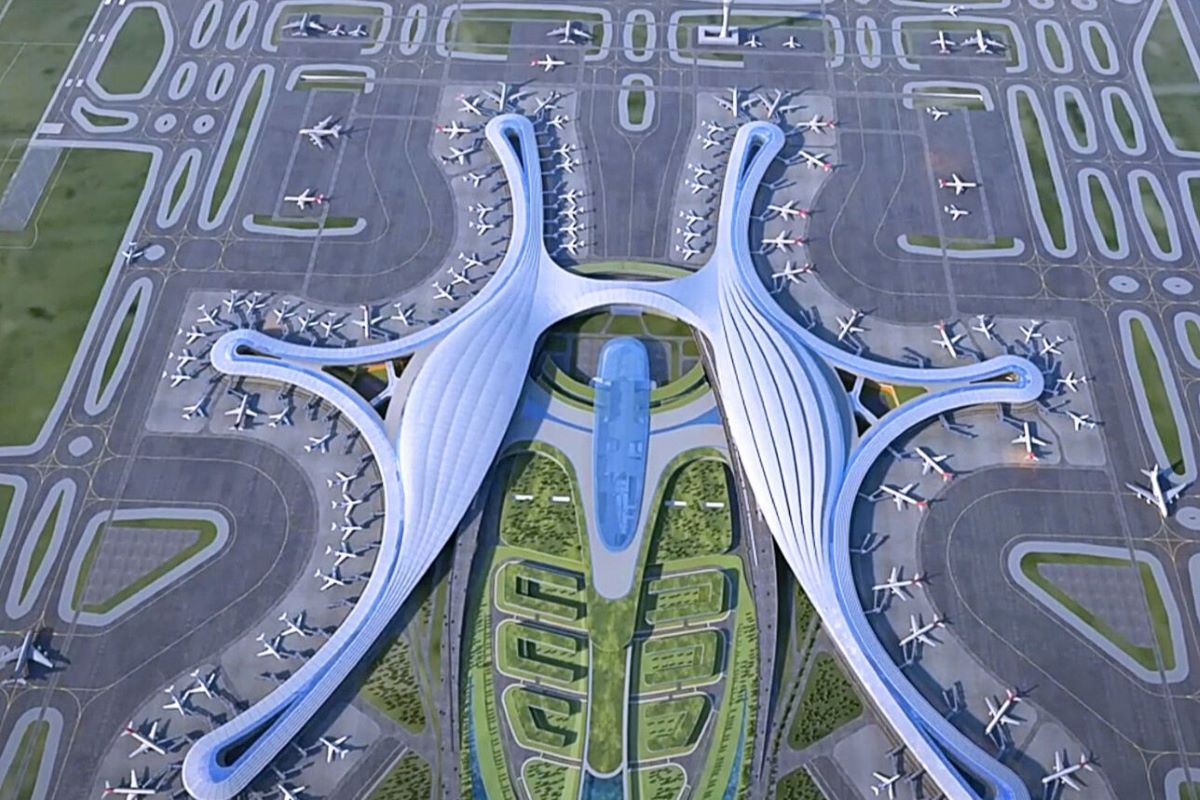
The proposed Nyakisharara International Airport will cover approximately 21 square kilometers—nearly twice the size of London’s Heathrow. The facility is designed to include:
- Two primary runways, each measuring 5.5 kilometers
- A dedicated 3.7-kilometer VIP runway for state use
- Modern terminal buildings and cargo handling infrastructure
- Supporting facilities including hotels
For context, these runway lengths would rank among the world’s longest civilian runways, exceeding major hubs like Heathrow (3.9 km).
The Strategic Vision: A Global Refueling Hub
The project’s foundation rests on geographic positioning. President Museveni has outlined a vision of Uganda as a critical refueling point on emerging air corridors between Latin America and Asia.
According to the presidential directive, current routes from Brazil to China require 34–42 hours of flight time. With a refueling stop at Nyakisharara, this could be reduced to approximately 20 hours—nine hours from South America to Mbarara, and 11 hours onward to China.
The government projects this positioning will attract long-haul carriers seeking more efficient routing, potentially generating substantial transit passenger and cargo revenue.
Economic Opportunities for Western Uganda
Local leaders have welcomed the project as a catalyst for regional development across three sectors:
- Tourism: Currently, international travelers arriving at Entebbe face 5–7 hours of driving to reach Western Uganda’s national parks and cultural sites. Direct airport access would place visitors minutes from Lake Mburo National Park and the region’s heritage attractions.
- Agricultural Exports: Western Uganda’s dairy, beef, and coffee producers have historically faced delays shipping to global markets via land routes. The airport’s cargo infrastructure is designed to enable direct air export of fresh produce, reducing post-harvest losses.
- Trade and Investment: As a strategic refueling hub, Mbarara is expected to attract foreign investment in logistics and supply chain operations, creating employment across the region.
Challenges and Next Steps
Aviation experts have raised questions about the commercial viability of a dedicated refueling hub, particularly given modern aircraft capabilities for ultra-long-haul flights without intermediate stops. The project’s success will likely depend on securing firm airline commitments and developing accompanying commercial zones to generate revenue beyond landing fees.
The government is proceeding with technical evaluations. The directive requires the developer to relocate the Ibanda–Mbarara public road at their own expense, while the Ministries of Works, Lands, and Finance will coordinate land acquisition and regulatory approvals.
If completed as planned, Nyakisharara would make Uganda one of Africa’s few countries with five international airports by 2031, joining Entebbe, Kidepo, Gulu, and Kabalega.