Zimbabwe Hosts CIMAM 2026 With Repair, Restitution and Radical Hospitality on the Agenda
Running 20–22 November at the National Gallery of Zimbabwe under the theme Museums Beyond Limits: Imagining Repair Across Cultures, Ecologies and Knowledges, the conference puts African curatorial leadership at the centre of a global conversation about restitution, decolonisation and the future of the museum.
Harare — For the first time since the inaugural edition of its annual conference in The Hague in 1962, the International Committee for Museums and Collections of Modern Art (CIMAM) is gathering on African soil, and Zimbabwe is sparing no ceremony in marking the occasion.
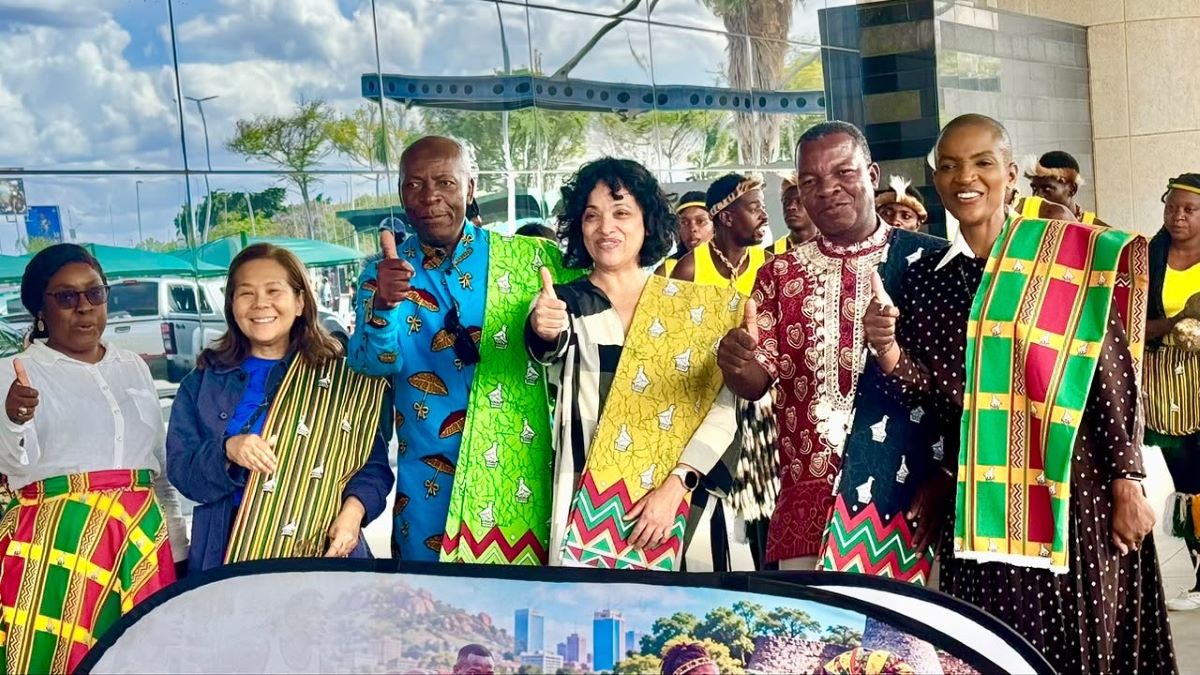
Tourism and Hospitality Industry Minister Hon. Barbara Rwodzi personally received CIMAM President Amanda de la Garza at Robert Gabriel Mugabe International Airport, accompanied by Dr. Biggie Samwanda, Director of Arts in the Ministry of Sport, Recreation, Arts and Culture, and Raphael Chikukwa, Executive Director of the National Gallery of Zimbabwe.
“An Exciting Milestone” for Destination Zimbabwe
Minister Rwodzi described the hosting of the conference as an exciting milestone that speaks volumes about Destination Zimbabwe’s appeal to niche markets interested in arts, culture and luxury experiences. Creative arts and cultural heritage, she noted, are an integral part of Zimbabwe’s tourism offering.
The three-day conference brings together museum leaders and professionals from across the globe, providing a platform to showcase Zimbabwe’s cultural heritage, elevate local artistic expressions and add value to products made by local communities. Through what the Government calls a Whole-of-Government Approach involving the Ministries of Tourism and Hospitality Industry; Sport, Recreation, Arts and Culture; and Home Affairs and Cultural Heritage, Zimbabwe is harnessing its cultural assets to enrich the tourism experience and ensure the benefits of cultural tourism extend to its people.
De la Garza, who also serves as Deputy Artistic Director of Madrid’s Museo Reina Sofía and holds the CIMAM presidency for the 2026–2028 term, said the gathering would be about far more than professional networking.
“It is very important to have a conference that gathers international museum professionals from all over the world, not just to connect among ourselves, but also with the cultural arts in Zimbabwe,” she said on arrival.
Beyond the programme itself, the conference is expected to open avenues for knowledge exchange, institutional partnerships and greater international visibility for Zimbabwean artists and cultural practitioners.
A Bid Won, Not Given
The Harare hosting was not simply awarded but won through a bid led by the National Gallery of Zimbabwe under Chikukwa’s stewardship, with support from the Ministry of Sport, Recreation, Arts and Culture, the Higherlife Foundation, CIMAM Patrons and local sponsors including the Bouckaert Family Trust, Harare International School, Dandemutande, Old Mutual and Delta Beverages. CIMAM describes itself as the only global network representing museum directors and curators of modern and contemporary art, with members drawn from more than 90 countries.
Crucially, Africa is not merely the location of this edition; perspectives from the continent shaped the structure through which the conference’s questions were formulated, developed by a Content Steering Committee co-led by Elvira Dyangani Ose, Director of MACBA in Barcelona, and Chikukwa.
Repair, Restitution and Radical Hospitality
Under the overarching theme Museums Beyond Limits: Imagining Repair Across Cultures, Ecologies and Knowledges, CIMAM 2026 asks what museums might become if some of their inherited boundaries — of nation, discipline and authority — are loosened.
The programme is organised in three movements. Day one, Friday 20 November, takes up Good Museum Practice, with sessions on museums and policy, “The Economics of Ethics: Funding, Transparency, and the Politics of Support,” and “Collections in Motion: Repatriation, Restitution, and Rebuilding Trust.” Day two, Saturday 21 November, turns to Tools of Transformation, while day three, Sunday 22 November, closes on Radical Hospitality.
Gabi Ngcobo, Director of Kunstinstituut Melly in Rotterdam, delivers the opening keynote, with contemporary artist and Yale associate professor Meleko Mokgosi serving as the day’s Chronist. Day two’s keynote comes from David Teh of the National University of Singapore, joined across the programme by Neema Githere, Inga Lāce and Hamza Walker. Art historian and curator Thembinkosi Goniwe closes the conference with a keynote addressing radical welcome and emotional infrastructure, alongside Mandivamba Rukuni, Anawana Haloba and Eva Lin. For the first time in the conference’s history, the role of Chronist has been introduced — an interpretative voice offering a running reading of each day’s discussions, audience contributions and spontaneous moments.
Chikukwa has framed the moment in longer historical arc. “The issue of decolonising museums in Africa is a journey, not an event,” he has said. “It will take years and generations to contribute. The struggle for independence was not only about political independence or economic independence, it was also about cultural independence… Investing in provenance research is more urgent than ever.”
He has also positioned the invitation itself as a provocation: “Zimbabwe invites you to CIMAM Annual Conference 2026 as an opportunity to exchange and network on African soil for the first time. It’s an opportunity for the international museum ecosystem to understand African art and museum practice in its own context.”
Beyond the Gallery Walls
Delegates can extend the visit. An optional post-conference tour on 23 and 24 November travels to Great Zimbabwe, Masvingo and Serima Mission, which CIMAM describes as a journey through heritage, spirituality and artistic innovation.
For Zimbabwe, the calculation is both cultural and commercial. Hosting the global museum community places the country at the centre of a reimagining of museum practice while showcasing Shona sculpture, contemporary Harare studio practice and heritage sites to an audience of institutional buyers, curators and cultural policymakers. As the organisers put it, Africa should not simply participate in shaping the international art conversation, but hold a leading role in defining it.