60 World Records, No Price Tag: What Is Seychelles’ Sport Fishing Actually Worth?
A visiting angler lands a redmouth grouper in Seychelles that is almost twice the size of the standing world record. For Dr Ameer Ebrahim, the real story isn’t the fish — it’s what 60-odd IGFA records might be worth if the archipelago ever decided to count.
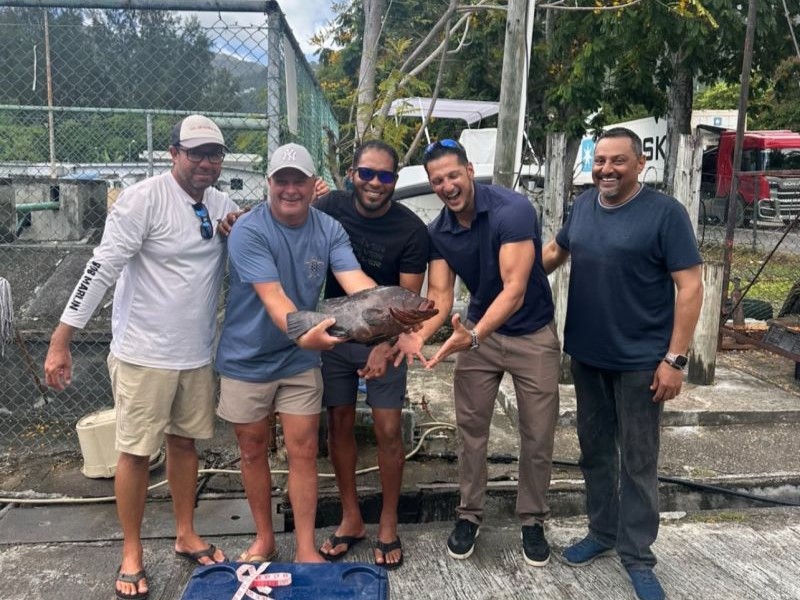
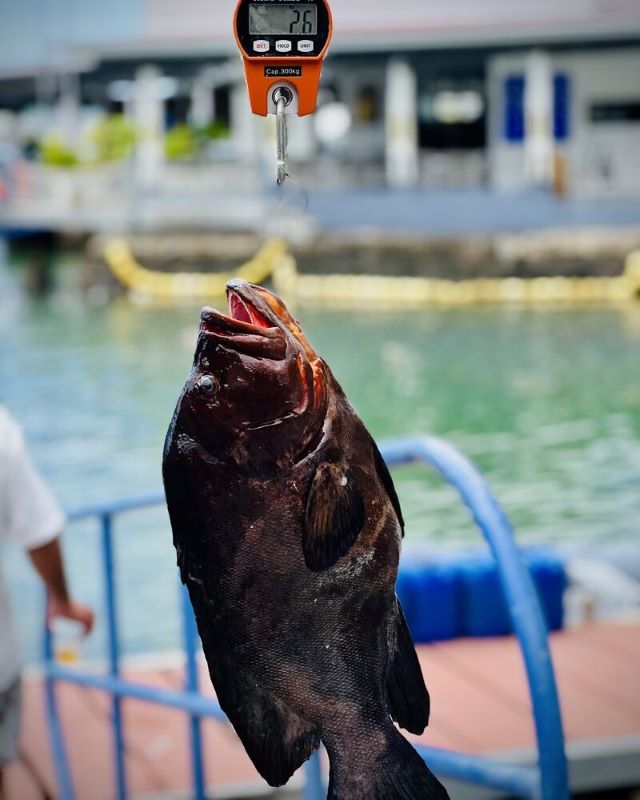
Not every day you get called down to the landing site to look at a possible world record. But that is exactly what happened to Dr. Ameer Ebrahim, director of Ameer Ebrahim Consultancy, working across environmental, marine and fisheries work in Seychelles. A visiting angler had landed a redmouth grouper — Aethaloperca rogaa, known locally as galfa — weighing 2.6 kg. The standing IGFA all-tackle record for the species sat at roughly 1.4–1.5 kg, set far away in the central Indian Ocean. This fish was nearly double.
Ebrahim was asked to confirm the species identification for the IGFA submission. By his own account, “it was an easy call on this one.” Now the ruling is pending, and the fingers are crossed.
The Line that Stuck
What stayed with Ebrahim wasn’t the weight on the scale. It was something the angler said afterwards: he has fished all over the world and never come across anywhere quite like Seychelles.
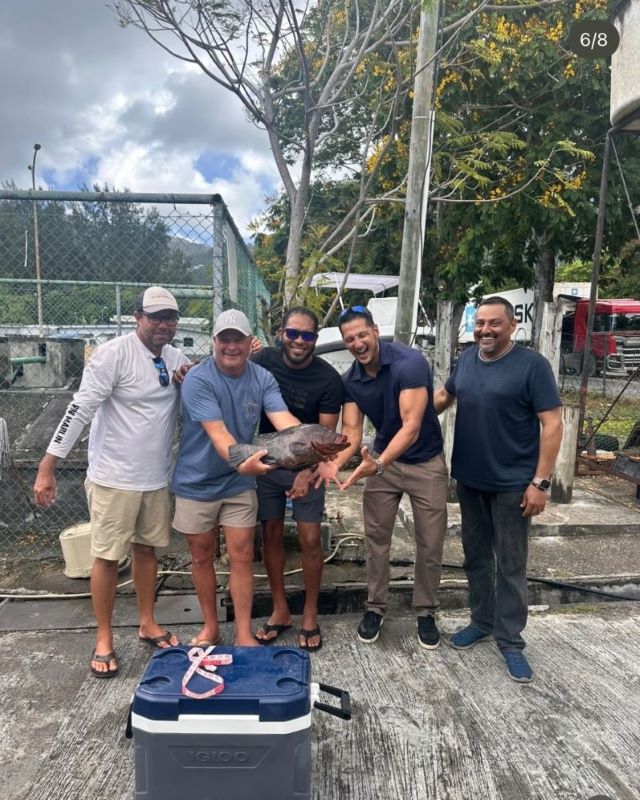
That is not a small compliment from a man who buys boat days for a living and has options on four continents. And it sits on top of a fact that Ebrahim finds harder to explain away. Seychelles already holds around 60-plus IGFA world records — an extraordinary tally for a nation of roughly 100 islands and fewer than 120,000 people.
“We’ve never really thought about what that’s worth,” he writes.
Belize Did the Arithmetic
The clearest counter-example comes from the Caribbean flats. In 2009, Belize enacted legislation that made catch-and-release mandatory for bonefish, permit and tarpon — the first country in the world to protect all three “Grand Slam” species this way, according to fisheries researchers working with the Turneffe Atoll guides. Roughly 92 per cent of sports fishers in the country target those three species, which tells you how much of the industry rested on the decision.
The economics have only strengthened since. Catch-and-release flats fishing now generates roughly BZ$246 million a year — close to 7 per cent of GDP — and supports around 6,000 jobs. Guides report that since the law came in, both the numbers and the sizes of fish have climbed. The conservation measure and the economic measure pulled in the same direction.
Costa Rica’s Uncomfortable Comparison
The second data point is sharper still, because it directly compares two ways of taking the same animal out of the same water. A study by the Billfish Foundation, Southwick Associates and the University of Costa Rica examined North American anglers visiting Costa Rica and found their spending generated about $599 million — around two per cent of GDP — along with roughly 63,000 jobs and $78 million in tax revenue. Commercial fishing for the same species produced about $528 million, 57,000 jobs and $68.6 million in taxes.
Put bluntly: leaving the fish alive out-earned landing it. Practitioners in the country put a finer point on it — a released sailfish circulates thousands of dollars through the local economy across repeat visits, while a dead one sold at the dock is worth a fraction of that.
What Growing This Properly Would Require
None of that argues for turning Seychelles into a charter-fishing free-for-all. Ebrahim is explicit that the model only works with guardrails, and there are three.
Catch-and-release as the default. Not as an optional courtesy offered by well-meaning skippers, but as the operating norm — the way Belize wrote it into law rather than left it to goodwill.
Licensing and catch reporting from charter operators. You cannot manage, market or price a fishery you cannot see. Reporting is what converts a reputation into evidence.
Room for local fishers to move into guiding. The Belizean and Costa Rican job numbers matter less for their totals than for who employs them: guides, deckhands, lodges, mechanics, restaurants. If sport fishing grows without a pathway for artisanal fishers into it, it becomes an imported industry on local water.
Done that way, Ebrahim argues, this is precisely the low-volume, high-value tourism Seychelles has spent decades saying it wants — more revenue per visitor, less pressure per reef.
The Record Nobody Has Filed Yet
The galfa may or may not be ratified. IGFA review takes time, and paperwork travels slowly between a landing site and a registry.
But the other claim doesn’t need a witness signature or a certified scale. Seychelles has, apparently without much deliberate strategy, accumulated one of the densest concentrations of game-fishing world records on earth relative to its size. An angler who fishes globally says he has not seen anywhere like it. Belize and Costa Rica show what happens when a government commissions the study and then legislates on the answer.
The question Ebrahim is really putting to his readers is administrative before it is ecological: has anyone in Seychelles ever valued this? So far, it does not look like it.
Dr. Ameer Ebrahim is a Seychellois marine scientist and Director of Ameer Ebrahim Consultancy, covering environmental, marine and fisheries work. Formerly head of Fisheries Management at the Seychelles Fishing Authority, he was the first Seychellois admitted to the global FishPath expert network, and now advises on fishery management and value chains across the Indian Ocean region.