Obudu’s Second Act: Can N60 Billion & an Oil Major’s Backing Finally Rescue Nigeria’s Most Famous Resort?
After more than a decade of decay, a revoked concession, and broken promises, Cross River State is betting N60 billion — and a subsidiary of an unnamed international oil company — on resurrecting one of Africa’s most iconic tourism destinations. But money alone won’t fix the infrastructure failures, access problems and community trust deficits that killed the last attempt.
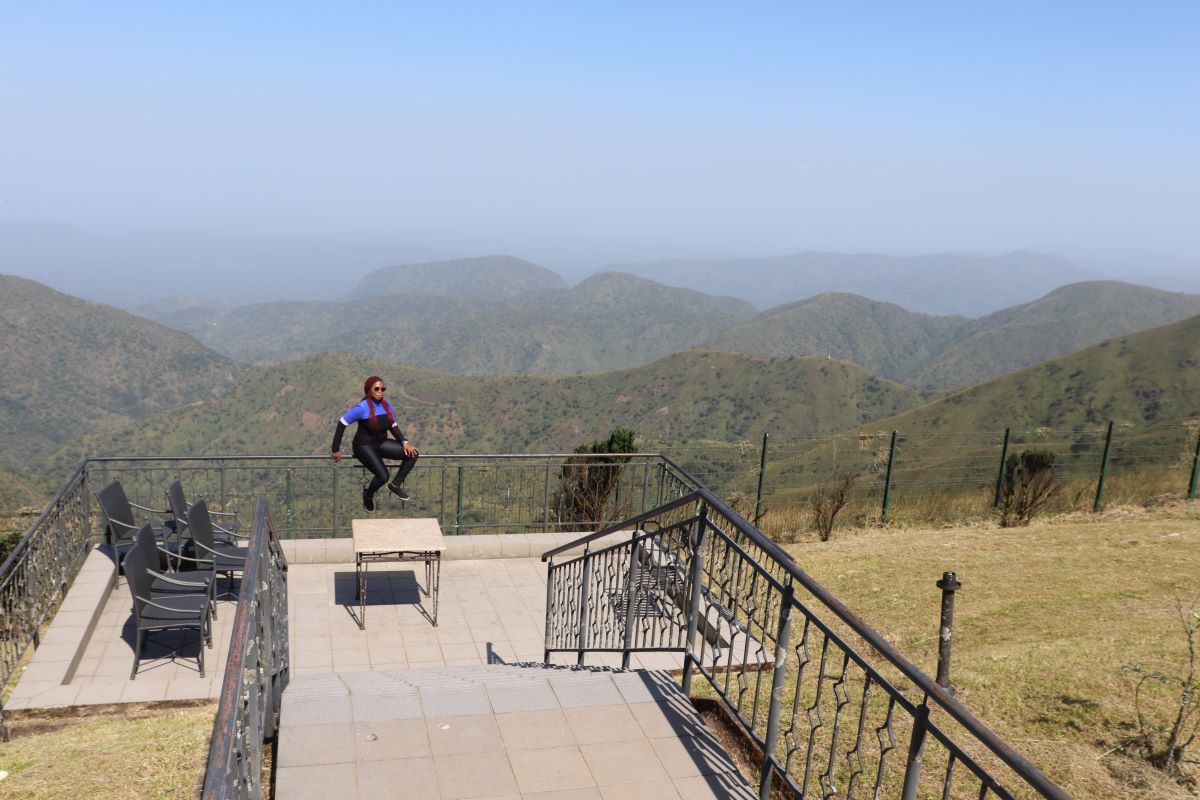
The mountain does not care about press conferences. It does not care about the handover ceremony, the stakeholders’ engagement in Sankwala, or the Special Adviser calling it a “new chapter” on television. Rain still falls hard enough to trigger a mudslide that collapses the road up the Oshie Ridge. The wind still finds every unsealed window. And the cable car — that four-kilometre promise suspended 870 metres above the forest floor — will either glide again or sit silent, and the mountain will remain indifferent.
What the mountain will not forgive is another round of announcements without execution. So it is worth pausing, before the cement trucks arrive and the press releases multiply, to ask the question a destination that has already failed once demands: is this revival actually viable — or is it just better funded?
The Numbers, The Backing, The Gap
In July 2026, Cross River State signed a 25-year concession with Living Curation Real Estate Ltd covering the Obudu Ranch Resort, Utanga Safari Lodge and the Bebi Airstrip. The project’s value is N60 billion. The company’s team lead, Col. Amit Ghosh, disclosed that Living Curation has operated in Nigeria’s oil and gas sector for roughly 20 years and has been active in Cross River State (Akamkpa LGA) for four and a half years — so the investor is not a stranger to the state.
More significantly, Dr. Francis Ntamu, Director General of the state’s Bureau of Public-Private Partnerships, revealed that Living Curation is a subsidiary of a major International Oil Company operating in Nigeria. He called N60 billion “a piece of cake” for the entity.
This is the strongest credibility signal the state could have deployed. An IOC-backed parent company brings deep capital, long-haul patience and — theoretically — operational discipline that an infrastructure-focused contractor like CIBA Construction Company Ltd, the 2017 concessionaire whose deal was revoked in March 2025 for failure to deliver, simply could not muster.
But here is the gap that must be acknowledged openly: the N60 billion figure and the IOC-parent claim come from a government official speaking on television, not from an audited disclosure or a prospectus. We have no independent verification that physical rehabilitation has visibly begun on the ground. The strongest evidence so far, as of mid-October 2026, remains the formal handover ceremony, the community engagements in Obanliku and the successful Bebi Airstrip test flight in August.
The announcements are flowing faster than the cement. That is not a criticism — it is a baseline fact that every observer of Nigerian public projects must carry.
What Has Changed Since the Last Concession Died
The 2017 deal with CIBA was not killed by a lack of ambition. It was killed by a lack of accountability. The government’s case was blunt: CIBA failed to make the investments it promised, including the renovation of the hotel and critical infrastructure, and did not remedy repeated breaches despite several opportunities. The result was what one former visitor described as weeping at leaking roofs while the cable car structures fell apart around them.
The new concession has responded to at least some of those failures with structural changes:
- A Project Implementation Committee and community liaison structures have been established to ensure transparency and protect host-community interests.
- The scope has been widened beyond accommodation and cable car to include Utanga Safari Lodge as a modern flora and fauna conservation centre dedicated to biodiversity protection, environmental education and ecological tourism — a move that anchors the resort in purpose rather than just luxury.
- Governor Bassey Otu has publicly framed the concession as not a sale: all assets and improvements revert to the state after 25 years.
- The complex was scheduled to close from September 1, 2026 for rehabilitation, following the Bebi test flight.
- The state has also injected a broader N18 billion into rehabilitating Obudu, Kwa Falls, Marina Resort and Tinapa under its “Season of Sweetness” tourism agenda.
- A soft-power signal has already landed: the Defence Intelligence Agency hosted defence attaches from Australia, Pakistan and other countries at the ranch, positioning it for diplomatic retreats and international conferences even before it reopens.
These are real steps. They do not make the project bulletproof. But they do suggest the state has learned at least one lesson from the 2017 failure: a concession without community structures and oversight mechanisms is just a signature.
The Infrastructure Questions Money Cannot Answer
N60 billion will repaint villas. It will replace glass. It will not, by itself, solve the two problems that have always made Obudu difficult to reach and hard to keep open.
Access remains a hillside gamble. In June 2026, a mudslide triggered by torrential rain cut the road connecting the resort base to the mountaintop, leaving motorcycles and footpaths as the only passage. Until the road is engineered to withstand the Sankwala Mountains’ wet season — or until the airstrip becomes a reliable commercial alternative — Obudu remains hostage to weather. The Bebi Airstrip test flight was a milestone, but commercial operations have not resumed, and the strip must meet Federal Airports Authority of Nigeria certification standards before any charter or scheduled flight can land there.
The cable car is a technical challenge, not a public relations one. The system, commissioned by President Olusegun Obasanjo and engineered by Ponet Nigeria Limited, ascends 870 metres vertically at five metres per second, carrying eight passengers per cabin in roughly six minutes. It was repaired and successfully tested in April 2020 after a period of disrepair. Getting it operational again requires engineering discipline, ongoing maintenance contracts and — perhaps most importantly — a funding line that survives the next budget cycle.
What This Means for Cross River State
For Governor Otu, Obudu is the centrepiece of a broader tourism transformation. He has announced plans to reposition the ranch as a five-star resort and livestock/export hub, partnering with the Federal Ministry of Livestock Development. The nearby Obudu Cargo Airport is nearing completion. The state has acquired two CRJ 1000 aircraft to complement Cally Air’s existing Boeing 737s. And the N18 billion injection into state-wide tourism assets is explicitly tied to preparing for the 20th Christmas Festival & Carnival Calabar this December.
If Obudu succeeds, it becomes the anchor that makes a year-round tourism economy possible — shifting Cross River from a seasonal destination centred on the Calabar Carnival to a state that draws visitors in every quarter. The conservation angle at Utanga, the airstrip, the cargo airport, the diplomatic positioning — these are all pieces of a single strategy.
But if Obudu fails again, the cost is not just financial. It is reputational. Cross River has already watched one concession die. Investors and partners will ask harder questions the next time. And the host communities of Obanliku, who have endured decades of infrastructure decay with remarkable patience, deserve an answer to the question that every abandoned resort in Nigeria eventually forces upon its neighbours: why did this time feel like the last time?
What This Means for Nigeria
Obudu is Nigeria’s most famous mountain resort, and it has become the country’s most visible tourism cautionary tale. It was established in 1951 as the Obudu Cattle Ranch by a Scottish rancher, M. McCaughley, enhanced dramatically during Governor Donald Duke‘s tenure (1999–2007) with the cable car, water park and canopy walkway, and then left to decay under political neglect and infrastructure failure.
A successful revival would prove something that Nigerian tourism has struggled to demonstrate: that a state-level tourism asset can be rehabilitated through public-private partnership, operated sustainably for decades, and create lasting value for both the destination and the surrounding communities. It would signal to other states — Plateau, Enugu, the Niger Delta highlands — that their own tourism assets are not beyond saving.
A failure would reinforce the cynicism that already shadows Nigeria’s tourism sector: that every concession is a contract to forget, and every reopening is just another press conference before the next breakdown.
The Test Is Not the Opening. It Is the Fifth Year
No one will be able to judge the viability of this N60 billion revival on opening day. The ribbon-cutting will be beautiful. The international attaches will smile for photographs. The cable car will run once, twice, maybe a dozen times while the cameras are rolling.
The test is the fifth year, when the initial press coverage has faded, the rainy season has tested the road again, the cable car has carried ten thousand passengers without a breakdown, the Utanga conservation centre has published its first peer-reviewed paper, and a woman from an Obanliku community managing a supply contract can say — without being asked — that the resort has changed her family’s trajectory.
That is what a destination that has failed once must prove. Not that it can reopen. That it will stay open. The mountain has waited this long. It can wait to see whether this time, the people below do the work properly.