Kenya’s Black Rhinos Reach Tipping Point as KWS & Ol Pejeta Plan Strategic Decongestion
With the conservancy’s black rhino population exceeding its land’s carrying capacity, the Kenya Wildlife Service and Ol Pejeta leadership have agreed to strategic interventions—including animal relocation—to ensure the long-term survival of East Africa’s most critical rhino stronghold.
In a working session marked by pragmatic collaboration rather than diplomatic formality, the Kenya Wildlife Service (KWS) and the Ol Pejeta Conservancy (OPC) have agreed to implement immediate measures to decongest the conservancy’s rhino sanctuary.
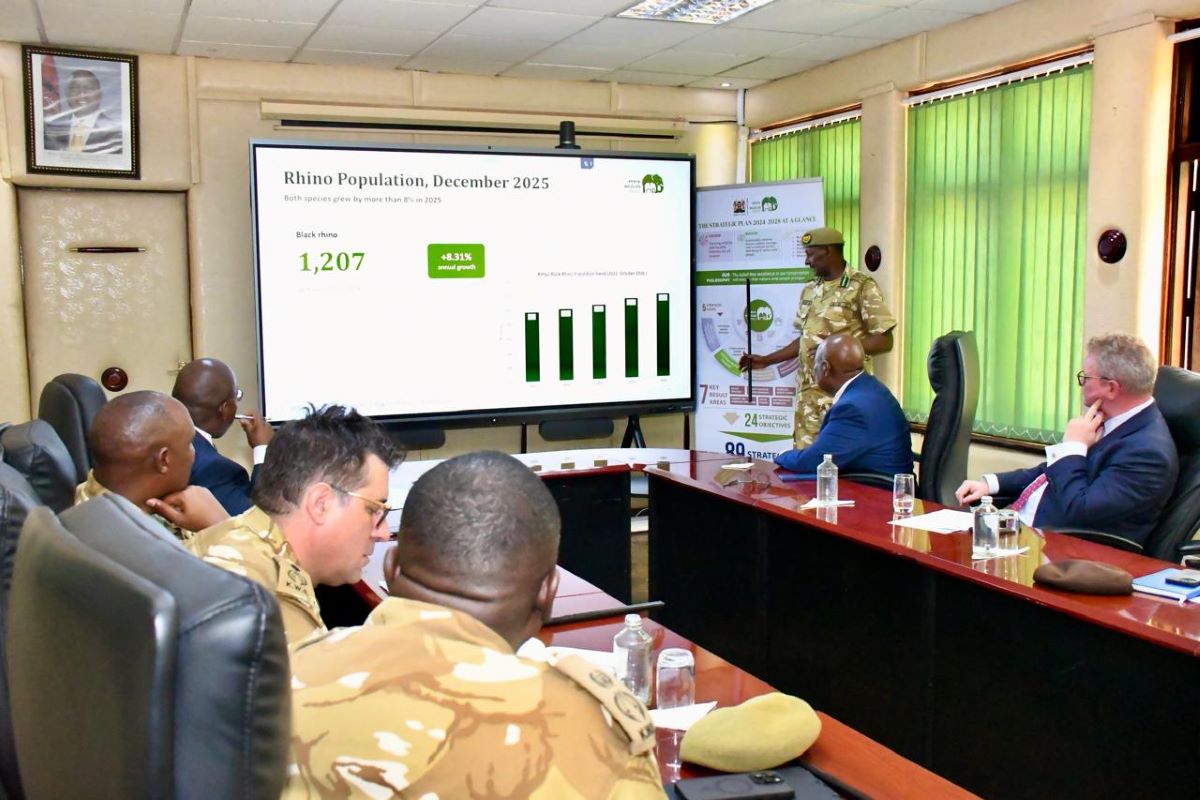
The delegation led by OPC Chairman Mr. Philip Coulson and included former Speaker of the National Assembly, Hon. Francis Ole Kaparo, met with KWS Director General Prof. Erustus Kanga. The meeting which was hosted on 5 November 2026 at KWS headquarters was to address a critical challenge: the sanctuary has exceeded its carrying capacity, necessitating timely interventions to secure additional space for rhinos and other wildlife.
A Conservation Success Under Strain
Ol Pejeta remains one of Kenya’s most vital conservation assets. It hosts the largest black rhino population in East Africa and serves as the last refuge for the northern white rhino, of which only two females remain on Earth.
Decades of rigorous protection, monitoring, and veterinary care have driven significant population growth—a national achievement that has now created its own set of ecological pressures.
When rhino density outpaces the land’s ability to sustain it, competition for food and water intensifies, territorial conflicts increase, and breeding rates slow. Some of these conflicts end fatally. Carrying capacity is not merely an abstract scientific metric; it is the threshold at which a landscape can no longer support its inhabitants without inflicting harm. Once crossed, ecological decline can be swift and difficult to reverse.
Creating Room to Thrive
To mitigate these risks, consultations focused on practical solutions, primarily the relocation of select animals to other suitable habitats. This strategy aligns directly with the Kenya Rhino Range Expansion initiative, a broader national effort designed to:
- Create new secure habitats for rhinos.
- Reduce pressure on existing, overcrowded sanctuaries.
- Grow the national rhino herd toward the target of 2,000 animals by 2037.
Relocation is a complex operation that extends far beyond simply moving animals from one fence to another. Each translocation requires meticulous assessment of receiving habitats, genetic diversity considerations, robust security arrangements, and protocols for long-term monitoring. Every decision is weighed against the welfare of the animals and the interests of the communities who share the landscape with them.
A Shared Responsibility
The engagement underscores KWS’s ongoing commitment to oversight and collaboration with conservation partners. It also reflects key pillars of the KWS Strategic Plan 2024–2028, which recognizes that the future of Kenya’s wildlife depends on strong partnerships between government, private conservancies, local communities, and conservation organizations.
No single institution can bear the weight of rhino conservation alone. It requires shared planning, resources, and accountability. The Service provides national oversight, regulatory authority, and field expertise. Conservancies contribute land, investment, and daily management. Communities bring local knowledge and, increasingly, a direct stake in the outcome. Each party depends on the others, and none can succeed in isolation.
KWS remains committed to working closely with Ol Pejeta and all its partners. The challenges facing Kenya’s rhino population are real, but so is the institutional commitment to overcoming them—ensuring that Kenya’s rhinos, and indeed its wider wildlife, continue to recover and thrive for generations to come.