We Were Never Strangers
Across fifty-four nations and a thousand traditions, Africa has always known how to bring people home to each other
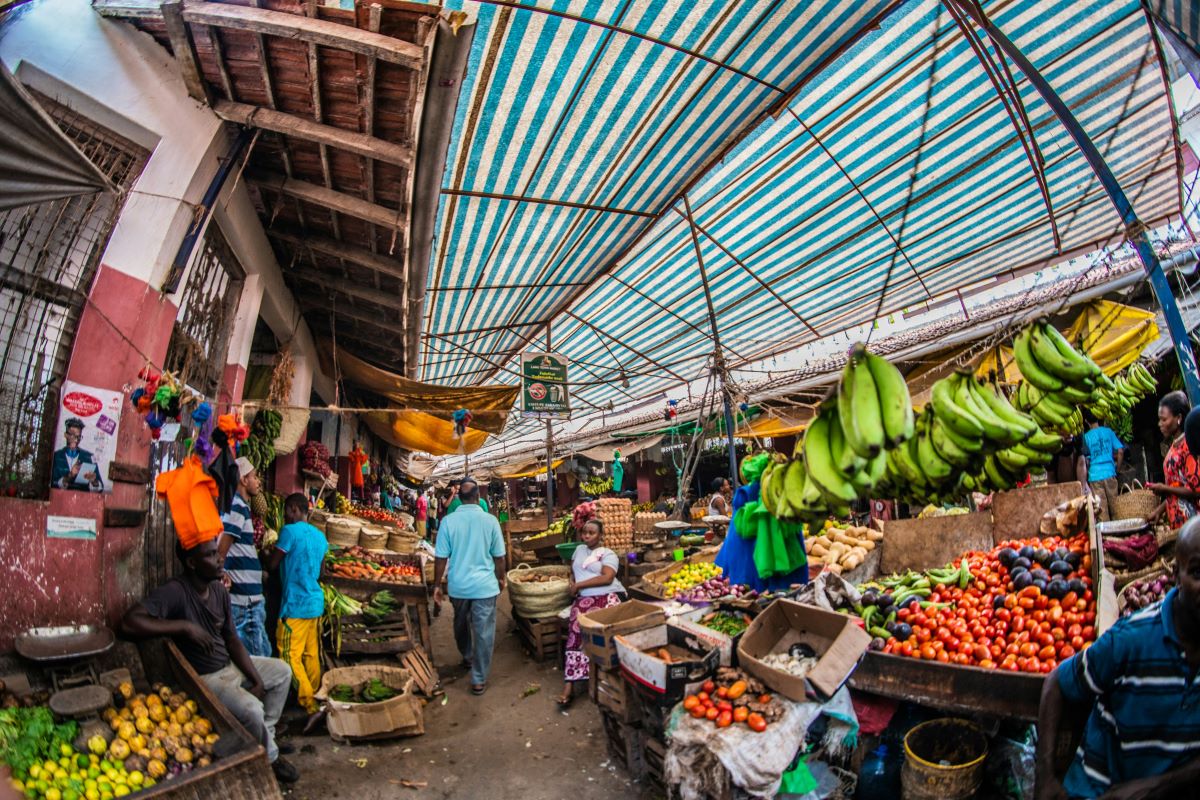
There is a moment that happens in markets across Africa that is nearly impossible to explain to someone who has not experienced it. A traveller arrives as a stranger, speaking no language, standing in a place where the colours, sounds, and smells are layered and completely unfamiliar. Then, someone catches their eye and smiles. Something in the chest unlocks. In an instant, the stranger is no longer a stranger.
This happens in the medinas of Morocco, the fish markets of Dakar, the shores of Lake Victoria, and the narrow lanes of Addis Ababa. It happens because Africa, in all its staggering diversity, has built something into the fabric of its cultures that many parts of the world have forgotten: it knows how to connect people. Not as a philosophy or a tourism slogan, but as a daily, living practice found in food, festivals, and the way joy is multiplied.
The Drum Knows Before You Do
Ask anyone who has stood inside the Damba festival in northern Ghana what they remember most, and few will mention what they saw first. They will mention what they heard. The drumming begins before sunrise, moving through the walls of a sleeping traveller’s building, prompting a bodily response before the mind catches up. By the time they step outside, the streets are alive. The chief’s procession weaves through a crowd that is not watching but participating, because in Dagbon culture, there has never been a distinction between the two. The drumbeat is not a soundtrack; it is a summons.
Nowhere is this summons more visceral than with the Royal Drummers of Burundi. The Ingoma drummers do not simply play; they move. Dressed in the red, green, and white of the national flag, they perform on a central mound with their entire bodies. Drumsticks rise and fall in unison, voices lift, and the ensemble becomes music, dance, ritual, and history. The tradition stretches back to the royal courts, where the drum was the heartbeat of the state—a symbol of power, fertility, and unity. In the Kirundi language, the word for drum (ingoma) is the same as the word for kingdom. UNESCO recognised this ritual as an Intangible Cultural Heritage of Humanity in 2014, and standing before it, a traveller understands why. This is not a performance for visitors; it is a living tradition carried forward with fierce pride.
Carry that feeling eastward to Rwanda, and the rhythm finds a different expression in the Intore, the “Chosen Ones.” These traditional warriors have been moving in ceremony for centuries. Men leap with extraordinary precision, headdresses of white colobus monkey fur catching the light, mimicking battle with invisible adversaries. What strikes the thoughtful traveller is not just the spectacle, but the fact that this tradition survived everything Rwanda survived in the twentieth century. On the other side of unimaginable loss, a community chose to return to its dances, performing them not as a wound but as a declaration: We are still here.
This shared spirit of connection runs deep. In Zimbabwe, the Bira ceremony gathers a community through the night to connect with ancestral spirits through music. Nobody is a guest; everyone is family, including the ancestors. In Ethiopia, the Timkat festival transforms cities into one moving body, with tens of thousands in white filling the streets, candles burning in the cold air, and the city exhaling together at sunrise.
Cloth, Colour, and Food as Connection
One of the most beautiful aspects of travelling across African cultures is discovering how much is communicated without a single word. In Ghana, Kente cloth tells a story. Gold threads speak of royalty; green carries the earth and growth; black holds the weight of maturity. A master weaver in the Ashanti region will say that every cloth is a sentence. When you know how to read it, a room full of people becomes a room of people speaking an ancient language.
In East Africa, Maasai beadwork carries its own grammar. A necklace is not just decoration; it is biography, status, and love. When two Maasai women meet, an exchange of glances at each other’s beadwork is a whole conversation happening in seconds—an intimacy of shared culture.
If the drum is Africa’s first language of connection, food is the second. Across the continent, food is rarely eaten alone. In Ethiopia, injera laid out on a communal platter is a statement: You are not individuals eating near each other; you are one table. In Senegal, thieboudienne is served in a single large bowl from which everyone eats. The preparation is a community event where stories are exchanged and children learn without being taught. In Nigeria, the arrival of a guest triggers a domestic mobilisation. To let someone leave without eating is a failure of fundamental human obligation. The guest is not an interruption; the guest is the point.
Mgeni ni baraka. A guest is a blessing. This sentiment lives in kitchens from Lagos to Lusaka. The stranger at the door is not a problem to be managed; they are an opportunity to practise what a community believes about humanity.
Grief, Joy, and the Shared Self
What Africa understands about joy, it understands equally about sorrow. The Famadihana of Madagascar, the “turning of the bones,” sees families exhume ancestors, wrap them in fresh cloth, dance with them, and tell them the news of the family. To an outside eye, it looks strange. To the Malagasy, it is a family reunion. The ancestors remain present, interested, and loved.
Across the continent, funerals in Ghana are famously joyful celebrations of a life fully lived. This is not denial; it is a cultural insistence that even in grief, the community holds you.
Africa is not one culture. The Atlas Mountains of Morocco and the reed islands of Lake Chad are not the same world. The Zulu kingdom and the Tuareg nomads carry entirely different histories. But underneath the glorious difference, there is a shared instinct: an orientation toward the collective. The Zulu say Ubuntu: Umuntu ngumuntu ngabantu (A person is a person through other persons). The Akan of Ghana say Onipa na ohia onipa (A person needs people). The Swahili say Mtu ni watu (A person is people).
Different languages. Different geographies. The same truth, arrived at independently and practised every day in the markets, kitchens, and festival grounds of a continent that has never needed to be taught how to belong to each other.