
Magical Kenya: The Colours, the Sounds & the Fanfare of the Festival Season!
Kenya is usually sold to the world in two colours: the gold of the savannah and the blue of the coast. Lions at dawn. Dhows at dusk. It is a true picture, but an incomplete one, because it leaves out the sound. Drive through Kenya during festival season and you will hear it before you see it: the low percussion of Turkana song carrying across a lakeshore, the creak of dhow rigging catching wind off Lamu, the ululation that rises when a Maasai age-set completes a ceremony that has outlasted every border drawn across their land.
These are not staged performances built for a stage. They are Kenya’s forty-plus communities marking time in their own languages, on their own calendars, and increasingly, opening the circle wide enough to let a curious traveller stand at its edge. The Kenya Tourism Board has positioned cultural festivals as a key pillar of its tourism diversification strategy, complementing the safaris and beaches for which the country is best known. What follows are five gatherings that make the case for a different kind of Kenyan holiday — one built around the calendar of a people rather than the convenience of a tour bus.
Tobong’u Lore: Welcome Home to the Jade Sea
There is a reason people describe Lake Turkana by its colour before anything else. The water turns a startling jade in certain light, ringed by volcanic rock and desert wind, and it is against this stark backdrop that Kenya’s largest cultural festival unfolds each year in the town of Loiyangalani. Tobong’u Lore means “welcome home” in Turkana, and the name carries real weight. Since 2008 it has brought together more than a dozen communities from the Turkana Basin, among them the Turkana, Samburu, Rendille, Dassanach, Gabra and the El Molo, one of Kenya’s smallest indigenous groups.

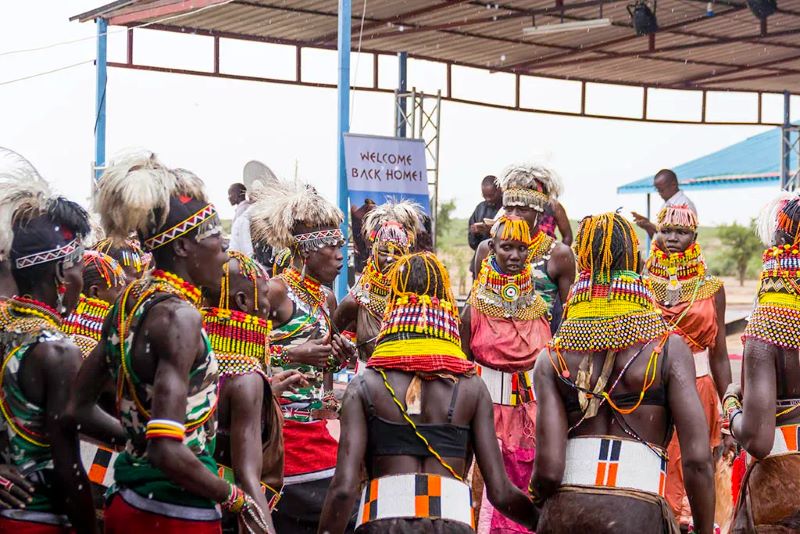
What makes the festival remarkable is not only its scale but its purpose. These communities have long, complicated histories of cattle raiding and territorial conflict, and Tobong’u Lore was created specifically to interrupt that pattern — giving elders a forum to pour libations to shared ancestors and giving young people a reason to gather that has nothing to do with grazing rights. Over three or four days, that translates into a parade of hand-beaded jewellery and dyed leather, wrestling and spear-throwing contests, and dancing that visitors are invited to join rather than simply photograph. For the traveller willing to make the journey north, far past where the tarmac gives out, the reward is a festival unfiltered by tourism infrastructure, still built by and for the people who call the lake home.
Lamu: A Living Museum That Races Donkeys
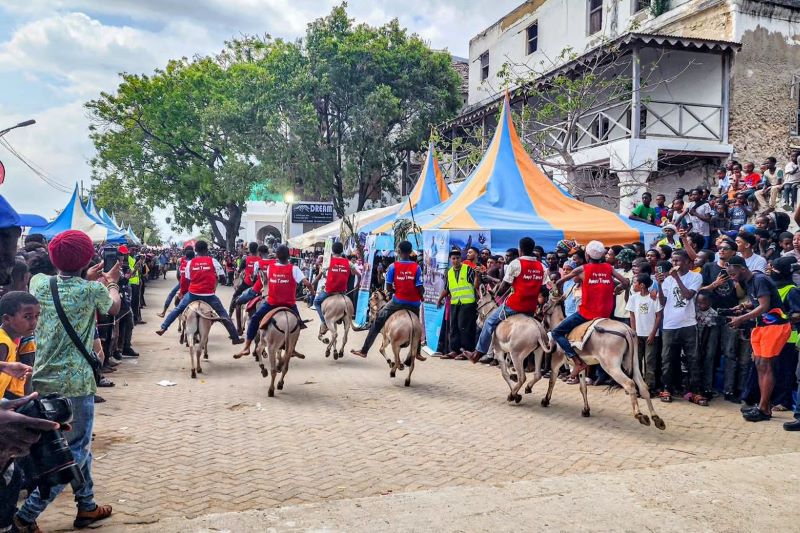
If Turkana is Kenya’s most remote festival, Lamu is its most theatrical. Every November, on an island where cars have never really taken hold, this UNESCO World Heritage town turns its narrow coral-stone alleys and turquoise channel into a four-day stage for Swahili culture at its most exuberant. The signature event — and the one visitors talk about for years afterwards — is the donkey race: a sprint through winding streets by animals that are otherwise Lamu’s primary mode of transport, ridden by young jockeys who train for the honour for months beforehand. It is chaotic, slightly absurd, and completely earnest — the spirit of the whole festival.
Out on the water, the dhow races tell a quieter story about the same instinct to preserve what modern convenience threatens to erase. As outboard engines and fibreglass hulls become easier to buy, Lamu’s sailors keep racing traditional wooden dhows under sail alone, weaving through channel buoys in a display of seamanship that has defined the island for centuries. Between races, the festival fills out with taarab music, Swahili poetry duels, henna painting, and a version of the ancient board game bao, played with the seriousness of a chess championship. It is less an event to attend than a town to step inside for a weekend — where the past is not preserved behind glass but still very much in use.
Lake Ol’ Bolossat: Where Culture Meets Conservation
Not every Kenyan festival is centuries old. Lake Ol’ Bolossat’s is proof that new ones can matter just as much. Held in July on the shores of Nyandarua County’s only natural lake, this cultural and tourism festival is barely a few years old, but it has become a template for what the Kenya Tourism Board wants to see more of: heritage and environmental stewardship treated as one project rather than competing ones.

The 2026 edition made that link explicit, pairing traditional music, dance and craft displays with public updates on an ongoing hippo relocation programme — part of a broader effort by the Kenya Wildlife Service to restore the lake’s ecosystem and protect the community around it. Visitors come for the boat rides and local cuisine, but they leave having absorbed something about how the region’s tourism board sees its future: five million visitors by 2027 will mean little if the lakes, hippos and grasslands that draw them are not still standing to welcome the next wave. It is a small festival by Kenyan standards, but a telling one, and county officials hope it will grow into a fixture on the national festival calendar the tourism board is building year by year.
Maa Cultural Week: The Maasai on Their Own Terms
Ask most travellers what they associate with Maasai culture and they will likely describe a village visit slotted between game drives — ten minutes of dancing arranged for a busload of tourists. Maa Cultural Week is the corrective. Spread across Narok, Kajiado, Laikipia, Samburu and Baringo counties, and coinciding in its Mara edition with the great wildebeest migration, this is a gathering built by Maa-speaking communities for their own cultural continuity, with visitors welcome to witness rather than direct it.
Across the week, that means traditional dance competitions, warrior displays, beadwork exhibitions, and a fashion day dedicated to ornaments, headdresses and dress codes that carry meaning far beyond decoration. Local women use the gathering as a genuine marketplace for their beadwork, and county governments increasingly fold conservation dialogue into the celebration, treating cultural pride and wildlife protection as two ends of the same rope. For a traveller already planning a Mara safari, timing a trip around Maa Cultural Week turns a wildlife holiday into a fuller introduction to the region, with its people as central to the story as its lions.
Why This Matters
The Kenya Tourism Board has been candid about its reasoning: cultural festivals are the country’s answer to a simple problem — the Big Five and the beaches can only carry a tourism economy so far before travellers start looking for something less packaged. These festivals offer participation rather than observation. A visitor to Tobong’u Lore is not watching a reenactment of Turkana peacebuilding; they are standing inside an active one. A dhow race in Lamu is not staged for cameras; it is raced because the skill it requires is at risk of disappearing.
For the traveller drawn to Kenya’s wilder, quieter corners as much as its famous ones, that distinction is the whole point. These festivals ask more of a visitor than a safari does: more planning, more patience with dust and heat and distance. In exchange, they offer something a lodge veranda cannot: a seat, briefly, inside a country’s own understanding of itself.