Hotel 247’s Restaurant Launch Marks a New Era for Black Women in Mpumalanga Tourism
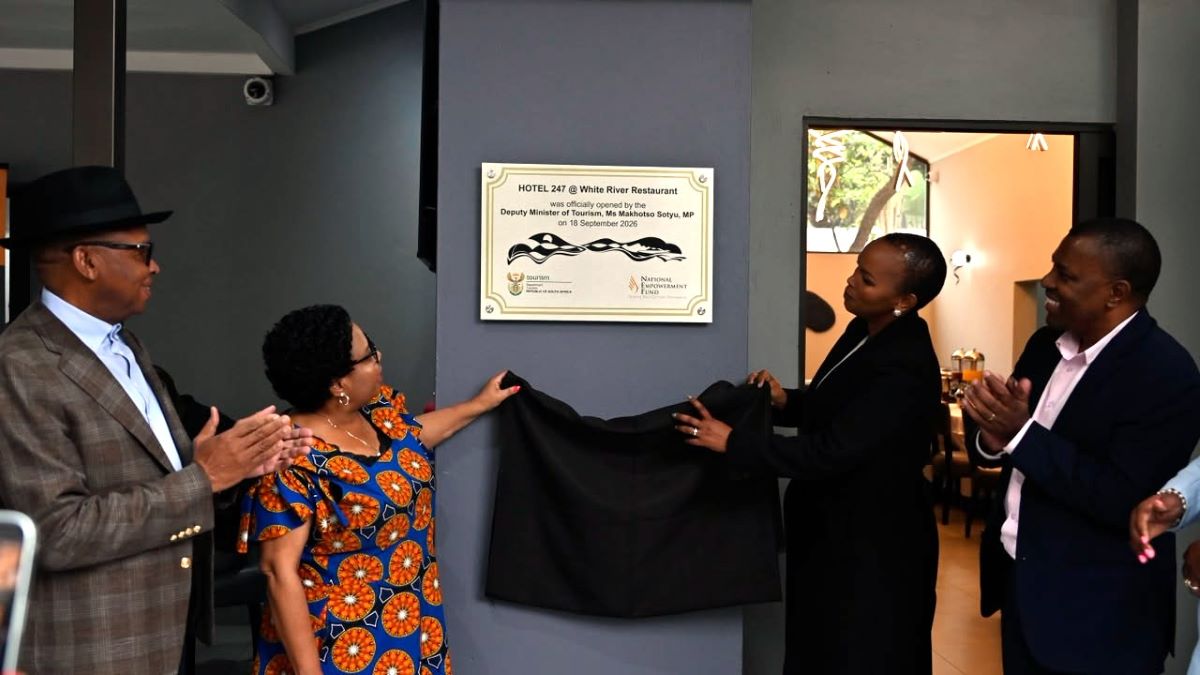
White River, Mpumalanga — In a ceremony that blurred the lines between policy and practice, the National Empowerment Fund (NEF) and the Department of Tourism officially launched the refurbished restaurant at Hotel 247 today, Friday 18 September 2026. The event was less about a ribbon-cutting and more about a tangible declaration: transformation in South Africa’s tourism sector is no longer a distant goal, but a visible reality built on ownership, resilience, and strategic finance.
The launch brought together a formidable coalition of leaders, including Deputy Minister of Tourism Ms. Makhotso Sotyu, Deputy Minister of Police Mr. Cassel Mathale, Mpumalanga MEC for Economic Development and Tourism Ms. Jesta Sidell, NEF CEO Mr. Mziwabantu Dayimani, and the driving force behind the enterprise, Ms. Khosi Mthalane. Together, they celebrated a milestone that promises to ripple far beyond the dining room doors.
A Bold Bet on Resilience
At the heart of this story is Ms. Khosi Mthalane, a woman who didn’t just survive the pandemic but seized it. Acquired in 2021 when the global tourism industry was paralyzed, Hotel 247 was rebranded from its former identity into a 100% black woman-owned, three-star establishment. Today, it stands as a beacon of the Lowveld’s hospitality sector, offering 52 rooms, conferencing services, and a dining experience that has just been significantly upgraded.
The recent investment, totaling over R3.5 million, was a mosaic of support: a R1.65 million grant from the Tourism Transformation Fund (TTF), a R1.65 million senior loan from the NEF, and R242,600 in alternative-energy funding.
But money alone doesn’t build a legacy. It was Mthalane’s vision that turned these funds into modernization. The restaurant’s seating capacity has swelled from 140 to 200 patrons, new furniture and equipment now grace the space, and alternative-energy infrastructure has been installed to ensure operational resilience. The impact is immediate: five new permanent jobs have been created, supported by 15 temporary roles during the renovation phase, bringing the hotel’s total workforce to 30.
Beyond Funding: The Architecture of Growth
Deputy Minister Sotyu, speaking with a conviction that resonated through the hall, reminded the audience that tourism is economic activity in its truest form. “Tourism transformation becomes meaningful when black entrepreneurs are able to own productive assets,” she stated. “We want to see more women participating in tourism not only as employees, but as owners of sustainable enterprises that create employment and contribute to their communities.”
This sentiment was echoed by NEF CEO Mr. Mziwabantu Dayimani, who framed the project as a blueprint for development finance. “The true measure of investment is not simply how much funding we approve, but what that funding enables,” Dayimani said.
“At Hotel 247, we see an entrepreneur strengthening her business, expanding capacity and improving the guest experience. Our ambition is for that growth to extend beyond this property, creating opportunities for suppliers, tourism operators and other businesses in the surrounding economy.”
A Web of Opportunity
The launch also served as a showcase for the wider ecosystem that supports such growth. In a move that highlighted the interconnectedness of the local economy, four NEF-supported enterprises exhibited their wares: Maduka Resources, Times Ten Workwear, Mbombela Experience, and Sibusiso Mogale Production.
These exhibitors—spanning engineering, manufacturing, tourism, and agriculture—illustrated the potential for commercial relationships across sectors. Notably, Mbombela Experience, a TTF beneficiary, offered tours and transfers that connect visitors to the region’s iconic attractions, proving that one successful hotel can anchor a web of local services.
Safety and Sustainability: The Foundations of Trust
As tourism recovers and expands, the question of safety remains paramount. Deputy Minister of Police Mr. Cassel Mathale underscored the necessity of collaboration in creating destinations where visitors feel secure. “A successful tourism economy depends on visitors feeling safe and communities benefiting from the opportunities tourism creates,” he said. “Safety is a shared responsibility that requires cooperation between law enforcement, government, businesses and communities.”
This call for unity was met with a nod from Mpumalanga MEC Ms. Jesta Sidell, who emphasized that the province’s natural beauty is only as strong as the quality of its enterprises. “Investments such as this one strengthen our destination while creating opportunities for businesses operating across the tourism value chain,” Sidell noted. “We want visitors to stay longer, experience more of our province and contribute to local economic activity.”
The Entrepreneur’s Vision
For Ms. Khosi Mthalane, the launch is a validation of her decision to invest during a time of uncertainty. “When I acquired Hotel 247, I saw an opportunity to build a business that could grow and compete while creating opportunities for others,” she reflected. “This refurbishment allows us to offer our guests an improved dining experience and serve more customers. Our focus now is to make this investment work by delivering excellent service and building a stronger, sustainable business.”
As the sun set over White River, the refurbished restaurant at Hotel 247 was more than a venue for meals; it was a testament to what happens when policy meets grit, when grants meet ambition, and when a woman with a vision decides to build when others retreat. In the heart of Mpumalanga, a new chapter of inclusive, competitive, and transformative tourism has officially begun.