Bernard Onguso on the “Financial Plumbing” Powering Africa’s 2050 Aviation Future
The Founder and Practitioner-Architect explains why Africa’s energy crisis was never about a lack of oil—it was about a lack of vision. From the Lamu refinery to the digital rails of PAPSS, Onguso breaks down the three pillars required to power African aviation to net-zero.
Most people look at a map of Africa and see pipelines as the solution to the continent’s energy challenges. Bernard Omboto Onguso sees something else entirely: a failure of imagination and a crisis of capital structure.
As the founder behind the push to fuel African aviation and a practitioner-architect of the continent’s energy future, Onguso argues that the energy problem isn’t about the molecules—we have plenty of them. It is about the “poor term sheets” that prevent those molecules from flowing freely.
“We are standing on the precipice of a massive convergence,” Onguso declares. “By 2050, Africa won’t just be a consumer of energy. It will be the architectural engine of its own net-zero transition. But to get there, we have to stop looking at energy security as a policy theory and start building it as a physical and financial reality.”
Onguso’s framework for this transition is built on three non-negotiable pillars: Physical Infrastructure, Financial Plumbing, and a Bankable Operating System.
Pillar 1: The Concrete Reality
Theory is essential, but execution looks like concrete. For Onguso, energy security requires physical corridors that bypass maritime choke points and secure local supply chains from the ground up.
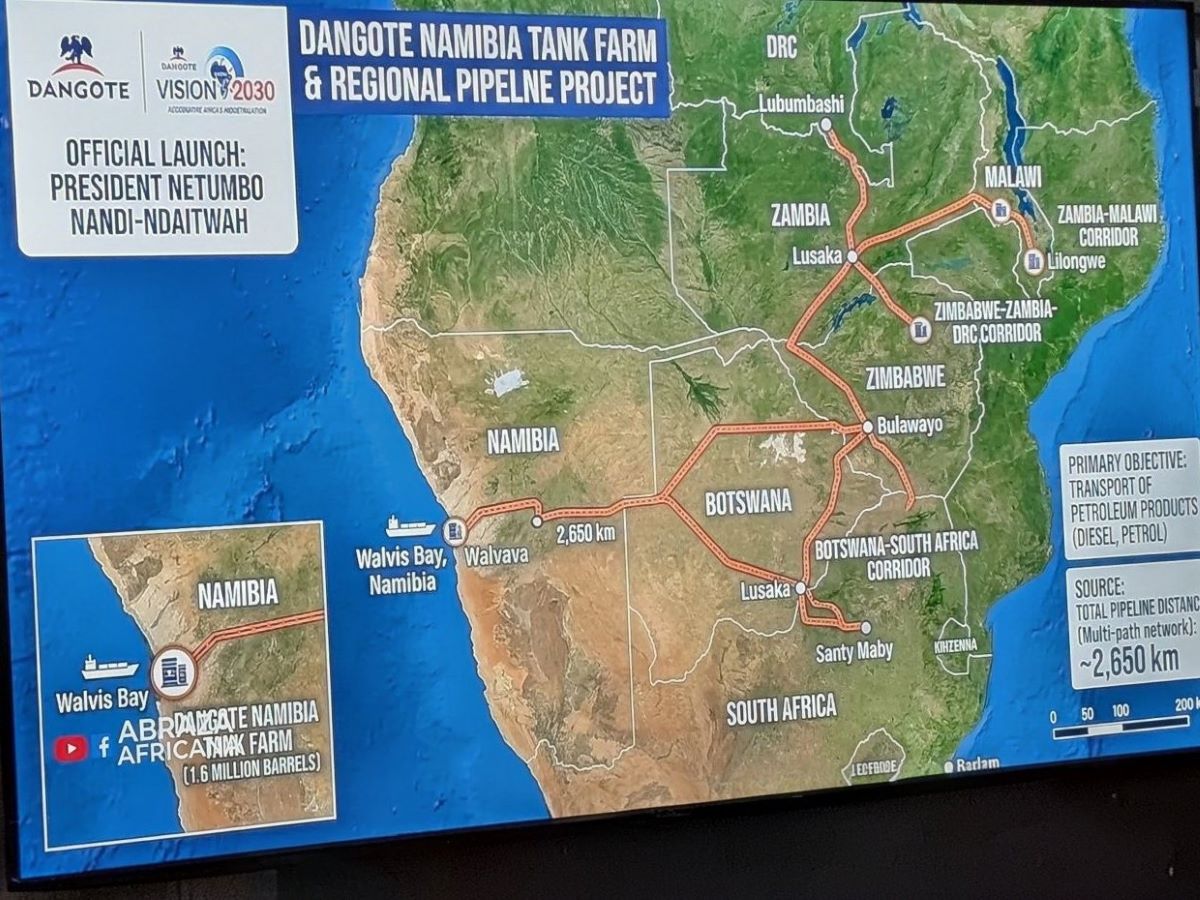
“We are looking at a massive expansion of multi-path networks,” he explains. “From the ~2,650 km pipeline arteries connecting Walvis Bay to Southern Africa’s industrial heartlands, to the East African front featuring a planned 700,000-barrel-per-day refinery in Lamu coupled with a 24.76% stake in the Kenya Pipeline Company.”
This expansion is continental. Plans are already underway for a new undersea pipeline linking Dangote’s Lagos refinery to Ghana (via Togo) by 2028. This is no small feat; it is a strategic footprint proving that large-scale continental execution is entirely possible, powered by visionary capital deployments from leaders like Aliko Dangote.
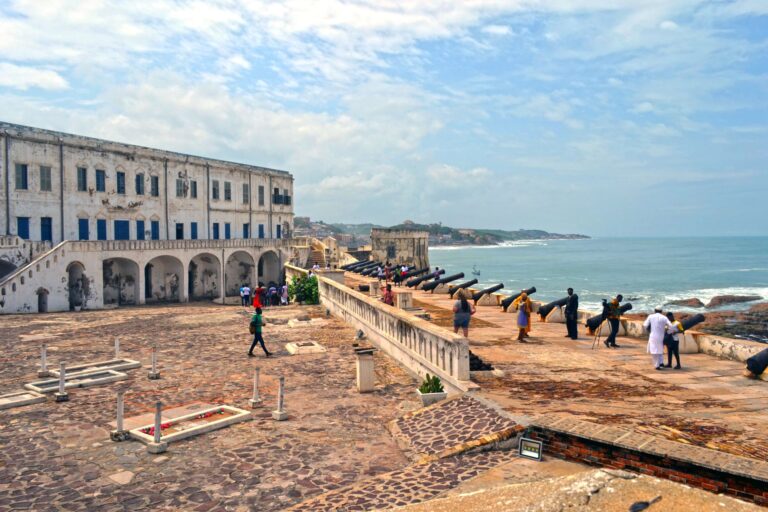
“Ethiopian Airlines anchoring Bishoftu International Airport is another fine example of this,” Onguso notes. “It is optics meeting reality—concrete corridors and robust infrastructure being built country by country, deal by deal.”
Pillar 2: The Financial Plumbing
If physical infrastructure is the body of African energy, financial plumbing is the blood. African carriers have long faced structural markups driven by foreign exchange (FX) latency and fragmented supply chains.
Onguso sees a solution in the rapid integration of digital rails. By integrating mobile money systems like M-Pesa with continental payment infrastructure like the Pan-African Payment and Settlement System (PAPSS), we can enable instant local-currency settlements.
“This eliminates the 17% cost penalty from ticket markups that has historically bled African carriers dry,” he says.
But the financial innovation goes deeper. Onguso points to Sustainable Aviation Fuel (SAF) certificates—SAFc—as a new frontier. This mechanism allows African producers to earn hard currency by supplying global carriers, while the physical fuel simultaneously powers regional fleets. It is a dual-engine financial model that keeps capital within the continent.
Pillar 3: The Bankability OS
“Projects in frontier markets don’t die from bad molecules,” Onguso asserts. “They die from poor term sheets.”
To achieve financial close before the first brick is even laid, Onguso argues that risk must be decoupled across three distinct pillars:
- The Airline: Acting as the anchor of offtake with an enforceable take-or-pay agreement.
- The Fuel Supplier: Providing infrastructure that reduces CAPEX drag.
- The Tech Partner: Handling modular execution to isolate operational risk.
“When you structure a deal this way, you are no longer asking for charity. You are offering a bankable, de-risked investment opportunity to the world,” he says.
The 2050 Convergence
For Bernard Onguso, the future of African energy is not a distant dream—it is a localized, bankable reality in progress. His vision is one where African aviation is powered by African capital and African execution, bridging the gap between global net-zero goals and frontier market potential.
“The 2050 convergence isn’t a policy theory,” Onguso concludes. “It’s localized refining, financial plumbing, and bankable cross-border corridors, executed in real-time. Africa’s time is now.”
As the continent scales toward 2050, the question is no longer if Africa will power its own future, but how quickly the world will catch up to the architects already building it.
Bernard Omboto Onguso is an independent SAF & Jet A-1 strategist with over 30 years of refinery-to-wing experience at Eni, Shell, and TotalEnergies. He is the author of the Fueling African Aviation Trilogy and the founder of the Global Investor Portal at fuelingafricanaviation.com. He was a panelist at ILA Berlin 2026, representing Africa on SAF.