The Paradox of the Pearl: Uganda’s Tourism Boom Masks a $50 Billion Blind Spot
Our East Africa Head of Media, Emmanuel Kintu explores the gap between Uganda’s tourism vision and reality, while charting a pivot from recovery to true expansion
Kampala, Uganda – On the surface, Uganda’s tourism sector is a story of roaring success. In 2025, the “Pearl of Africa” shattered records, with international arrivals surging to 1.65 million and revenues hitting a historic $1.7 billion (Shs6.1 trillion). This marked a dramatic leap from the $1.28 billion earned the previous year. Yet, behind these headline figures lies a more sobering reality: a widespread consensus among government officials, industry leaders, and international partners that Uganda’s tourism potential remains significantly underutilized.
A Sector Firing on Some Cylinders
The government has set its ambitions sky-high, envisioning an increase in annual tourism revenues to a staggering $50 billion by 2040, driven by a target of 5 million visitors. Intermediate targets aim for $5.2 billion in revenue by 2028, requiring 3.5 million visitors. Currently, the sector contributes an estimated 5.9% to Uganda’s Gross Domestic Product (GDP) and supports over 876,000 jobs, accounting for 7.5% of total employment.
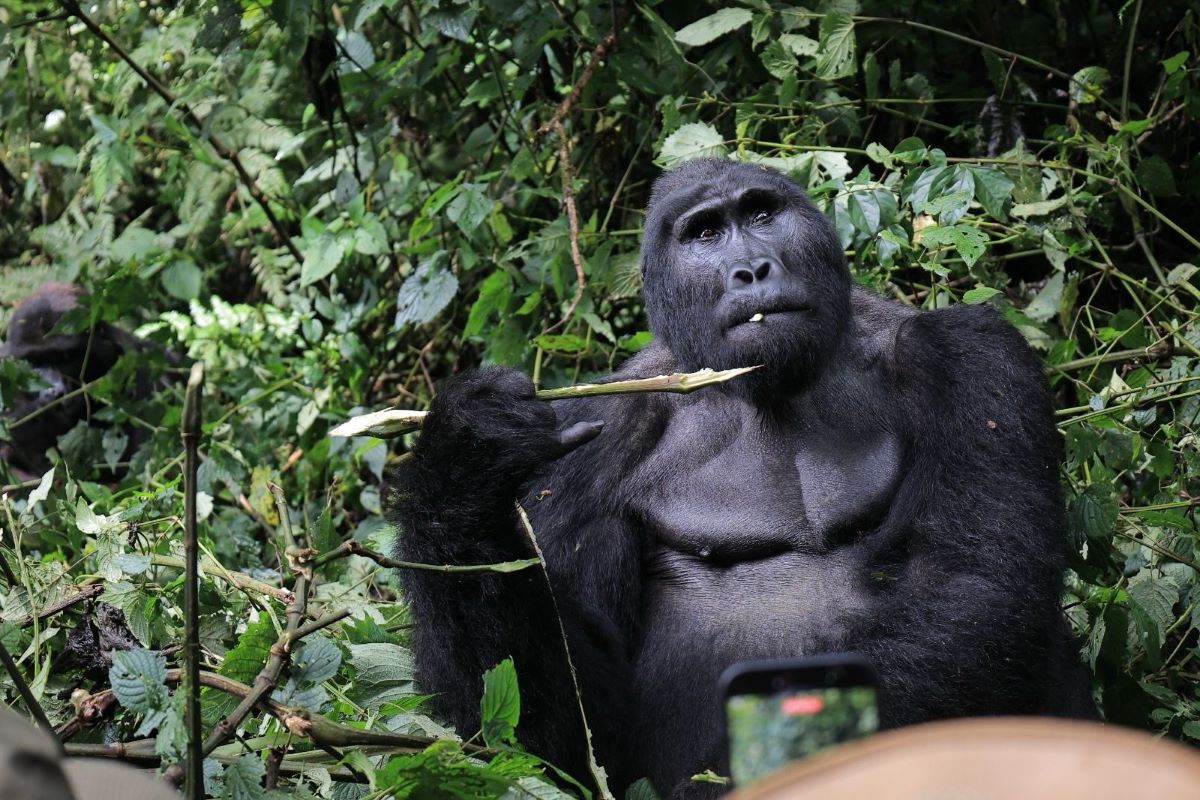
This growth is largely fueled by flagship attractions, most notably the endangered mountain gorillas. In 2024 alone, 41,468 gorilla trekking permits were sold, a number that surpasses pre-pandemic levels. High-spending visitors from key source markets like the United States, Kenya, the United Kingdom, and increasingly India—which saw arrivals jump to 42,800 in 2025—drive this segment.
The Underdevelopment: A Portrait of Untapped Wealth
Despite these gains, analysts describe the sector’s potential as “vast” yet largely “not harnessed”. The country’s tourism map is critically uneven. The southwestern circuit, home to Bwindi Impenetrable Forest and Queen Elizabeth National Park, absorbs the lion’s share of tourist traffic. Meanwhile, vast areas in the north and east remain “largely unexplored and underinvested”. Regions like Karamoja, with its rugged savannahs, and the West Nile sub-region, with its cultural trails, possess “extraordinary untapped potential” but have been historically overlooked by the mainstream safari economy.
Beyond geography, entire tourism segments lie dormant. Uganda boasts over 1,020 bird species, representing 11% of the world’s total, positioning it as a potential global birding mecca. The country also offers world-class white-water rafting on the Nile, a snow-capped mountain range on the Equator (the Rwenzoris), and a rich tapestry of over 65 distinct cultural groups, yet its brand remains narrowly fixated on primates. Experts argue that these diverse “crystals” that make up the “Pearl of Africa” are seldom defined or effectively communicated to a global audience.
The Root Causes: Gaps in Investment and Infrastructure
A primary culprit for this underdevelopment is a chronic underinvestment in the sector. In a recent financial year, the government allocated approximately $70 million to tourism, a mere 5% of the $1.3 billion in revenue the sector generated. This funding gap is even more stark when compared to regional competitors: Kenya allocated $118 million, while Tanzania dedicated $94 million to their tourism sectors. Private sector leaders consistently raise concerns over “underfunded marketing, poor infrastructure, and bureaucratic hurdles”.
This fiscal constraint manifests as a critical infrastructure deficit that stifles growth. The Kabale–Lake Bunyonyi road project, a vital artery for tourism in the Kigezi sub-region, is a case in point. Nearly a year after its launch, only 2.07% of the work had been completed, leading to an estimated 30% loss in income for local tourism businesses. The story is similar for aviation, a sector not yet tuned to support tourism. Routes from domestic airports like Kasese and Gulu remain underutilized, and the national carrier’s schedules do not always align with major tourism events.
Furthermore, tourists often depart with an estimated 60% of their money unspent, a clear signal of a lack of diversified products and opportunities for expenditure beyond park fees and accommodation. A ministerial review acknowledged persistent challenges, including “inadequate infrastructure in tourism zones, limited internet and electricity connectivity and negative external perceptions”.
A Strategic Pivot: From Recovery to Expansion
Recognizing the widening gap between potential and performance, the Ugandan government is beginning a strategic pivot. The post-pandemic recovery phase is officially over, and the focus is now on expansion. This shift is being operationalized through several key initiatives:
- Policy and Marketing Overhaul: The government launched its first-ever National Destination Marketing Strategy (NDMS) 2024–2029 to decentralize tourism traffic and promote overlooked regions. This was followed by the National Tourism Policy 2025, which prioritizes high-growth segments like Meetings, Incentives, Conferences, and Exhibitions (MICE) tourism and cultural heritage.
- Targeted Investment: A $20 million injection from the World Bank-backed PIM-PLUS initiative is channeled toward developing tourism infrastructure at Equator points, a museum redevelopment, and roadside stopovers. The government is also pushing to align aviation strategy with tourism demand through better integration between Uganda Airlines and the Uganda Tourism Board.
- Regional and Product Diversification: The state minister for tourism, Martin Mugarra, has emphasized a move “from recovery to expansion” by strengthening regional tourism circuits and formalizing partnerships with cultural institutions, such as the Busoga Kingdom, to showcase heritage sites like the Source of the Nile and lesser-known historical slave caves.
Conclusion: A Crossroads for the Pearl
Uganda’s record-breaking 2025 performance demonstrates that its tourism sector is not underdeveloped in a blanket sense; it is functional and growing. However, it is critically underutilized relative to its natural and cultural endowment. The engine of growth is running, but it is powering only a small part of the vehicle, relying heavily on a single circuit defined by colonial-era “gorilla tourism.”
The nation stands at a crossroads. The gap between the current $1.7 billion in revenue and the $50 billion vision for 2040 is a monumental challenge, one that will not be closed without a dramatic overhaul of investment, infrastructure, and imagination. As one industry analysis concluded, if Uganda is to reach anywhere close to its ambitious mark, “it can no longer do business as usual. Everything has to change, and must change immediately!”