St. Ange Challenges Tourism to Choose Between Consumption and Community
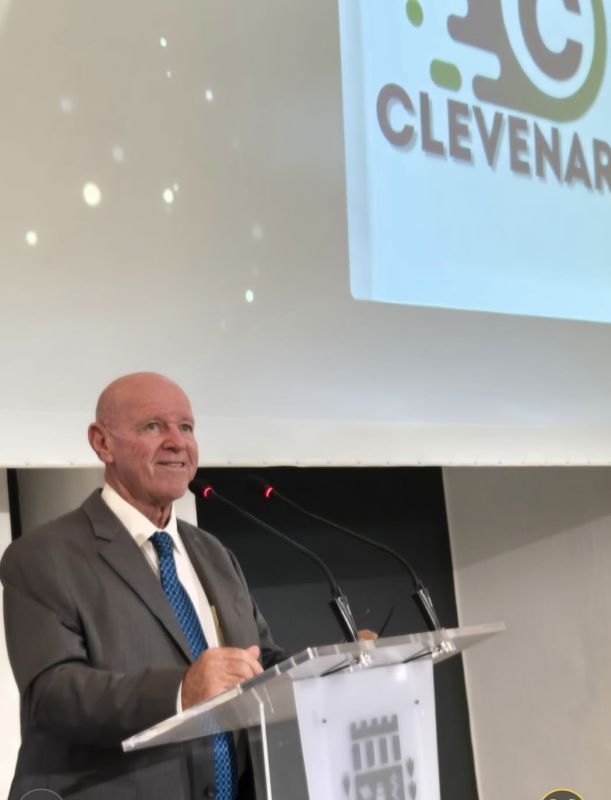
Alicante, Spain — In a keynote address that cut through the usual industry pleasantries at the CLEVENARD 2026 Conference, Alain St. Ange, Ambassador-at-Large for the Republic of Seychelles, issued a stark warning to the global tourism community: the industry is no longer neutral, and the era of chasing volume alone must end.
Speaking as the inaugural speaker, St. Ange addressed a room full of professionals with a message that resonated deeply on the responsibility of tourism in the 21st century.
“International tourism now accounts for well over a billion cross-border arrivals each year. A billion journeys. And almost every conversation about tourism begins and ends with arrivals, with volume, with how many more we can attract next season,” St.Ange began, before delivering his central thesis.
The Myth of “Spread” vs. The Reality of Value
Ambassador St. Ange dismantled the assumption that economic impact equates to community well-being. While acknowledging that tourism is the lifeblood of small island states, he drew a sharp distinction between “spread” and “depth.”
“Tourism can account for a huge share of GDP, and in small island states, it isn’t just one industry, it is the economy… money from tourism spreads in remarkable ways. A visitor’s spending reaches the taxi driver, the market vendor, the family guesthouse, the farmer supplying the kitchen,” he noted.
However, he cautioned, “Spread is not the same as depth, and volume is not the same as value.“
He argued that the data the industry collects must drive actual decision-making rather than serving as mere marketing fluff. “The time was now… We know that credibility is the currency that echoes reality ahead of vision statements and manifestos we all see launched at elections,” he stated, calling for transparency and accountability in how tourism success is measured.
Culture: Preservation or Packaging?
Perhaps the most poignant section of his speech addressed the commodification of culture. St. Ange challenged the audience to consider the difference between preserving a culture and packaging it for consumption.
“At its best, tourism funds the preservation of heritage that might otherwise crumble. It gives traditional crafts a market, and a reason to survive. It turns a community’s story into a living exchange, rather than an exhibit behind glass.”
He painted a vivid picture of the dangers of “hollowing out” a destination: “When a sacred dance becomes a nightly show stripped of its meaning, when a place of worship becomes a backdrop for photographs, when a community’s identity is flattened into a souvenir on a shelf, is when we’ve stopped exchanging culture and started consuming it.”
The Ambassador emphasized that the people who lose most in this transaction are rarely the ones collecting the profit. The solution, he argued, lies in ownership.
“Authentic cultural tourism respects that the community owns its own story. It asks before it markets, it shares the benefit, it listens first,” St. Ange said. “Get that balance right and tourism doesn’t dilute a culture. It tells a younger generation that their heritage carries a value the wider world genuinely wants to understand.”
The Human Dimension of Tourism
Moving to the human impact, St. Ange shared observations of tourism transforming remote villages—where a road leads to a school, which leads to a clinic. He highlighted the industry’s unique potential as a “democratic” sector where one doesn’t need a degree or capital to participate, but rather a genuine welcome and deep local knowledge.
“Real transformation happens when local people hold genuine ownership. When decisions are made with communities, not for them and profit stays and circulates,” he declared.
He concluded that a thriving tourism industry cannot be left to chance. It is built by:
- Policymakers who plan for resilience.
- Businesses willing to share ownership and profit.
- Travelers who choose culture over consumption.
- Communities empowered to tell their own stories in their own way.
A Call to Action
As the applause faded, St. Ange left the audience with a personal challenge to each individual present.
“As I end I want to say to everyone. Let us ask ourselves – What can I do to help my country of origin? Tourism is a resource every country has, so let us all, each and everyone of us, transform this resource into jobs, into a better economy for our country and a shared prosperity.”
He finished with a powerful sentiment echoing the sentiment of the West Africa Tourism Association (WATO): “Today the future of tourism is not being handed to us… Tourism is instead being built by the people who are bold enough to show up for tourism.”
In Alicante, Ambassador St. Ange reminded the world that the future of travel depends not on how many people we can bring in, but on how deeply we can root them in the communities they visit.