Famadihana: Madagascar’s Sacred Festival of Turning the Bones
Among many African tribes and in other parts of the world, there is a strong reverence for the dead, or ancestors as they are often called. This veneration stems from a belief that the departed act as intermediaries between the living and the supreme being, and are capable of bringing good fortune to the family or community if they are properly honored.
In some places, this reverence is demonstrated through sacred cultural rites marked with celebration. One such ceremony honoring the dead is the Famadihana of the Merina people of Madagascar.
Famadihan-drazana: Turning of the Bones
Although Famadihan-drazana (Famadihana for short) is the most widely practiced traditional festival in the central highlands of Madagascar, it is not an ancient Malagasy tradition and does not date beyond the 17th century.
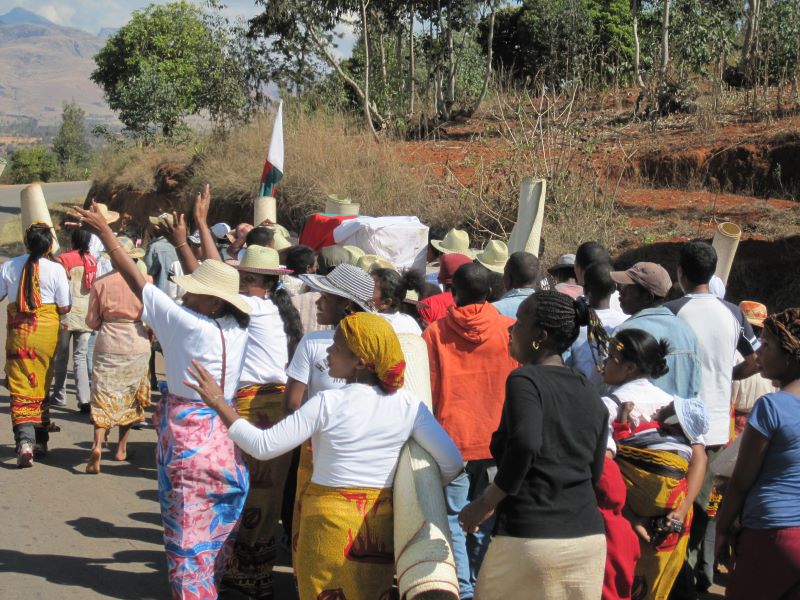
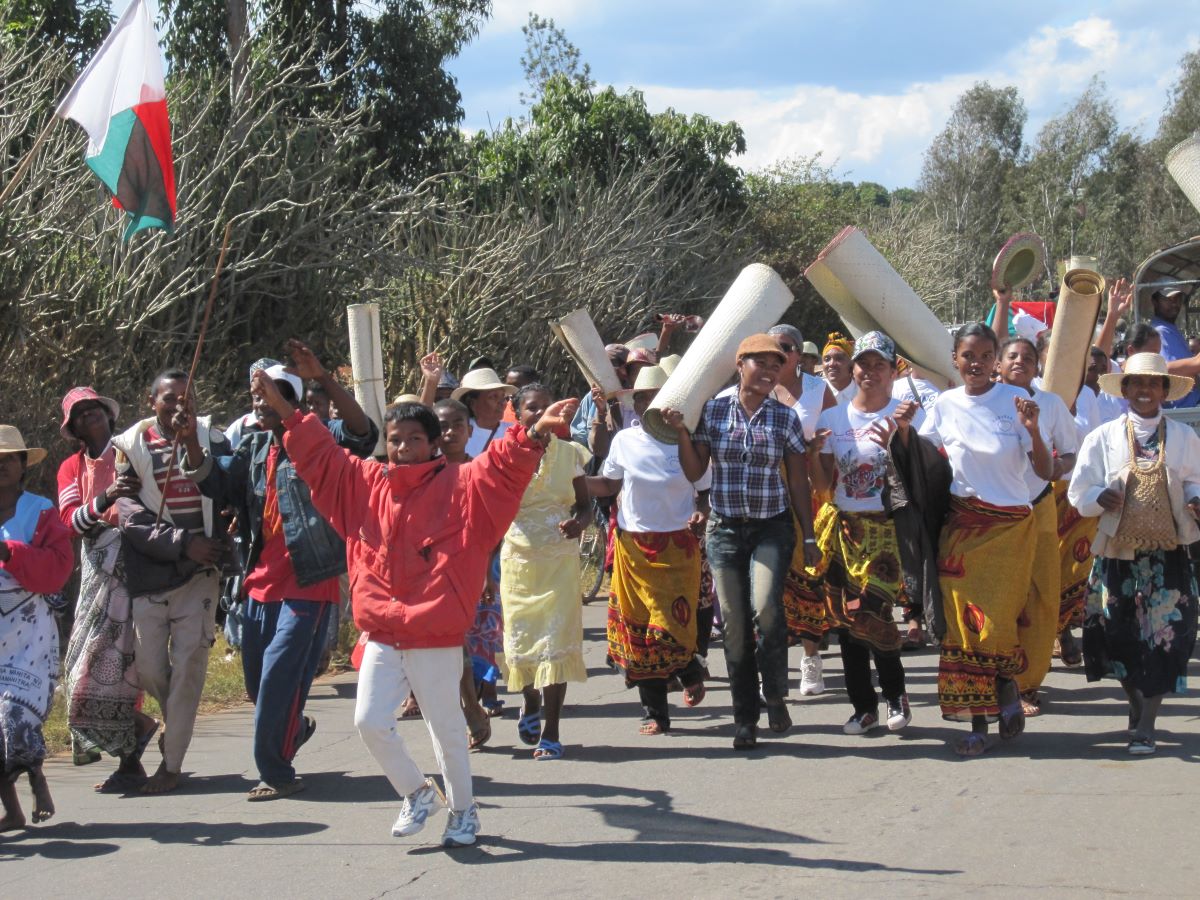
Famadihana occurs every five to seven years, or when there is a significant family event, and it is celebrated during winter in Madagascar, from June to September. The atmosphere is festive rather than somber—tears are banned during Famadihana, as crying is seen as a rejection of blessings from the ancestors.
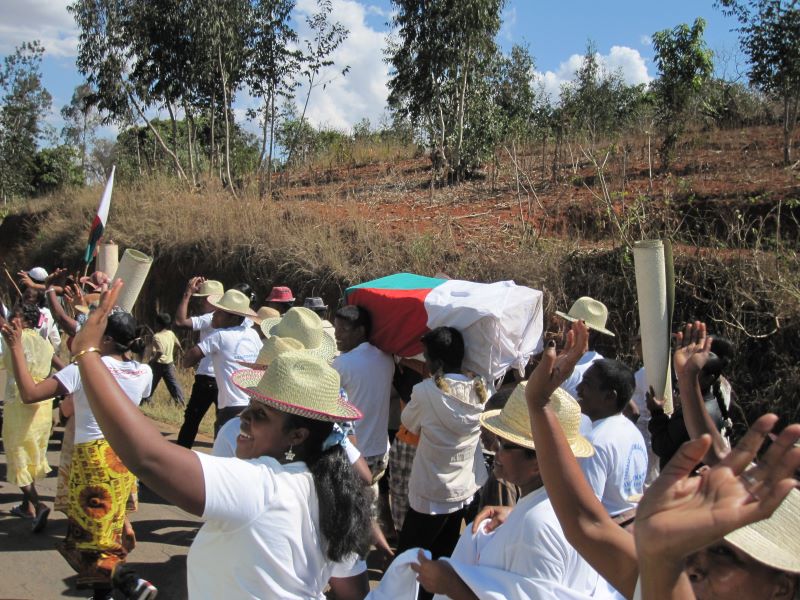
At the commencement of the ritual, the corpses are exhumed from their burial places and rewrapped in fresh silk shrouds to keep the ancestors warm, according to the people’s belief. The bodies are rewrapped on the laps of the zana-drazana (children of the ancestors) in public and then placed on new mats to rest for a while.
Before the bodies are re-interred, they are hoisted up and carried around their tombs several times amid dancing and music, so they can become familiar with their resting places. It is believed that the dead will roam and disturb the living if they are not familiar with their final abode.
Family Reunions Beyond Death
Famadihana also offers a chance for deceased family members to be reunited in a single family tomb, since Malagasy beliefs view being buried separately as a terrible fate. The family tombs are organized by lineage, and in most cases, male and female ancestors are buried together, particularly married couples who share the same tomb.
So popular is Famadihana that neighbors often join the celebrations, whether invited or not. They offer the sao-drazana (ancestor’s thanksgiving), usually a monetary contribution accompanied by a bottle of rum or toaka gasy (local alcohol) to show their solidarity.
A Festival of Life and Celebration
The Famadihana celebration features live music, energetic dancing, and feasting on the customary vary be menaka (rice with much oil), prepared with fattened zebu, chicken, pork, or fish. Families spare no expense, sometimes spending the equivalent of thousands of dollars on the multi-day event.
At the end of the festival, people compete to grab items that were in contact with the corpses, such as pieces of the old shrouds or mats. These are taken home as lucky charms believed to bring fertility and prosperity.