
Nigeria’s Tourism Sector Embraces Hybrid Governance Model for Workforce Stability
As Lead City University, Ibadan PhD Law Candidate proffers solutions to industry challenges at NIHOTOUR Stakeholder Engagement Forum
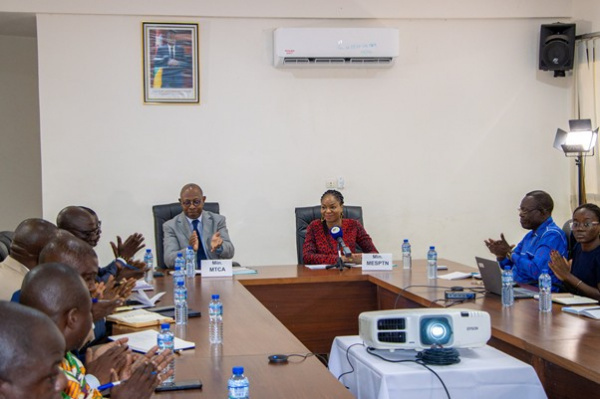
In a landmark move toward professionalizing Nigeria’s tourism and hospitality industry, leading academics, regulators, and industry stakeholders have endorsed a Hybrid Professional Governance Framework that merges statutory regulation with professional self-governance. The proposal emerged from the NIHOTOUR Stakeholder Engagement Forum held on Wednesday, July 15, 2026, at the National Institute of Hospitality and Tourism (NIHOTOUR) headquarters.
Speaking at the forum, Aare Abisoye Fagade, Director-General of NIHOTOUR, underscored the necessity of tripartite collaboration. “Building a globally competitive workforce requires strong partnerships between the agency, academia, and the private sector,” Fagade stated in his welcome address, signaling a shift from siloed operations to integrated governance.
The Case for a Hybrid Model
The forum’s centerpiece was a keynote paper by Professor Wasiu Babalola, a Professor of Hotel Management and Tourism at Atiba University, Oyo, and a PhD candidate at Lead City University’s Faculty of Law. His presentation, titled “Strategic Roles of Industry Associations and Professional Bodies in Workforce Registration, Certification, Licensing and Sustainable Human Capital Development,” argued that legislation alone—specifically the NIHOTOUR Act 2022—cannot guarantee professional stability.

According to Babalola, the sector currently suffers from:
- Fragmented regulation and overlapping institutional mandates.
- Inconsistent certification standards across the country.
- Weak professional identity among practitioners.
- Inadequate workforce data for strategic planning.
“Legislation provides the skeleton, but professional recognition provides the muscle and nerve,” Babalola explained. He drew parallels with mature professions like law, medicine, and engineering, where government regulators set minimum standards while professional bodies handle ethics, continuous development, and peer recognition.
Professional Recognition by Professional Practice (PRPP)
The core of the proposal is the Professional Recognition by Professional Practice (PRPP) framework. This model envisions a clear division of labor:
- NIHOTOUR retains authority over statutory regulation, national workforce registration, licensing, and setting minimum standards.
- Recognized Professional Bodies are empowered to manage continuing professional development (CPD), ethical oversight, and specialized competence training.
“Section 4 of the NIHOTOUR Act already provides the legal basis for this collaboration,” Babalola noted, emphasizing that the law supports a partnership model rather than institutional rivalry.
The Roadmap to Implementation
The forum outlined a practical eight-point roadmap for adopting the hybrid framework:
- Formal recognition of credible professional bodies under the PRPP framework.
- Clear delineation of professional practice areas across tourism and hospitality sub-sectors.
- Development of Standard Operating Procedures (SOPs) and operational manuals for recognized bodies.
- Enhancement of a National Digital Tourism and Hospitality Workforce Register.
- Implementation of competency-based certification under NIHOTOUR.
- Mandatory Continuing Professional Development (CPD) delivered by professional bodies.
- Strengthened collaboration between industry, academia, and government.
- Alignment with international best practices in workforce development.
Stakeholder Reception and Future Steps
Stakeholders at the forum welcomed the proposal as a pragmatic solution to decades of institutional fragmentation. The consensus was that the framework would eliminate duplication of functions, enhance workforce quality, and boost Nigeria’s global competitiveness in tourism.
Participants urged NIHOTOUR to continue engagements with industry bodies to refine the model into a version that is both acceptable and popular among all stakeholders.
Babalola concluded with a vision of unity: “Professionalisation is strongest when statutory authority and professional recognition work together, not in competition, but in partnership.”
The presentation also highlighted the academic rigor behind the proposal, with Babalola acknowledging the research environment at the Faculty of Law, Lead City University Ibadan. He noted that presenting doctoral research before national and international audiences reflects the university’s commitment to bridging the gap between academic theory (“the gown”) and industry practice (“the town”).
As Nigeria moves forward, the successful implementation of this hybrid model could serve as a blueprint for other emerging economies seeking to professionalize their tourism sectors.