Over 60% of Hotel Businesses in Southwest Nigeria Fail Within Five Years
Ado Ekiti – The hospitality sector in Southwest Nigeria is grappling with a staggering failure rate, with empirical evidence revealing that more than 60% of hotels in the region do not survive beyond their first five years of operation.
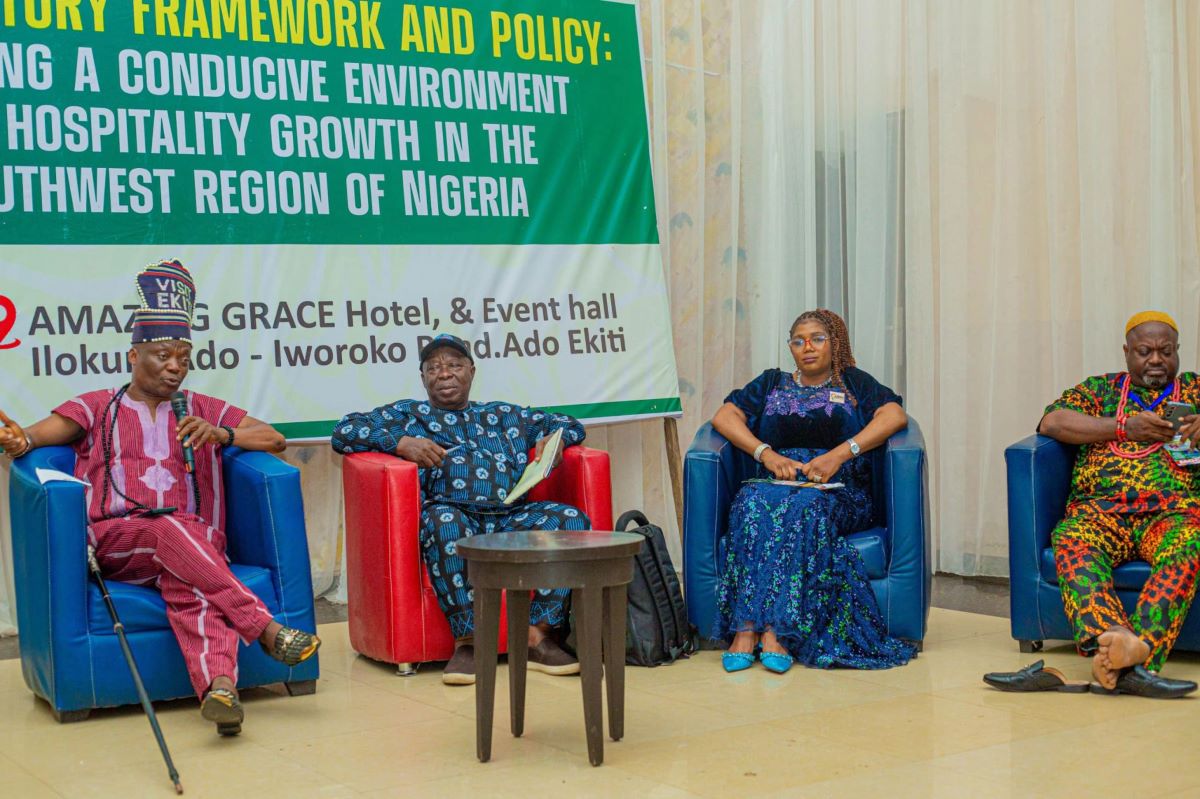
The alarm was raised during the Biennial Conference of the Hoteliers Association of Nigeria (Southwest Zone), held at the Amazing Grace Hotel and Event Hall in Ado Ekiti. The conference, themed “Regulatory Framework: Creating a Conducive Environment for Hospitality Growth in the Southwest Region of Nigeria,” served as a critical platform for stakeholders to address the structural decay threatening the industry.
A “Painful Reality” for Investors
Olusayo Oluwakemi Olowookere-Ayodele, a lecturer at the Federal University Oye Ekiti (FUOYE), served as a panel discussant on the session titled “The Determinants of Hotel Mortality and the Failure of Hotel Businesses in Southwest Nigeria.” According to Olowookere-Ayodele and her fellow panelists, the high mortality rate is not a matter of poor management alone, but a consequence of a harsh economic climate that makes sustainability nearly impossible for small and medium-sized hospitality brands.
Key Drivers of Industry Failure
The panel identified several “harsh operational realities” currently eroding the sector’s profitability:
- The Energy Burden: With an “epileptic” national power grid, hotels are forced to rely on diesel generators for 18 to 20 hours daily. Diesel costs now account for 35% to 45% of total monthly operating expenses, leaving businesses with razor-thin margins.
- Infrastructure and Security: Deteriorating road networks and rising security concerns in specific states have stifled tourist arrivals, particularly impacting facilities located outside of major state capitals.
- Forex Volatility: A heavy reliance on imported inputs—ranging from kitchen equipment to furniture and maintenance parts—has made upgrades unsustainable as the Naira continues to fluctuate against the dollar.
Stakeholders Demand Urgent Policy Reform
Moving beyond the diagnosis of the problem, the conference established a strong consensus on a roadmap for recovery. The proposed solutions focus on three main pillars:
1. Harmonized Taxation The panel called for the immediate implementation of a single-window payment system for all hospitality-related charges. This would eliminate the current duplication of taxes and levies that complicates the ease of doing business in the region.
2. Renewable Energy Incentives To combat the energy crisis, the sector is being urged to transition toward solar power and energy-efficient systems. Stakeholders suggested that the government provide incentives for hotels to adopt these green technologies to slash operational costs.
3. Standardized Regulation and Training The conference recommended that State Tourism Boards strictly enforce standards through the licensing and grading of all lodging facilities. Furthermore, the panel emphasized capacity building through strategic partnerships with the National Institute for Hospitality and Tourism (NIHOTOUR) and private hospitality schools.
“Reducing hotel mortality in the Southwest requires deliberate policy reform, improved access to finance, and continuous human capital development,” Olowookere-Ayodele noted. “If these recommendations are implemented, they will not only keep hotels alive but position the region as the hospitality hub of Nigeria.”
The findings from the conference are expected to be presented to regional policy-makers to initiate the necessary legislative frameworks for the industry’s survival.