Silence, Colour, Flight: A Birdwatcher’s Guide to Uganda’s Aerial Kingdom
With over 1,000 recorded species, Uganda is not just a wildlife destination—it is an aerial kingdom. From the papyrus swamps of Mabamba to the misty depths of Bwindi, discover a four-day journey into colour, sound, and ancient migratory stories.
Uganda is not just a wildlife destination; it is an aerial kingdom. Straddling the meeting point of savannahs, rainforests, wetlands, and river systems, the country holds one of the richest bird populations on the African continent. With more than a thousand recorded species, birding here is not a hobby; it is a journey into colour, sound, and ancient migratory stories written across the sky. For travellers who crave quiet adventure, Uganda offers an unforgettable four-day birding experience that blends accessibility with raw, untouched wilderness.
Day One: Gentle Beginnings in Entebbe
The journey naturally begins in Entebbe, where colonial-era gardens stretch gently along the shores of Lake Victoria. The Entebbe Botanical Gardens feel like a soft landing into Uganda’s birding universe. Tall palms and ancient trees form a cathedral of green, while lake breezes carry the layered calls of countless species.
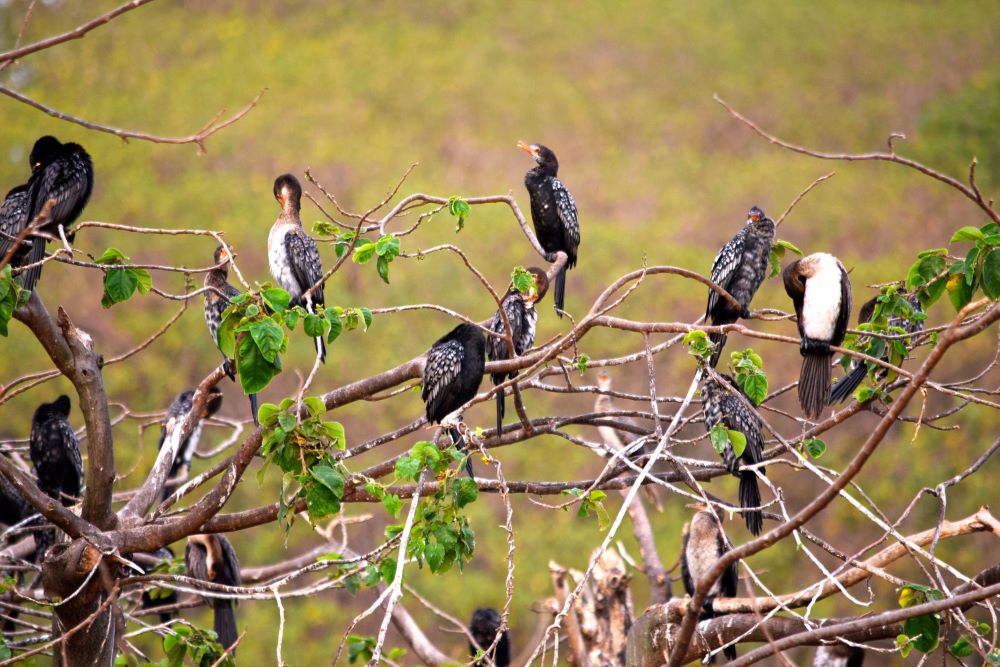
This first day is about tuning your ears and eyes. Sunbirds glitter like flying jewels, hornbills flap heavily across the canopy, and plantain-eaters glide between branches with quiet authority. The famous Great Blue Turaco often appears like a royal flash of colour, rewarding patient visitors with a glimpse of its regal glide. Waterbirds gather close to the lake’s edge, offering opportunities to spot storks, pelicans, and elegant kingfishers. It is a slow day, designed not to chase birds but to let the wilderness introduce itself.
Day Two: Into the Heart of the Wetlands
From the garden calm of Entebbe, the adventure deepens at Mabamba Swamp, one of Uganda’s most celebrated birding wetlands. The journey is taken by canoe, sliding silently through papyrus corridors that rise like living walls. Here, movement is slow, deliberate, and respectful.
This is the world of the shoebill, a towering, prehistoric-looking bird that stands like a statue before suddenly springing to life in a single, precise hunt. But Mabamba is not a one-bird destination. Jacanas step delicately across floating vegetation, coucals hide and reveal themselves in bursts of rich colour, and rare wetland specialists call from hidden perches. Migratory birds join the ecosystem in seasonal waves, turning the swamp into a global crossroads of wings. This day is about immersion: only paddles, water, wind, and birds.
Day Three: Where River and Sky Collide
The third day leads north to Murchison Falls National Park, where birding meets drama. The Nile cuts through the land with enormous force, creating an ecosystem that draws birds in extraordinary numbers and diversity. Along the riverbanks, African Fish Eagles claim tall trees as their thrones, their sharp calls echoing across the water.
Boat safaris open up a different vantage point, floating quietly as pelicans dive, herons stalk, and kingfishers explode into colour against the surface of the river. One of the most striking encounters here is the sight of the Goliath Heron, standing tall and still, watching the currents with ancient patience. Between sightings, wildlife such as hippos, crocodiles, and antelope complete the sense of a balanced yet powerful ecosystem. This day feels cinematic, with widescreen skies, endless horizons, and the constant presence of both water and wings.
Day Four: The Deep Forest Secret
The final day descends into the misty depths of Bwindi Impenetrable National Park, one of Africa’s most biologically dense forests. The air here is thicker, cooler, and filled with the layered sounds of life. Birding in Bwindi is not about scanning open skies but listening carefully and moving slowly through ancient trees draped in vines and moss.
This forest holds some of Uganda’s rarest birds, many found nowhere else. Trails twist through old growth, and every step reveals shifting shadows, distant calls, and brief flashes of wings. The reward here is sometimes a single rare species seen between leaves, or a soft call answered from deep within the canopy. Bwindi teaches patience, humility, and respect for fragile ecosystems. It is a quiet, spiritual end to the journey.
When to Plan the Journey
Uganda offers excellent birding year-round, but the period from late May through September brings clearer skies and easier forest access. From November to April, migratory species arrive from Europe and Asia, adding another layer of diversity to the experience. Each season reshapes the story of the birds, ensuring that no two journeys are ever the same.
What to Carry and How to Prepare
Birding in Uganda requires simple preparation. Lightweight clothing, dull-coloured attire, binoculars, a camera, a hat, insect protection, and plenty of water create the foundation for a smooth experience. But beyond equipment, the most important thing to bring is patience. In Uganda, birds do not perform; they appear when you are ready to see them.
This four-day journey is a trip through landscapes and a passage through silence, colour, rhythm, and life in motion. Uganda does not shout its beauty; it lets it fly.