Olubugo Barkcloth: Woven from the Mutuba, Uganda’s 800-Year-Old Tradition & Its Future
At Kampala’s National Theatre, the fifth harvesting of Nanyazi, a Mutuba tree, offered a rare opportunity to witness how one of Uganda’s oldest cultural traditions transforms the bark of a living tree into a treasured fabric.
On Friday, 23 October 2026, the grounds of the Uganda National Cultural Centre, home to the National Theatre in Kampala, became a living classroom in traditional craftsmanship. Gathered around Nanyazi, a Mutuba tree growing within the compound, visitors watched as a centuries-old practice unfolded before them: the harvesting and making of Olubugo, Uganda’s traditional barkcloth.
There was no loom, no thread, no spool of cotton. Instead, there was a tree, a collection of traditional tools, the steady hands of experienced craftspeople, and knowledge passed down through generations. The morning’s purpose was to witness Nanyazi’s fifth harvest and follow the remarkable journey from standing tree to a sheet of pliable, earthy-coloured cloth.
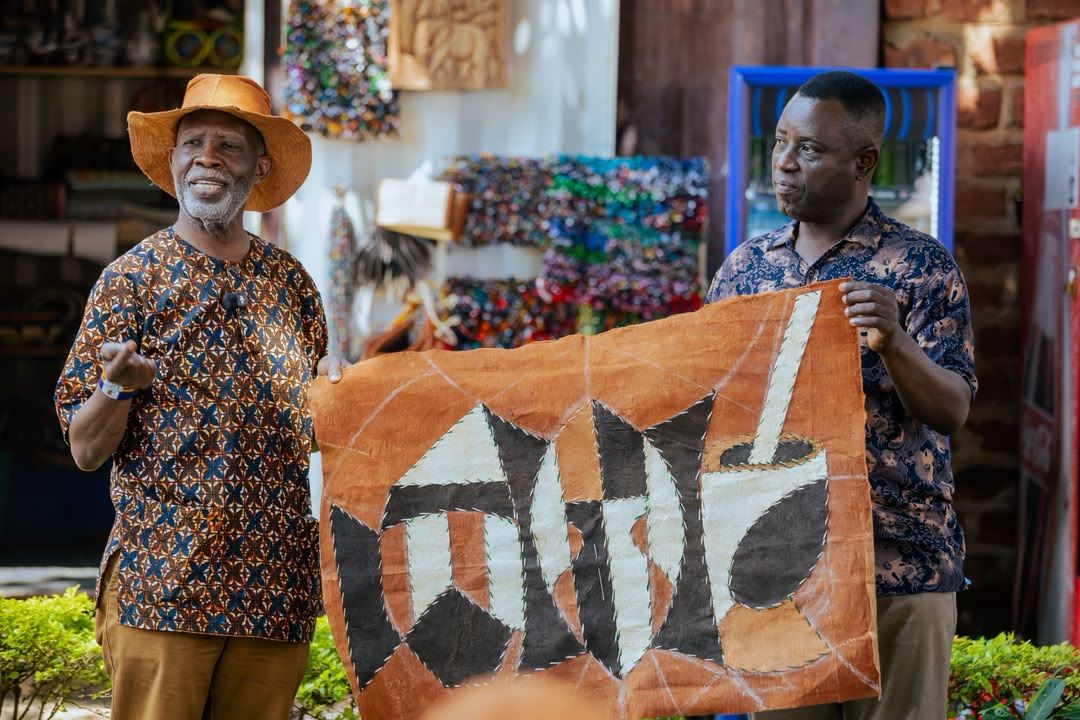
Led by Fred Mutebi, alongside Nuwu Wamala Nyanzi and Mutuba tree surgeon Peter Samula Katamiira, the demonstration offered a close look at a craft whose significance extends well beyond the finished material. It brought together traditional ecological knowledge, technical skill, cultural identity, and a question that increasingly matters to Uganda’s heritage: how can an ancient practice remain alive in a rapidly changing world?
A Tree With a Story to Tell
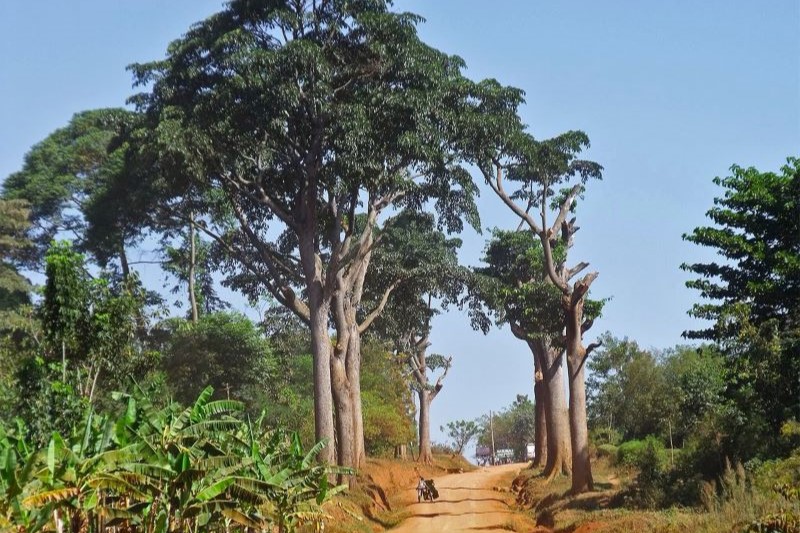
The story of Olubugo begins with the Mutuba tree, scientifically known as Ficus natalensis. Its inner bark provides the raw material for a fabric that has served Baganda communities for centuries, long before woven textiles became commonplace.
Yet the tree is never cut down to obtain the bark. The process depends on understanding when the tree is ready, how to remove its bark carefully, and how to encourage it to recover for future harvesting. This relationship between craft and conservation is central to the practice: the tree must continue living if it is to yield barkcloth again.
Before harvesting begins, the Mutuba tree surgeon examines the trunk and makes a small test cut near its base, checking whether the bark is ready to be removed. This preliminary assessment, sometimes described as the tree’s “first tasting,” is an important decision point. Experience matters: harvesting at the wrong time or handling the tree carelessly can compromise both the material and the tree’s recovery.
The first major stage, known as Okuwalieira, involves scraping away the thin outer layer of bark. Beneath it lies the softer inner layer that will eventually become cloth.
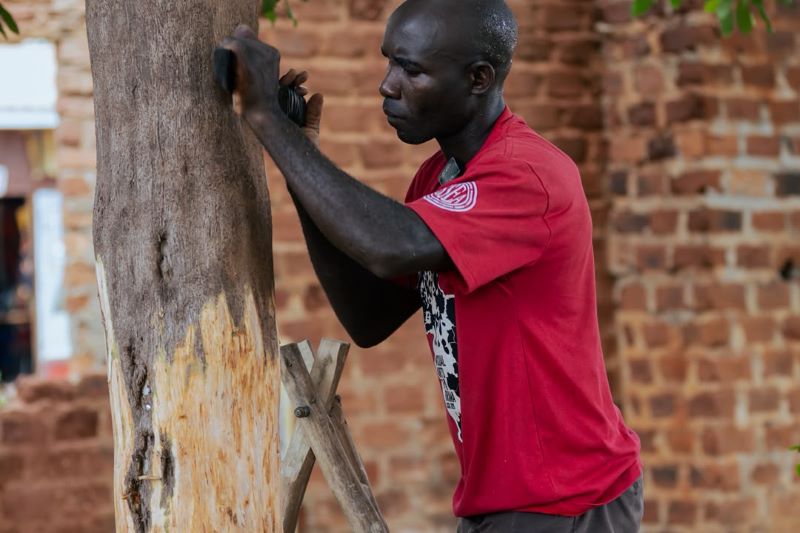
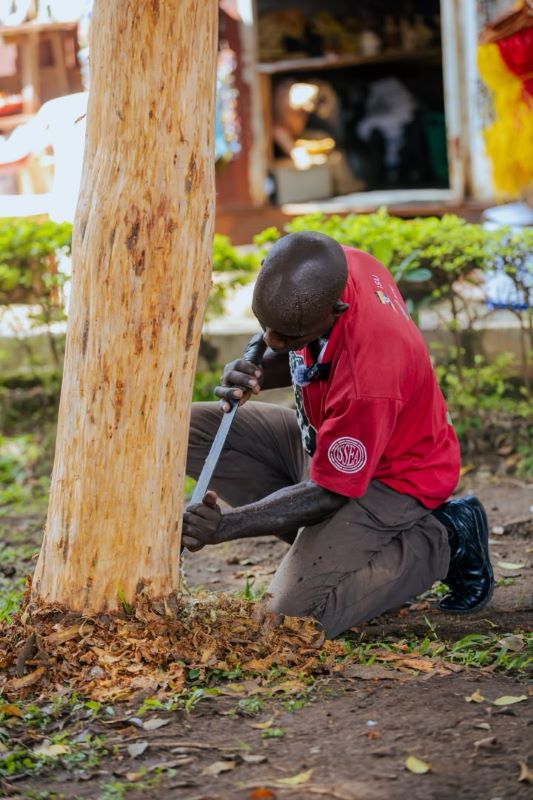
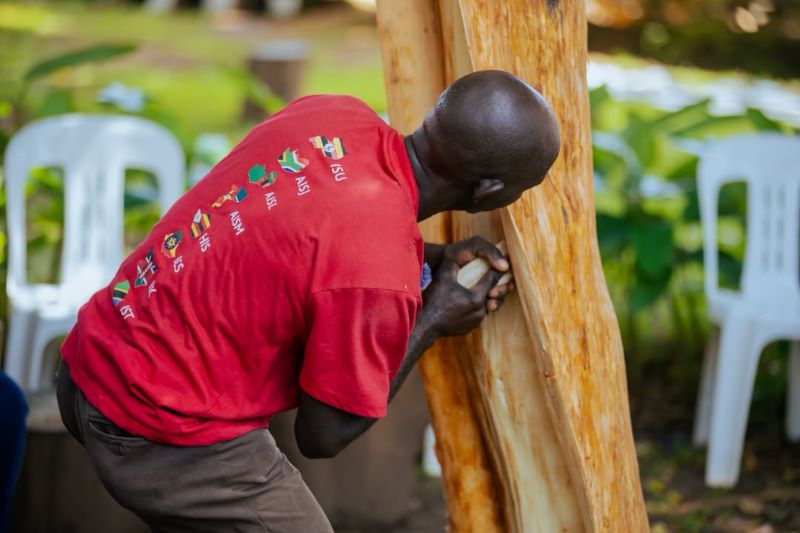
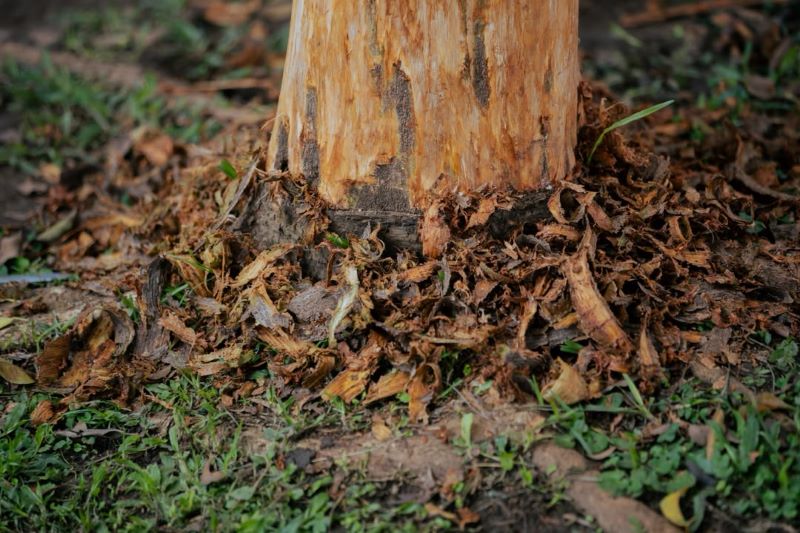
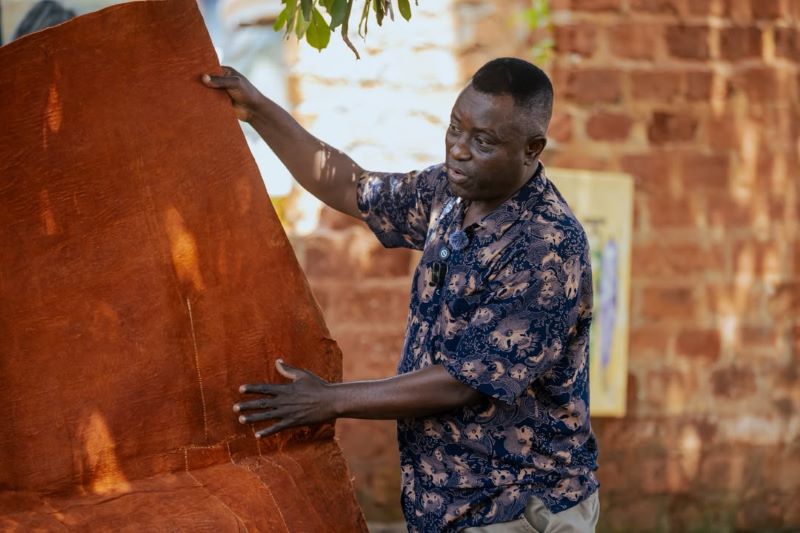
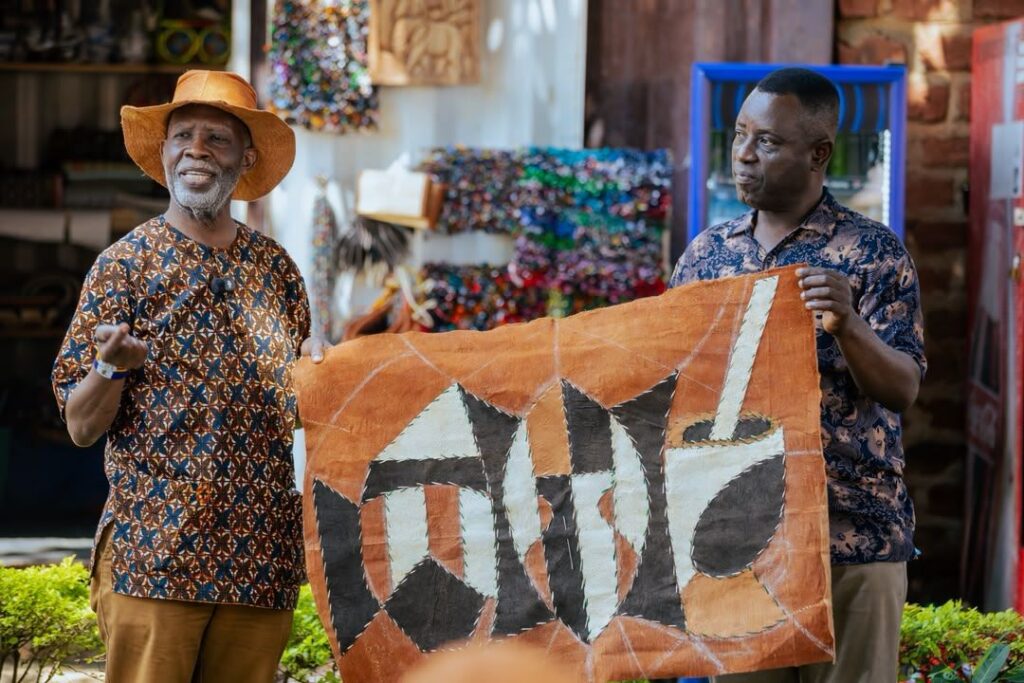
The next steps reveal the ingenuity of the traditional toolkit. Rather than relying solely on metal blades, the craftsman uses the soft middle section of a banana plant stem, known as Omunukwanuka, to help loosen the bark. This material is gentle enough to work against the tree without unnecessarily damaging the inner layer being harvested.
Through a series of careful movements, the bark is loosened and removed from the trunk. Each action has a purpose, and each depends on the person performing it understanding the material beneath their hands.
Harvesting Without Ending the Tree’s Life
One of the most striking aspects of the process is what happens after the bark has been removed. The harvested bark is gathered and folded carefully, allowing the sap to collect as the material is prepared for processing. Meanwhile, attention returns to the exposed trunk. In a stage known as Okuzza Omutuba, the tree is massaged to help restore the fibres and encourage recovery.
The exposed section is then protected with broken banana leaves in a process called Okusabika. The covering helps shield the trunk while allowing air to circulate. Damaged areas may also be treated with cow dung as part of the traditional care given to the tree.
This is where barkcloth-making becomes more than a lesson in material production. It demonstrates a practical understanding of renewal. The harvest is not intended to be the tree’s final contribution; with appropriate care, the Mutuba can recover and yield bark again.
Nanyazi’s fifth harvest was therefore significant not only because another piece of cloth could be produced, but because the tree had remained part of an ongoing cycle of use, care, and return.
For visitors accustomed to thinking of fabric as something that begins in a factory or on a shop shelf, this part of the experience offers a different perspective. Here, the origins of the material are visible, as are the decisions and responsibilities involved in obtaining it.
From Raw Bark to a Supple Fabric
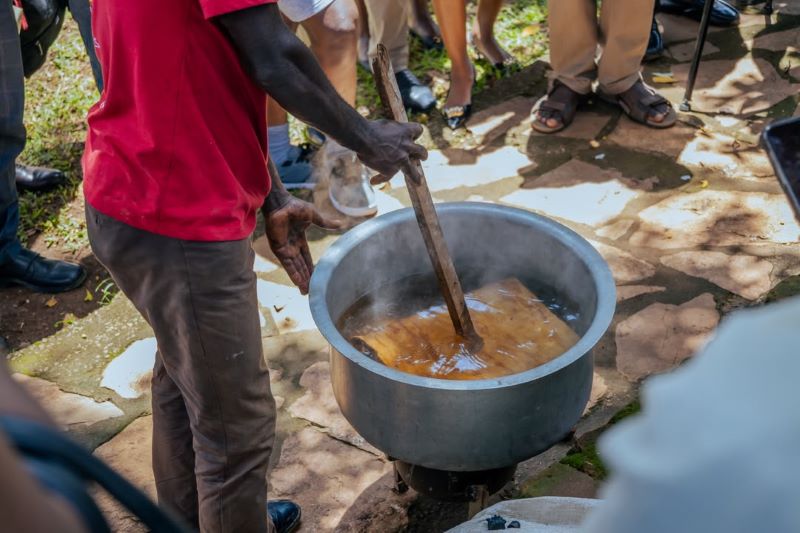
Once removed, the bark must undergo a series of preparations before it can be beaten into cloth. Depending on the method used, it may be boiled, steamed, or exposed to heat with dry banana leaves—a process called kubabula. These techniques help soften the material and manage the sap, preparing it for the labour-intensive work that follows.
Then comes the sound that gives barkcloth-making much of its character. Using wooden mallets known as Ensaamo, the craftsman begins to beat the bark. The work is rhythmic, but it is not simply a matter of striking as hard as possible. The material must be worked evenly so that it expands, becomes thinner, and develops a softer texture without tearing.
Different mallets are used at different stages. The first beating works the material, while subsequent stages help refine and smooth it. The craftsman folds, turns, stretches, and beats the bark repeatedly, responding to its changing texture and thickness.
The process is known through several stages, including Okusaaka and Okufunyira. At Okutenga, the material may be placed in the sun for a short period to release moisture, which helps it shed water and expand during further beating. It is then worked again to achieve the desired size and texture.
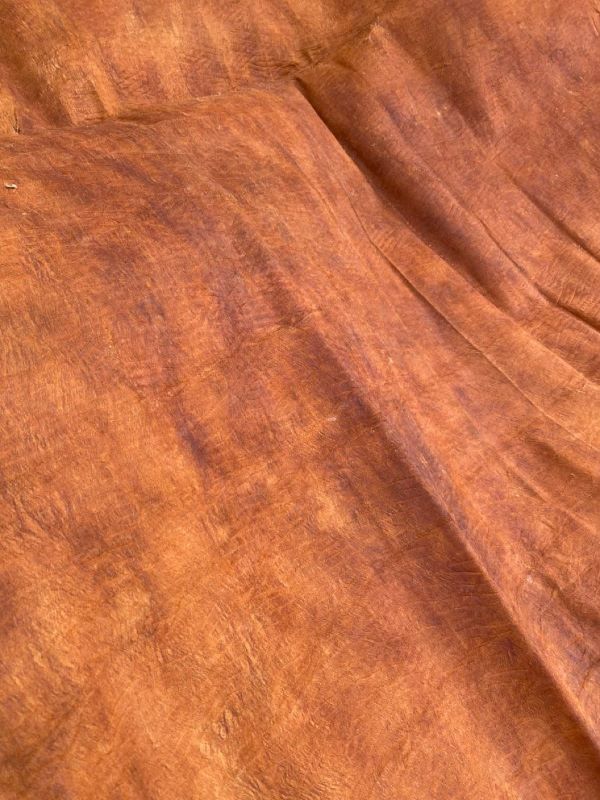
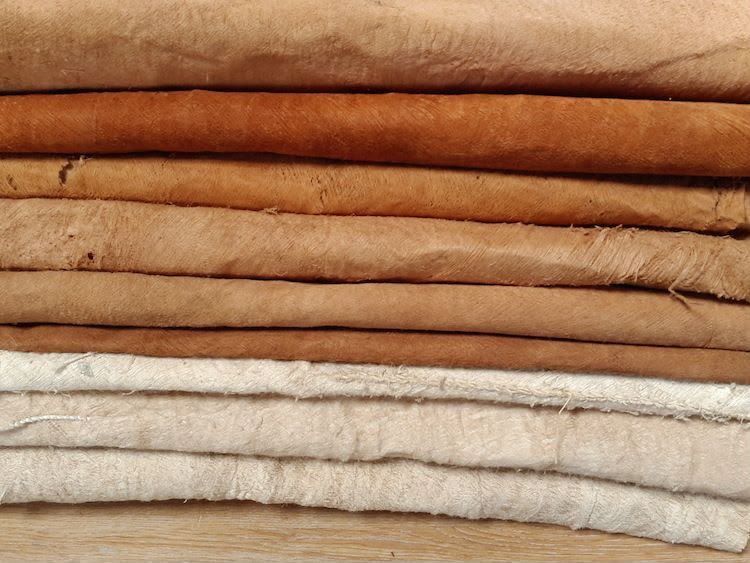
The transformation is gradual. What began as a thick, fibrous layer taken from a tree becomes increasingly flexible, broad, and cloth-like. The colour deepens into the warm terracotta tones for which traditional Olubugo is widely recognised.
The work is physically demanding and requires patience. Too little attention can leave the material uneven; too much force can damage it. The craftsman must understand how the bark responds to every strike, fold, and stretch.
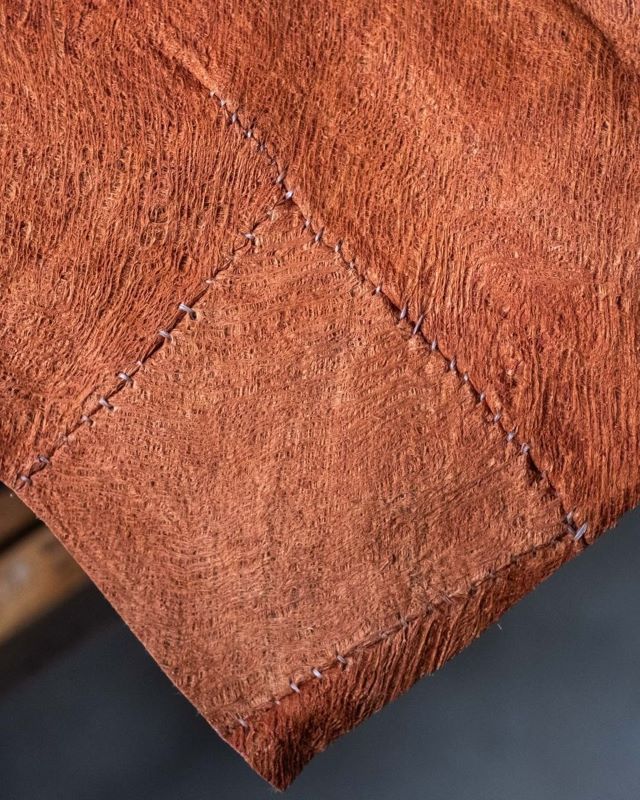
There are also practical skills involved in finishing. Torn sections damaged during the beating are traditionally stitched together by women, and the cloth is then spread out and stretched as it dries. Stones or mallets can help hold it in position, allowing the material to straighten and settle into its final form.
By the time the process is complete, the transformation is difficult to separate from the knowledge that made it possible. The finished cloth is the visible result, but behind it lies a sequence of decisions that cannot be learned merely by looking at the material.
A Fabric Woven into Cultural Identity
Olubugo holds a place in Buganda’s cultural and spiritual life that ordinary fabric cannot easily replace. For generations, it has been used in ceremonies, burials, healing practices, and other significant cultural occasions. It has clothed people, covered the departed, and marked important moments in community life.
Its importance has also been recognised internationally. UNESCO first proclaimed barkcloth-making a Masterpiece of the Oral and Intangible Heritage of Humanity in 2005, before inscribing it on the Representative List of the Intangible Cultural Heritage of Humanity in 2008.
That recognition acknowledges an ancient body of knowledge, but it also points to a continuing responsibility. Intangible heritage survives through people who practise it, teach it, and give younger generations opportunities to understand its value.
Today, Olubugo also offers possibilities beyond its traditional ceremonial uses. Artists and designers are exploring the material in contemporary art, fashion, accessories, and interior decoration. Its natural texture and distinctive appearance provide a connection to cultural identity while allowing room for creative experimentation.
The challenge is to ensure that these new uses strengthen the heritage behind the craft. The value of Olubugo lies not only in what can be made from it, but in the knowledge of the tree, the harvesting methods, the tools, and the skills that bring it into existence.
Keeping the Knowledge Alive
A demonstration such as Nanyazi’s fifth harvest makes that knowledge accessible in a way that photographs of finished barkcloth cannot. Visitors can see the bark being loosened, hear the mallets striking the material, and observe the patience required to produce a usable sheet of cloth. They can ask questions, follow each stage, and appreciate the difference between seeing an object and understanding how it is made.
It also creates an opportunity to recognise the people behind the practice. Traditional crafts depend on skilled practitioners, yet the time, physical effort, and specialised knowledge required to produce them are not always fully appreciated. Greater public awareness can help create demand for authentic products, encourage learning, and strengthen opportunities for those who carry these skills forward.
For travellers interested in Uganda beyond its familiar attractions, barkcloth-making offers a meaningful cultural experience. It connects visitors to the country’s living heritage through a process that is tangible, engaging, and rooted in place. Rather than simply purchasing a finished item, they can understand the journey behind it and the relationship between the material, the maker, and the community.
The experience at the National Theatre also raises an important question about the future. International recognition is valuable, but a UNESCO listing alone cannot keep a tradition alive. That requires trees to be cared for, skills to be practised, young people to be taught, and the finished material to retain cultural and economic value.
As the fifth harvest of Nanyazi demonstrated, the story of Olubugo is not confined to the past. It continues wherever a Mutuba tree is tended, where a knowledgeable hand carefully removes its bark, and where the steady rhythm of a mallet turns that bark into fabric.
The cloth begins as part of a living tree. Its future, however, rests with living people. If this remarkable knowledge is to endure for generations to come, the question is not simply how to preserve a piece of barkcloth. It is how to protect the trees, value the tree surgeons, and ensure that the next generation has the opportunity to learn the art for itself.