The Practitioner-Architect: Inside Bernard Onguso’s Push for Net-Zero African Skies
After the landmark Morocco SAF loan proved that blended finance is the only way to unlock frontier market decarbonization, Bernard Onguso argues that Africa’s path to Net-Zero 2050 depends on structural rigor. We review his “Convergent Economy” framework, his critique of speculative energy projects, and his vision for bridging global capital with African execution.
If there is a single sentence that defines the current inflection point for African aviation energy, it is this: the constraint is no longer the molecule; it is the structure.
On November 4, 2026, Bernard Omboto Onguso articulated what has long been an open secret in frontier market development. While the industry obsesses over feedstocks and refining chemistry, the real bottleneck to decarbonization is the multi-decade capital architecture required to build it.
As the Founder and Author behind the “2050 NextGen: Africa & Frontier Markets” framework, Onguso operates at the intersection of practitioner and architect. He does not just theorize about Sustainable Aviation Fuel (SAF), Jet A-1 logistics, and net-zero transitions; he analyzes the specific financial mechanisms that allow them to exist.
His recent analysis of the European Bank for Reconstruction and Development’s (EBRD) $135 million loan to Green Sky Capital for a SAF plant in Morocco is not viewed merely as a deal. It is viewed as a structural stress test for the next quarter-century of African energy.
The Morocco Blueprint
The Morocco deal is significant because it is definitive. It is the latest—and perhaps most mature—confirmation that the shift toward structured, blended finance in frontier markets is no longer experimental. It is operational.
Onguso argues that if we decode the mechanics of this transaction, three critical lessons emerge for the road to 2050. These are not just financial observations; they are the foundational principles of what he terms the “Convergent Economy” and the “Bankability OS.”
1. The 2030–2050 Capital Bridge
By 2050, global aviation will require trillions in green infrastructure. The scale of this transition is such that pure commercial project finance simply cannot absorb the risk profile of frontier markets today.
This is where the “shock absorber” model becomes non-negotiable. The Morocco deal’s inclusion of the Green Climate Fund ($20M) and EU EFSD+ first-loss guarantees proves a vital mechanism: public capital must take the initial hit to de-risk the asset. This de-risking is the only lever that crowds in private debt at the scale required.
For African developers, the lesson is structural. The scalability of the continent’s energy transitions depends entirely on replicating this risk-mitigation architecture. Without public capital acting as the foundation, private capital will remain on the sidelines.
2. Of offtake Certainty
Airlines are facing a tightening regulatory noose. Mandates like ReFuelEU and CORSIA are tightening by 2050, creating a guaranteed market for low-carbon fuel. However, Onguso notes a critical paradox: while demand is regulated, supply is still treated as speculative.
“Plants cannot secure debt on ‘hope value,'” Onguso argues.
In the Morocco deal, Shell Aviation locked in as the exclusive long-term offtaker. This is the bedrock of bankability. It is what credit committees demand. Onguso’s critique is sharp: developers who attempt to build merchant or un-offtaken biorefineries will find themselves locked out of capital stacks entirely.
Bankability is downstream of an investment-grade contract, not the molecule itself. You cannot finance a refinery on the hope that someone will buy the fuel; you finance it on the certainty that the fuel is already spoken for.
3. Supply Chain Resilience
The final pillar of Onguso’s framework addresses asset longevity. Relying solely on a single product—SAF—exposes a facility to extreme feedstock price volatility and regulatory shifts.
His recommendation for the next generation of African refineries is “fuel optionality.” Plants must be engineered with built-in flexibility to yield co-products such as renewable diesel, bionaphtha, and biopropane. This diversification creates a revenue hedge that protects the asset over its multi-decade lifecycle.
In the arc toward 2050, asset longevity belongs to the refineries that are engineered for flexibility, not just specialization.
Bridging Capital and Execution
Onguso’s position as a “Practitioner-Architect” is key to understanding his influence. He is not an academic observing from the outside; he is a developer navigating the friction between global capital requirements and African execution realities.
His work with the African Refiners & Distributors Association (ARDA) and his focus on the downstream oil body’s pan-African network further ground his theories in the mechanics of the continent’s actual energy infrastructure.
The Morocco deal has proven the blueprint. The question for the next decade is whether African developers have the structural rigor to replicate it.
As Onguso puts it, the constraint has never been the molecule. It is the architecture. And for the first time, the architecture is finally in place.
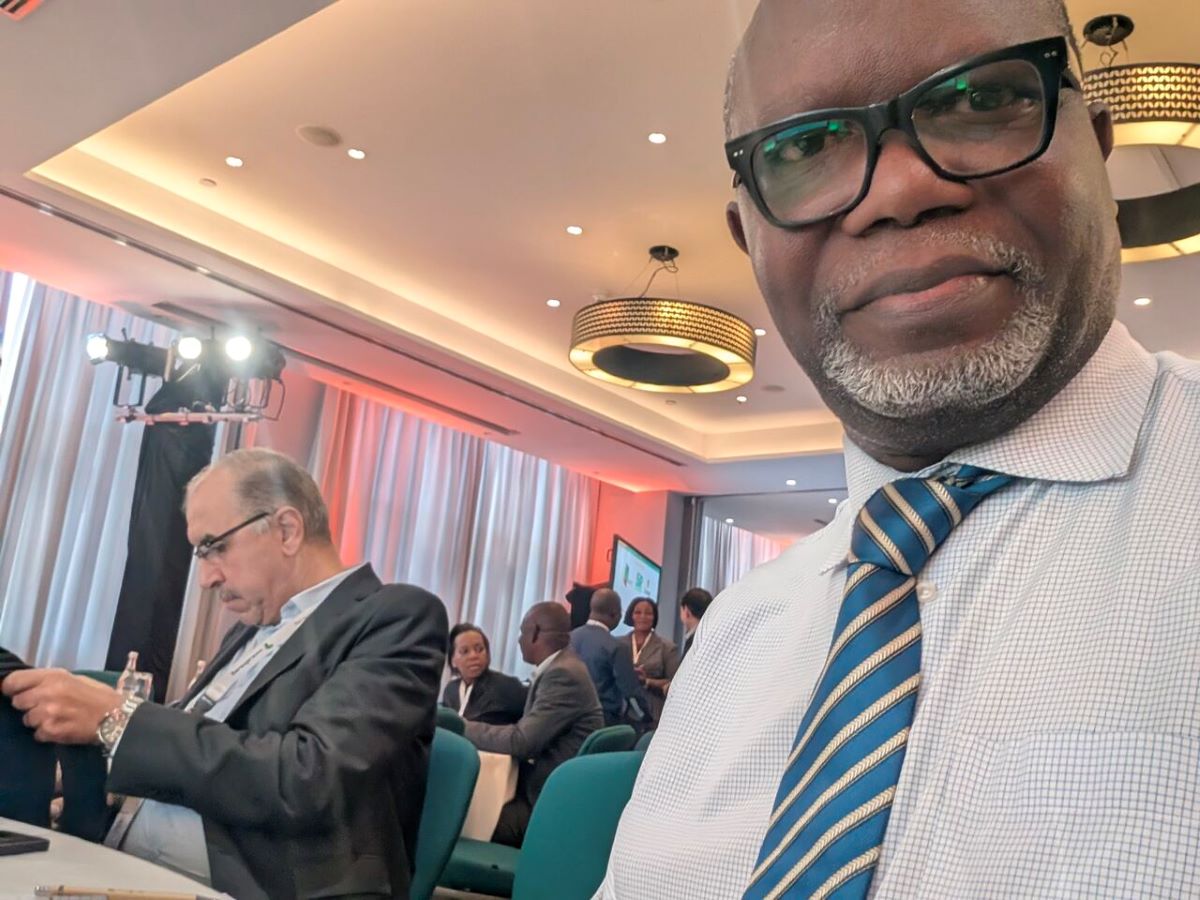
Bernard Omboto Onguso is an independent SAF & Jet A-1 strategist with over 30 years of refinery-to-wing experience at Eni, Shell, and TotalEnergies. He is the author of the Fueling African Aviation Trilogy and the founder of the Global Investor Portal at fuelingafricanaviation.com. He was a panelist at ILA Berlin 2026, representing Africa on SAF.