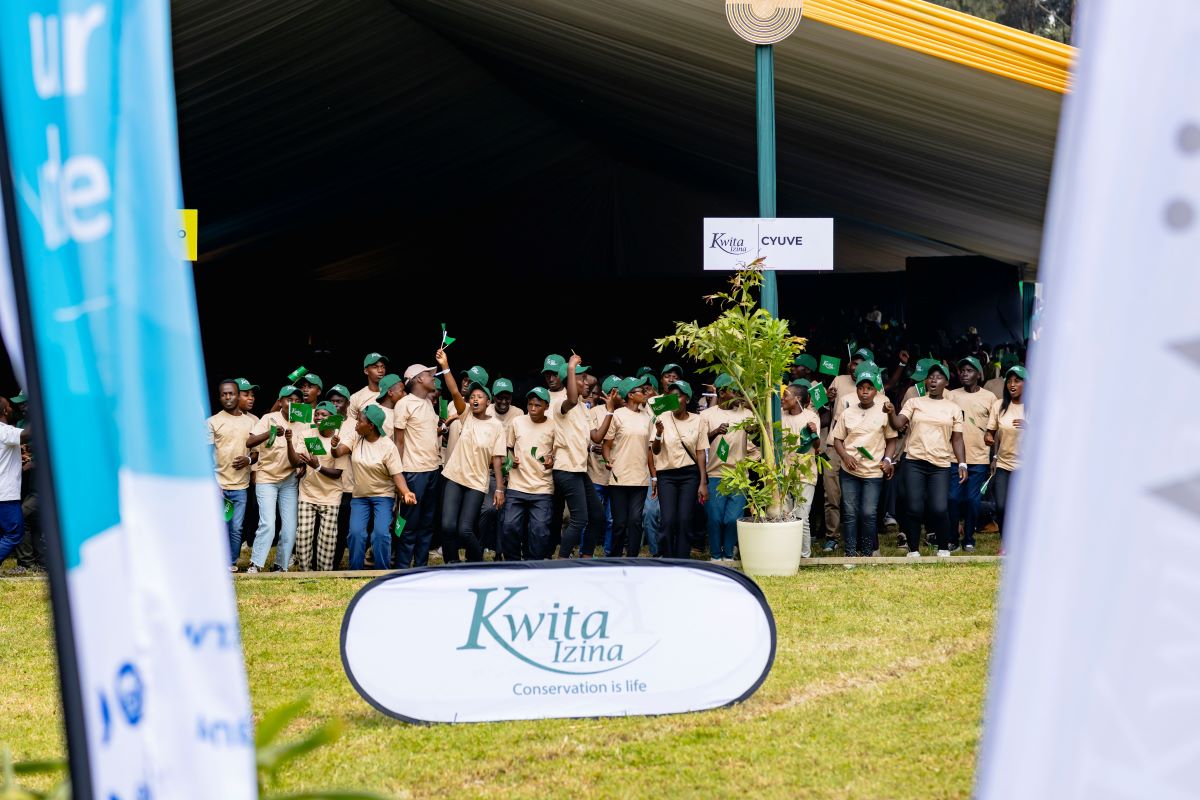
Kwita Izina @21: A Ceremonial Triumph & a Land Question Rwanda Can No Longer Postpone
Over a week after 22 baby gorillas were named in Kinigi, the applause has faded and the numbers are worth sitting with. The ceremony did what it does best. The harder story it carried was about space, money and 547 households.
Over one week on from Kinigi, the honest verdict on the 21st Kwita Izina is that it succeeded on its own terms and gestured, briefly and bravely, at terms it cannot yet satisfy.
Twenty-two infants were named on Friday 4 September beneath the Virunga volcanoes, bringing to 460 the number of gorillas named since the ceremony was formalised in 2005. The theme, “Conservation is Life: Sustaining the Future,” was the right theme. It just happens to point at the one thing Rwanda’s conservation model cannot buy with tourism revenue.
What went right, and by how much
The case for the model is now statistical, not rhetorical. Mountain gorillas remain the only great ape whose population grows, with roughly 1,060 individuals across the Virunga Massif and the Bwindi–Sarambwe ecosystem. Prime Minister Justin Nsengiyumva put the comparison where it belongs, noting that the Virunga Massif held only about 250 animals in the early 1980s and now holds more than 600.
“This remarkable recovery did not happen by chance,” he said, crediting rangers, veterinarians, researchers, policy, “responsible tourism, and the recognition that no single actor could do this job alone.”
That is not ceremony talk. It is a defensible causal claim, and Rwanda has the census data to support it.
The event also did something Kwita Izina has always done well: it made conservation legible to people who would never read a population report. Patrice Evra, James Chester and Mamadou Sakho named infants alongside Miss Belgium 2024 Kenza Johanna Ameloot, Olympic high jumper Mutaz Essa Barshim, Planet Earth producer Alastair Fothergill, and Rwandan filmmaker Marie-Clémentine Dusabejambo, fresh from an Un Certain Regard slot at Cannes. Rwanda’s own contribution was arguably the stronger line-up: gospel artist Israel Mbonyi, and Nyungwe ranger Jeannette Uwimbabazi, who named a baby Ndahiro, “commitment.” A ranger naming a gorilla after commitment is a better image than any celebrity arrival.
The programme’s widening beyond the stage was a genuine improvement. A conservation exhibition ran in Kinigi from 28 August to 8 September, the documentary A Gorilla Story was screened, namers trekked before the ceremony, and a community concert filled Ubworohane Stadium in Musanze on the eve, with a further concert at BK Arena on 5 September. The week is now longer than the day, which is how an event of this kind stays economically useful to the town hosting it.
What the ceremony did not resolve
Here is the appraisal’s uncomfortable part. Rwanda’s gorillas are no longer primarily threatened by the thing everyone assumes. Poaching is largely managed. The binding constraint is acreage.
Which is why the most consequential announcement of the fortnight was not a name. On 27 August, eight days before the ceremony, government broke ground on the Smart Green Village at Rurembo in Kinigi, a USD 49 million development giving 547 households modern housing, services and livelihood options. It is the resettlement arm of the Volcanoes Community Resilience Project: an estimated USD 300 million, implemented over ten years, to expand Volcanoes National Park by about 3,740 hectares and establish roughly 6,620 hectares of buffer zones, improving livelihoods for more than 17,000 people.
Read that against the naming ceremony and the hierarchy becomes clear. Kwita Izina celebrates a population that has outgrown its home. The expansion adds around 23 per cent more habitat to the park. Buffer zones exist to absorb the friction that currently lands on farmers’ fields. The village exists because people currently living inside the expansion footprint have to be moved well, and with consent.
Northern Province Governor Maurice Mugabowagahunde was candid about the trade, saying the expansion “will help address limited agricultural land while reducing human-wildlife conflict” and give communities “more space to live and farm safely.” Compensation for the relocation site is complete; compensation inside the expansion area is still running. That second sentence is the whole risk in miniature.
Follow the money, then the logic
The revenue-sharing arithmetic is the part of Rwanda’s story foreign delegations keep failing to copy. Ten per cent of park tourism revenue goes to neighbouring districts. Over twenty years that is more than RWF 23 billion across nearly 1,300 projects. For this cycle, districts around Volcanoes received about RWF 1.98 billion, split between Musanze (RWF 659.8 million), Nyabihu (RWF 659.8 million), Burera (RWF 495 million) and Rubavu (RWF 164.95 million). Since the programme began, the Northern Province alone has seen 838 projects worth RWF 8.6 billion.
Against that, the tourism engine is healthy: the sector earned $685 million in 2025, up 6 per cent, on roughly 1.49 million visitors. Gorilla trekking at $1,500 a permit remains the flagship. The model is high-value, low-volume, and it works.
The fragility is that everything routes through one species and one price point. Habitat squeeze, a respiratory outbreak in a population sharing most of our DNA, or instability on the DR Congo side of the massif could each reverse years of gains. African Wildlife Foundation‘s framing of the challenge is the one worth keeping on the desk: the test is whether conservation can attract long-term investment and whether people and wildlife can share an increasingly pressured landscape, with targets by 2030 to restore 1,000 hectares of critical habitat, empower 500 households and mobilise $10 million in sustainable financing for the landscape.
The verdict
Kwita Izina 2026 was a well-run, well-attended, genuinely meaningful ceremony that told the truth about the past and was slightly coy about the present. Its names, Shikama (stand strong), Rugamba (fighter), Komezutsinde (keep winning), read like a country talking itself into resolve.
The appraisal, then: the conservation model is proven; the land settlement is not. Rwanda has demonstrated for two decades that gorillas can pay for their own protection. What the next decade must prove is harder and far less photogenic, that 547 families can be moved into a green village, 3,740 hectares absorbed, and 17,000 people made better off, without the word “conservation” starting to mean something different on the other side of a fence.
The gorillas named in Kinigi will be around to be counted again in twenty years. Whether the settlement succeeds is the open question, and it deserves more coverage than the naming.