
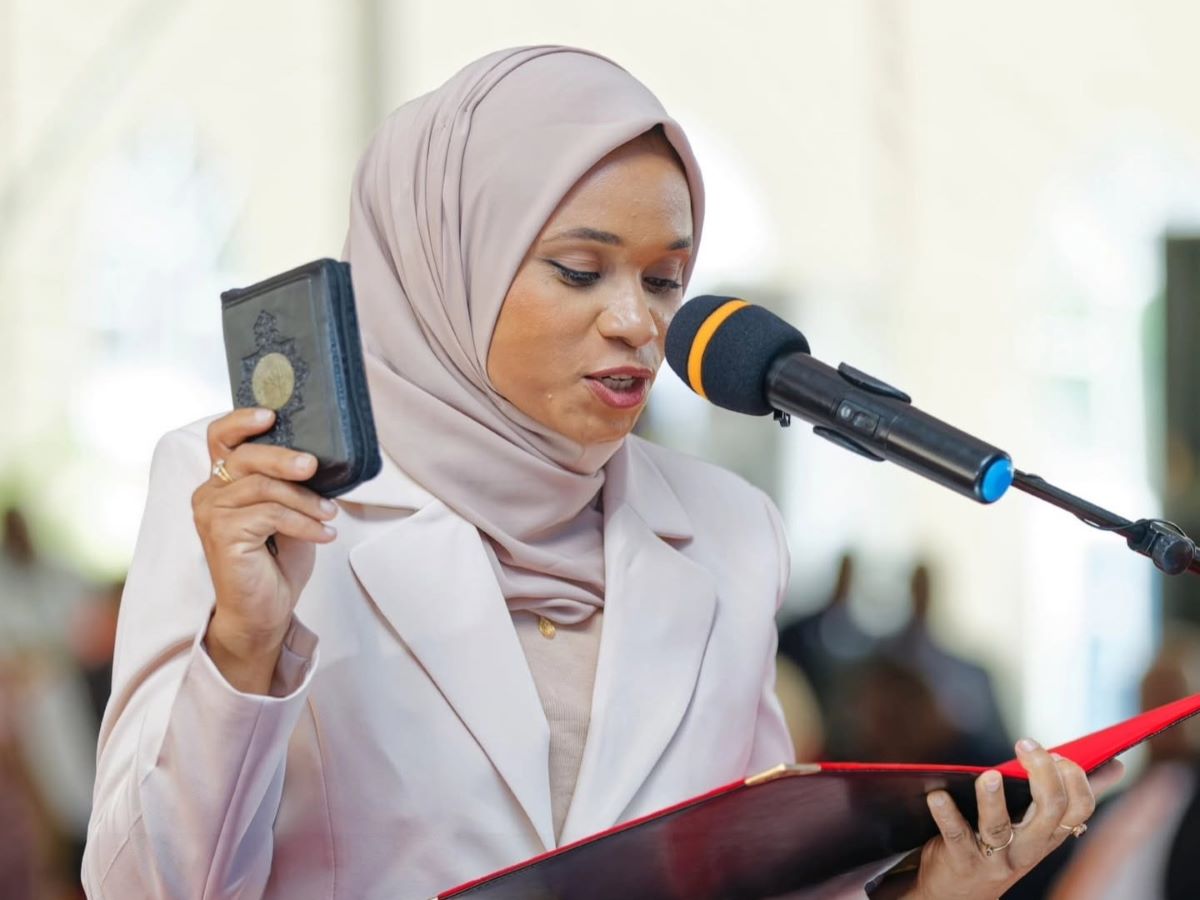
Dr. Nasra Nassor Omar Takes Zanzibar Tourism Portfolio In Government of National Unity
Dr. Nasra Nassor Omar, a senior official of the opposition ACT-Wazalendo party, has been appointed as Zanzibar’s Minister for Tourism and Heritage, by President Hussein Ali Mwinyi completing the cabinet of the archipelago’s first Government of National Unity (GNU).
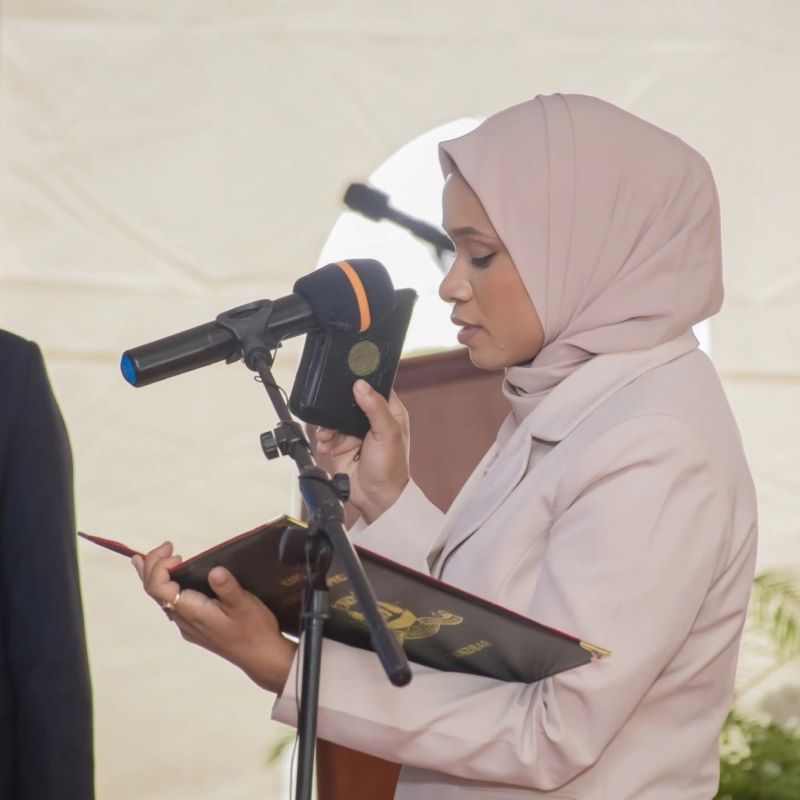
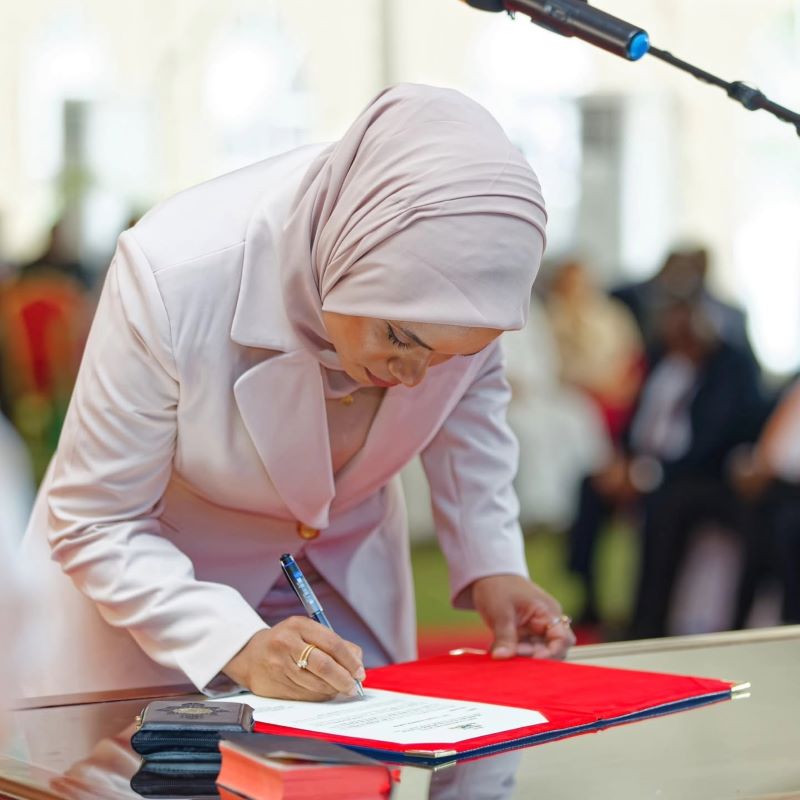
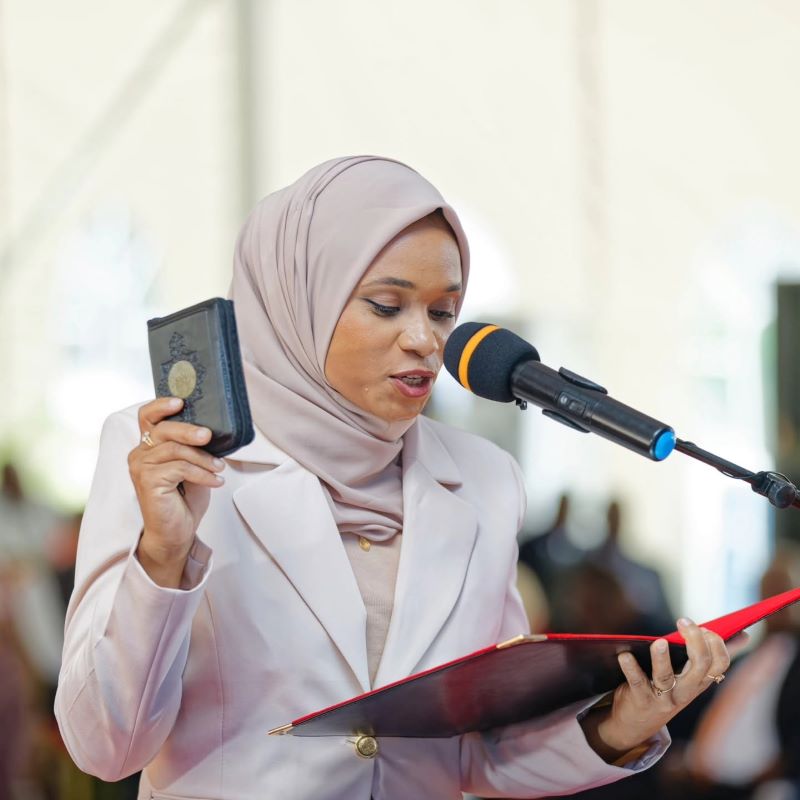
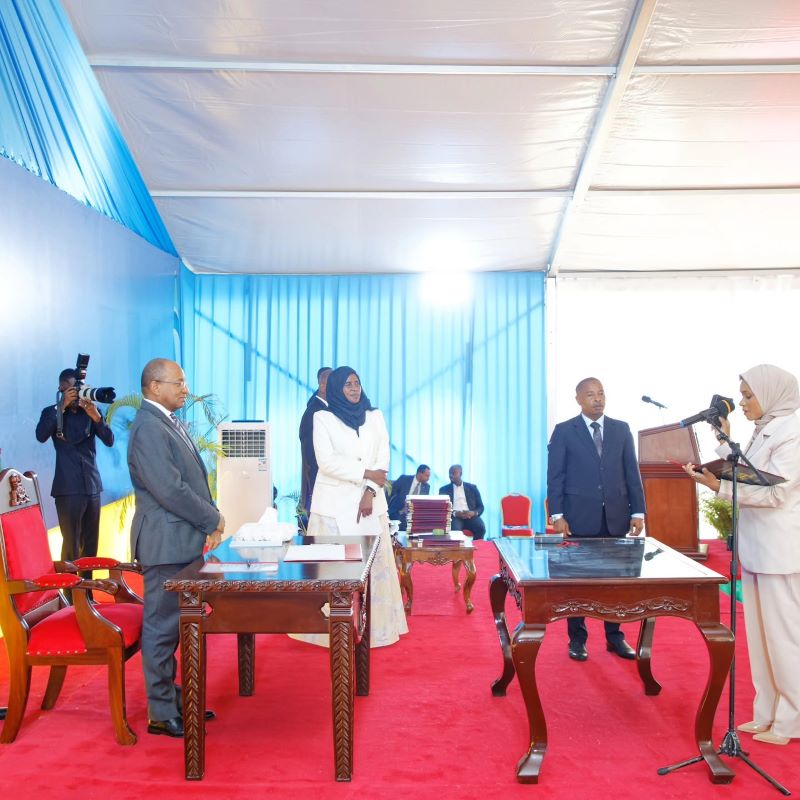
The appointment was announced on October 3, 2026 at State House, and Dr. Nasra was sworn in alongside her fellow ministers on Monday, October 5. She takes charge of the sector that anchors the island economy, following record tourism receipts of US$1.19 billion in 2025, up 19.3 per cent year on year.
A Cabinet Shuffle that Closes A Reconciliation Deal
The announcement wrapped up a process that began with the October 2025 general election and the swearing-in of ACT-Wazalendo’s Othman Masoud Othman as First Vice-President on September 22, 2026. Under the reconciliation and power-sharing agreement formalised in a joint declaration signed on July 9, 2026, the opposition is entitled to four ministerial positions.
Dr Mwinyi said the appointments “followed political reconciliation and constitutional agreements” between the ruling Chama Cha Mapinduzi (CCM) and ACT-Wazalendo, and were intended to strengthen unity and improve government efficiency. He also established a Joint Dialogue Committee to address problems in implementing the GNU accord.
The other three ACT-Wazalendo ministers are Nassor Ahmed Mazrui (Health), Omar Said Shaaban (Trade and Industrial Development) and Dr. Mohamed Ali Suleiman (Communications, Information Technology and Innovation).
The reshuffle also moved several CCM ministers. Mudrik Ramadhan Soraga, who had held the tourism portfolio since January 2024, was reassigned to head the Ministry of Blue Economy and Fisheries.
From Clinic to Cabinet
Dr. Nasra’s path to a full portfolio is unusual. She trained and practised as an aviation medical doctor and entered public attention as a commentator on Zanzibar’s electoral process, including writing about polling irregularities reported during the 2020 election cycle.
Within ACT-Wazalendo she served as the party’s Shadow Minister for Foreign Affairs and East African Cooperation, issuing statements on regional democratic developments. She is a member of the Zanzibar House of Representatives, where she has pressed grievances about employment being “dominated by non-locals” and argued that the Zanzibar budget does not reflect the islands’ constitutional and Union status.




The Zanzibar Electoral Commission allocated the women’s special seats on November 5, 2025 in proportion to constituency seats won — 16 to CCM and four to ACT-Wazalendo, among them Dr. Nasra. Holding a seat in the House is a constitutional prerequisite for serving as a minister.
Speaking after her swearing-in, Dr. Nassor Omar signalled a community-first approach: the ministry, she said, “will involve citizens in tourism so as to ensure every citizen participates in and benefits from the opportunities the sector generates.”
What She Inherits: A Boom with Friction
Tourism is Zanzibar’s leading source of foreign exchange and its largest single income generator, outperforming the agricultural export industry and contributing roughly a quarter of island income.
Momentum is strong. Zanzibar received 917,167 international visitors in 2025, up 24.5 per cent on the 736,755 recorded in 2024 and comfortably past previous records — 260,644 in 2020, 394,185 in 2021, 548,503 in 2022 and 638,498 in 2023. By end-October 2025 the islands had already logged 743,605 arrivals, the highest figure in the sector’s history at that point. European markets accounted for 64.4 per cent of July 2025 arrivals, and industry leaders are pushing for higher-value growth rather than simply chasing arrival numbers as the archipelago approaches the symbolic one-million-visitor mark.
That growth brings pressure. Lawmakers have raised concerns in the House that Stone Town, inscribed as a UNESCO World Heritage Site in 2000, is being converted into an “increasingly tourism-dominated zone,” with traditional homes turned into hotels and commercial space in ways they warn could erode the social fabric of the Old Town. The government has responded by directing the Stone Town Conservation and Development Authority to prioritise restoration over new construction within the heritage area.
Tanzania has also formalised a sustainable heritage framework with UNESCO covering Stone Town conservation, institutional capacity building and coastal climate defence — a programme that sits substantially in the new minister’s remit.
The portfolio also carries institutional memory of friction. Dr. Nasra’s eventual predecessor in the seat, Simai Mohamed Said, resigned in late January 2024 citing “unfavourable and disruptive working conditions.” Hospitality stakeholders have repeatedly cautioned that the sector, which supports large numbers of young workers, should not be caught up in political or regulatory disputes.
Dr. Nassor’s file, in short, combines a booming revenue line, a UNESCO-listed town under development pressure, an industry sensitive to regulatory disruption, and the added weight of symbolising a national unity deal. Mr. Mwinyi’s message to his new team was blunt: serve all citizens regardless of political, social, religious or regional differences.