How Jinja Became Uganda’s Living Heritage Ground on International Museum Day 2026
Jinja, Uganda — Long before the first speech was delivered and the exhibition gates officially opened at the Rugby Grounds, the streets of Jinja were already pulsing with a rhythm that felt less like a procession and more like a movement.
On the morning of May 18, 2026, the city came alive with color, memory, and pride. Drums echoed through the avenues as a diverse parade of Ugandans—elders and schoolchildren, museum curators and street performers, artisans and conservationists—marched together. Some carried banners; others carried traditional instruments. But collectively, they carried the shared story of a nation.
This was the national commemoration of International Museum Day 2026, held under the global theme “Museums Uniting a Divided World” and Uganda’s resonant national theme, “Museums as Bridges of Unity and Shared Heritage.” In the heart of Jinja, that theme became a reality.
A Living Mosaic at the Rugby Grounds
From the moment visitors entered the Rugby Grounds, the venue transformed into a microcosm of Uganda. Community museums from across the country showcased traditions, artifacts, and indigenous knowledge systems that defy the notion of culture as something static or fading.
Instead, the day highlighted a vibrant truth: culture is alive.
Exhibition stalls featured handmade crafts rooted in identity, while young innovators engaged visitors through interactive heritage education. Traditional dances from various regions turned the grounds into a moving celebration of diversity. The energy shifted seamlessly from one performance to another, each carrying its own language and story, yet all harmonizing in a shared space.
Bridging Generations and Divides
The event sent a powerful message beneath the festivities: museums are no longer silent warehouses of old objects. They are evolving into active spaces for dialogue, healing, and social cohesion.
In her address, Doreen Katusiime, Permanent Secretary of the Ministry of Tourism, Wildlife and Antiquities, framed museums as essential tools for rebuilding understanding in a world fractured by conflict and misinformation.
“Museums emerge not merely as institutions that preserve artifacts but as inclusive spaces where people can engage in dialogue, reflect on shared histories, reconciliation, unity and build empathy,” Katusiime said.
She emphasized that Uganda’s cultural diversity is a strategic strength, urging that development must not erase the nation’s stories.
“A society that disconnects from its heritage risks losing its sense of identity, continuity and belonging,” she warned, a sentiment that resonated deeply in an era of rapid modernization.
The Youth: The Future of Heritage
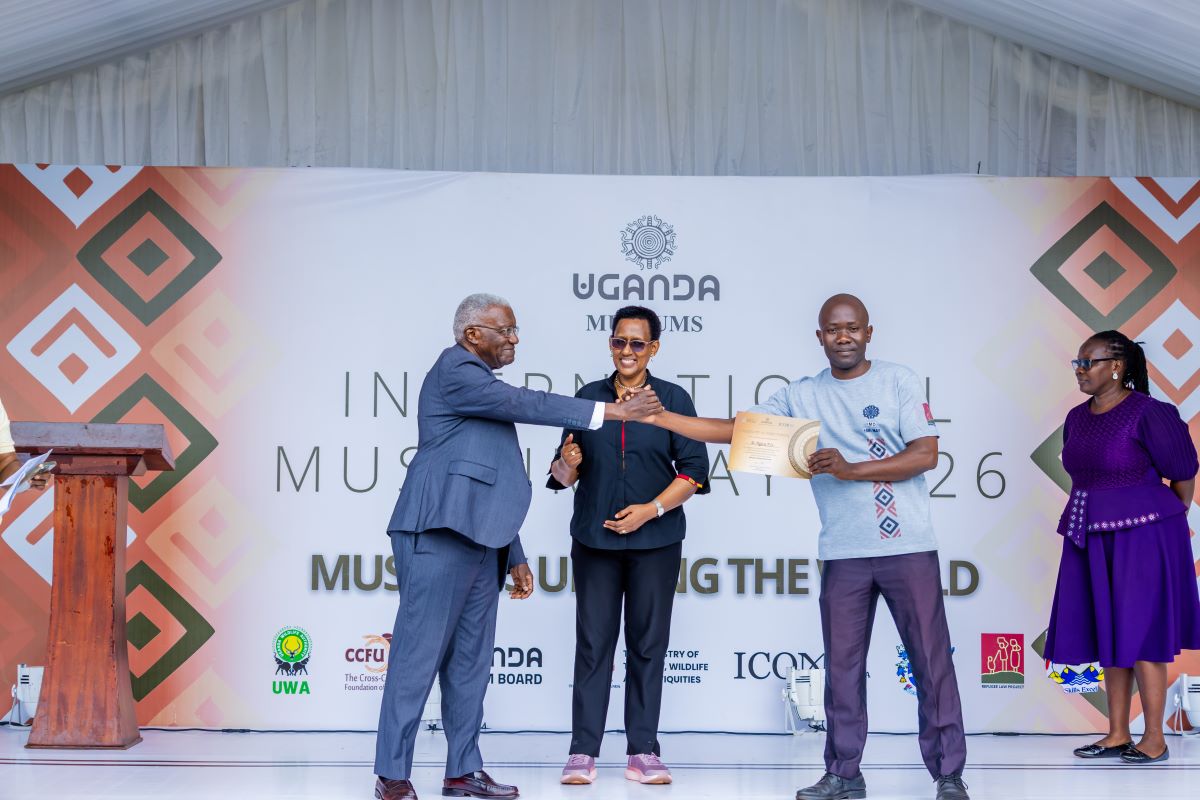
A defining feature of the day was the palpable involvement of young people. Students navigated exhibitions with curiosity, and schools excelling in heritage quiz competitions were recognized on stage. The moment underscored a critical point: heritage preservation begins with the youth.
Guest of Honour, Hon. Col. (Rtd) Tom Butime reinforced this, describing museums as “bridges” that connect generations and communities.
“Museums are bridges in many important ways. They bridge generations by connecting young people with the wisdom, knowledge, and experiences of their ancestors. They bridge communities by creating safe and inclusive spaces where different cultures can encounter one another with respect and understanding,” Butime stated.
He cautioned that a nation neglecting its heritage risks losing its historical consciousness, calling for heritage conservation to remain central to national planning as Uganda urbanizes.
Jinja: The Perfect Stage
The choice of Jinja as the host city proved inspired. Known for its industrial legacy, its role as the source of the Nile, and its status as a tourism hub, Jinja sits at a unique intersection of history and modernity. It provided a fitting backdrop for a celebration where stories of the past met the energy of the present.
Visitors encountered more than displays; they found living memory. Exhibits ranged from indigenous healing practices and traditional medicine to historical photographs, oral traditions, and musical instruments. Several exhibitors demonstrated how heritage drives livelihoods, turning culture into a viable engine for entrepreneurship and creative enterprise.
A Future Shaped by the Past
As the sun set and the drums quieted, the atmosphere remained charged. Children danced near the stages, elders shared stories with strangers, and curators spoke with passion about the histories they protect.
International Museum Day 2026 in Jinja was more than an event; it was a reminder that in a world increasingly shaped by screens and digital disconnection, identity still matters.
Uganda’s heritage was not hidden behind glass on that day. It was alive in the streets, in the music, in the conversations, and in the people who continue to protect the stories that make the country whole. Museums are not just preserving the past; they are actively helping to shape Uganda’s future.