“Tourism Policy is Economic Policy:” Highlights of De Lille’s World Tourism Day Keynote
South Africa’s Minister of Tourism, Patricia de Lille puts digital tools, jobs and GBV at centre of WTD 2026 address in Limpopo
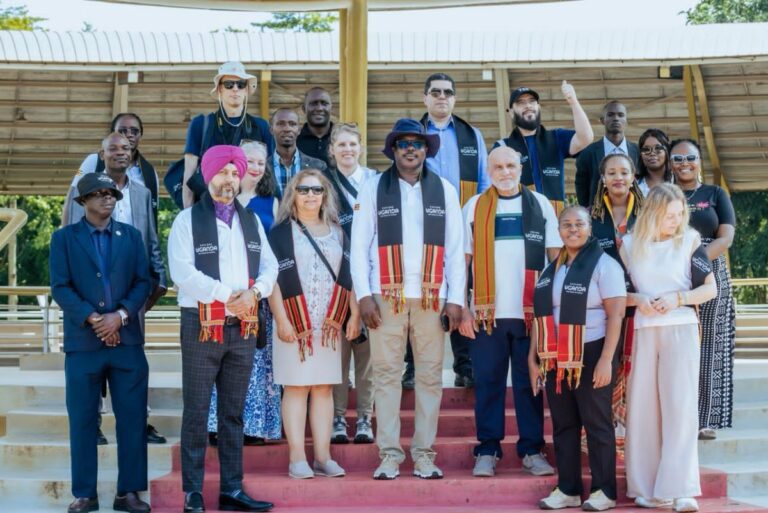
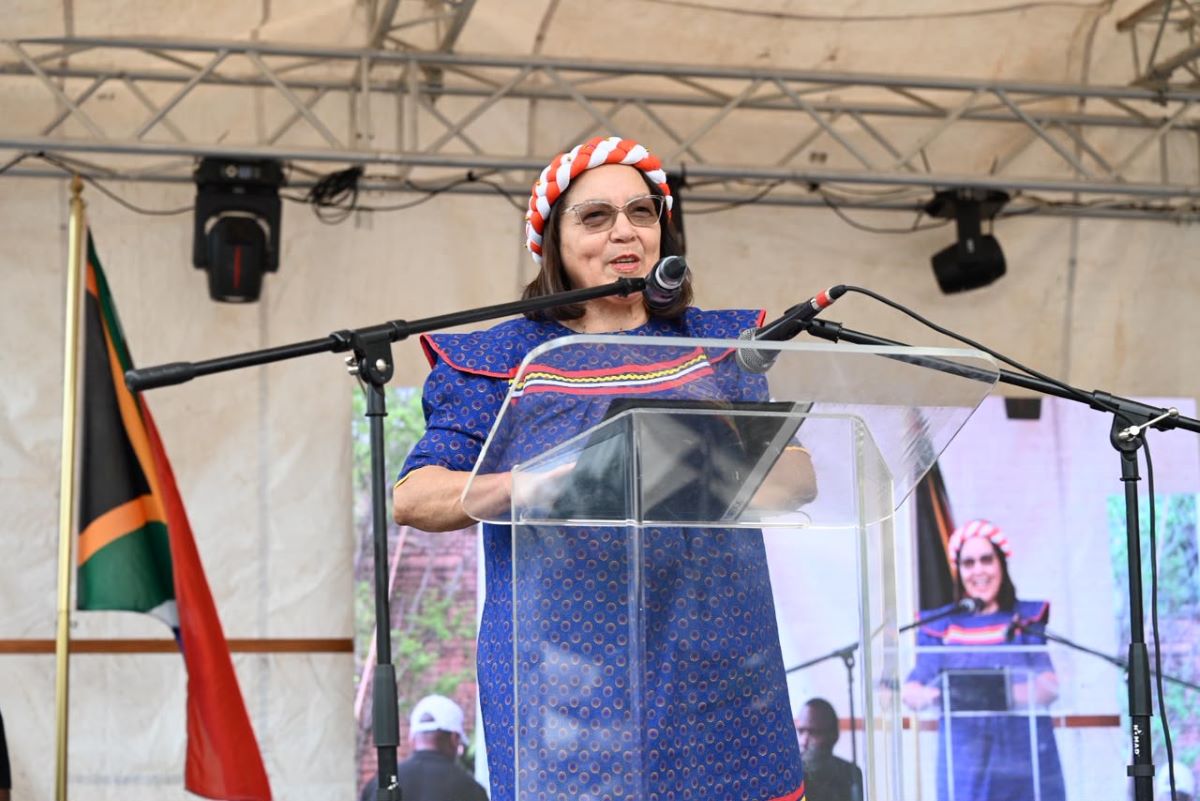
Legend Golf & Safari Resort, Waterberg District, Limpopo — South Africa‘s Minister of Tourism, Patricia de Lille, used this year’s national World Tourism Day address to argue that tourism has crossed a threshold — from a leisure industry into a formal pillar of the national economy — and that the country’s next phase of growth will be won or lost online.
Her keynote, delivered before sector stakeholders in Limpopo under the theme Growing South Africa’s Tourism Sector in the Digital Era, moved between three registers: an economic case, a technology agenda, and a moral appeal about safety at home.
“Highly revered”: A global mandate, a local verdict
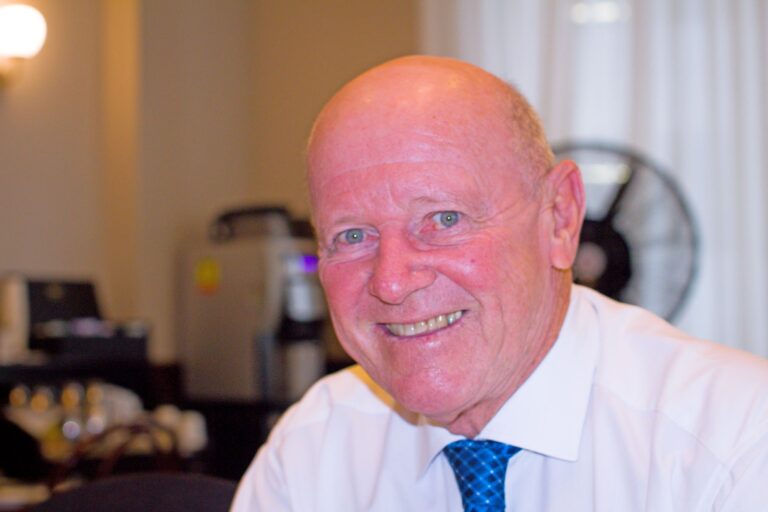
De Lille opened with a view from outside the country. She had just returned from Geneva, where she served as Co-Chair of the inaugural Beyond Tourism Day convened by Alois Zwinggi, President and CEO of the World Economic Forum.
“I am so proud to say that at the WEF headquarters, it was very clear to me that South Africa is highly revered as a tourism destination,” she said. “Our country’s input into some serious decisions affecting the tourism sector globally is highly valued.”
She attributed that standing not to government, but to the room itself: “This is all thanks to the work that you, as a broader tourism sector, do to continue showcasing our Mzansi.”
Limpopo, she argued, was a fitting host precisely because it compresses the country’s whole proposition — “iconic nature and wildlife, rich cultural heritage, vibrant music and food, rural and community-based experiences, and tourism opportunities beyond our traditional gateways, including golf.”
The Vulindlela shift: four sectors, one 3% target
The speech’s central political claim came with the announcement that tourism now sits alongside Mining, Infrastructure and Agriculture as one of four sectors identified to drive inclusive economic growth, job creation and confidence under Phase Three of Operation Vulindlela, the Government-Business Partnership announced by President Cyril Ramaphosa in August. The immediate target of the new phase is to lift South Africa’s economic growth above 3%.
“That is why I say tourism policy is economic policy,” de Lille said. “We are turning tourism growth into investment, jobs, thriving businesses and opportunities for communities across South Africa.”
But she was careful to frame the designation as obligation rather than trophy. “Growing tourism is a shared responsibility. Government must create the enabling environment; industry must invest and innovate; provinces and municipalities must strengthen destinations; and communities and tourism businesses must participate in the opportunities that growth creates.”
Two cabinet-endorsed instruments, she said, give the partnership its shape: the Tourism Growth Partnership Plan, organised around ease of access, destination marketing, safety and security, product development and job creation; and the Tourism Route Development Marketing Plan, which she described as taking shape through a coordinated approach with provinces to secure more direct flights.
One application, one answer within 24 hours
The minister positioned the newly launched Electronic Travel Authorisation as the concrete test of whether government can actually deliver on “ease of access”: one application, one answer within 24 hours. The system is live for travellers from China, India, Indonesia and Mexico, allowing visa outcomes digitally from home or cellphone, and once fully rolled out is expected to increase arrivals in a way that could create between 80,000 and 100,000 jobs.
That infrastructure made the day’s theme “particularly timely,” she said, because technology has already rewritten the funnel — how travellers discover destinations, plan journeys, make bookings and share experiences. Modern marketing, she noted, is pushing destination marketing organisations globally toward the digital era “to capture minds and hearts of travellers.”
Her critique of conventional destination promotion was pointed. “Our digital strategy must go beyond promoting beautiful images of South Africa. It must convert interest into travel and return visits.” Travellers, she insisted, must be able to “discover, compare and book South African experiences easily.”
The MSME argument — and the human caveat
De Lille’s most specific economic claim concerned who gets to participate. Digital storytelling, she said, must bring visibility to “rural destinations, hidden gems, townships, small towns, community experiences and emerging tourism businesses,” with MSMEs at the centre.
“Technology can give a small tourism business in Limpopo access to customers anywhere in the world. Digital transformation must therefore support both tourism growth and economic inclusion.”
She then reversed direction. “But as we embrace artificial intelligence and new technologies, we must remember that tourism remains fundamentally human. Technology may help someone discover and book South Africa; it is our people, hospitality and experiences that they will remember.”
Take a Sho’t Left, and come for the cricket
“Tourism begins at home,” de Lille told delegates. Domestic travel, she argued, is what gives the sector resilience and keeps money moving through the entire value chain. Her pitch was characteristically direct: “Take a Sho’t Left. It’s your country — enjoy it. Explore a neighbouring town, another province or an experience close to home. Even better, invite neighbouring countries to come and visit South Africa.”
In the digital era, she added, “every South African can become an ambassador for our destination,” pointing audiences to SABC 1’s four-part What We Know series, airing Thursdays, in which South Africans tell their own stories from the country’s small towns — evidence, she said, that compelling experiences exist well beyond the major cities.
With South Africa hosting the Cricket World Cup, she framed sport as a demand-generation tool for the whole Southern Region: “Come for the cricket. Stay for the culture.” Major sporting events, she noted, bring visitors, stimulate spending and showcase destinations to global audiences.
Record arrivals, Club Med and a summit on 1 October
The numbers underwrote the argument. South Africa recorded a record 10.5 million international arrivals in 2025, up 17.6% on the previous year, and welcomed 6.5 million visitors between January and July this year, an increase of 12.4%. De Lille reserved explicit credit for workers: “Thank You, Thank You — it’s because of your hard work that South Africa celebrated a record 10.5 million international arrivals.”
Investment followed as her second proof point: the opening of Club Med South Africa Beach and Safari on the KwaZulu-Natal North Coast, a R2 billion-plus resort pairing Indian Ocean beach leisure with a Big Five safari experience and creating hundreds of permanent jobs while supporting local suppliers and skills. “We want this investment to be a catalyst for more tourism investment across South Africa.”
That sets up next week’s second Tourism Infrastructure Investment Summit in Gauteng on 1 October, themed “Invest in Tourism Infrastructure, Invest in Growth,” where bankable public and private projects will be tabled — including Limpopo’s Framora Hotel from the Waterberg District Municipality. The inaugural Cape Town summit unveiled eight projects worth R1 billion, three of which have already secured funding. Her message to capital was unambiguous: “Come and build with us.”
“No thriving tourism economy where women do not feel safe”
De Lille closed by turning the subject of safety inward, away from visitors and toward residents. The tourism sector, she said, joins all South Africans in condemning continued violence against women and girls.
“There can be no thriving tourism economy in communities where women do not feel safe. Safety, dignity and respect must define the South Africa we build and the South Africa we invite the world to experience.”
Later this year, the Department of Tourism will host a fundraising golf day so shelters serving victims of gender-based violence and femicide “can keep their doors open” — a commitment aimed squarely at an industry whose workforce is majority female. “We stand with the women of this country who also make up the majority staff in the tourism sector.”
Her farewell returned to the keynote’s governing tension between machine and host: “The future of tourism will be increasingly digital, but its heart will always be human. Take a Sho’t Left. Discover Limpopo. Discover South Africa.”