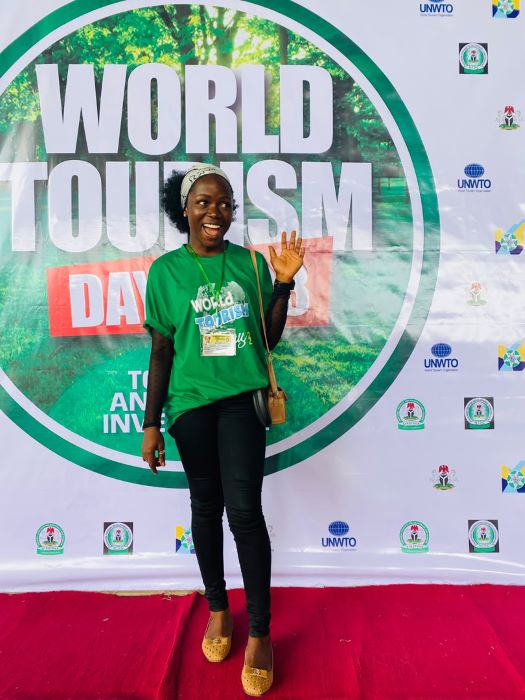
World Tourism Day 2026: Nigeria, Artificial Intelligence & the Question of Visibility
World Tourism Day 2026 asked how AI will redesign travel. In Nigeria, the more urgent question is about rethinking the future of tourism in the country — how do we make visible the experiences that already exist?
Every year on September 27, the world pauses to reflect on tourism — not simply as an industry of travel and leisure, but as a sector capable of connecting people, cultures, economies and communities. In 2026, that reflection took a pointed turn. Under the theme “Digital Agenda and Artificial Intelligence to Redesign Tourism,” the day was hosted in El Salvador, where ministers and industry leaders watched AI demonstrated live rather than merely discussed.
For Nigeria, the conversation lands with unusual weight. With its diverse cultural traditions, archaeological heritage, festivals, landscapes, cuisine, creative industries and a fast-growing domestic market, the country already holds most of the ingredients for a vibrant tourism economy. The persisting question is different: how do these resources become visible, accessible and genuinely connected to travellers in an increasingly digital world?
A World Tourism Day Without a Standalone Federal Celebration?
Unlike some national occasions where a flagship federal event anchors the commemoration, no separately announced World Tourism Day 2026 celebration appears to have been organised by the Federal Ministry of Art, Culture, Tourism and the Creative Economy (FMACCE) itself. States moved where the federation did not convene; Lagos marked the day with its own programme on innovation and digital transformation.
That absence, however, did not mean silence. Several of the Ministry’s initiatives leading into the day were already engaging the very issues embedded in this year’s theme.
The clearest example is Ember to Remember 2026, the Ministry’s 100-day national tourism season running from September through December, built in partnership with MyCityApp Nigeria. Announced by Minister Hannatu Musa Musawa at Transcorp Hilton Abuja and flagged off on September 14 at Eko Hotels Lagos, it gathers tourism, culture, entertainment, hospitality, transportation, commerce and the creative sectors under one coordinated calendar — aimed, officials say, at unlocking an estimated $100 billion tourism and creative economy.
At its centre sits a National Digital Events and Experiences Calendar, designed to make festivals, cultural gatherings and tourism experiences across the 36 states and the Federal Capital Territory easier to find. “What has been missing is a deliberate structure that brings these experiences together, gives them visibility and allows us to market them as one powerful national story,” Musawa said at the announcement.
That may sound like a modest digital calendar. It answers a much larger question in contemporary tourism: how do we make people aware of experiences that already exist?
Nigeria does not lack destinations, festivals or cultural moments. What has often been missing is visibility, coordination, documentation — the connective tissue between an experience and the person who might travel for it. This is where digital technology stops being a convenience and becomes infrastructure.
The Conversation is Already Moving
The Ministry’s direction is echoed elsewhere in the ecosystem. The Nigerian Tourism Development Authority (NTDA) marked the period with Tourism Week 2026 in Abuja, where Director-General Ola Awakan presented a first-year scorecard framed around repositioning the Authority beyond promotion into development, regulation, investment facilitation, destination marketing and tourism intelligence.
Awakan has also been advancing NITOUREY, a tourism streaming platform and content ecosystem unveiled in April as a public-private partnership intended to carry Nigerian destinations to global audiences — among them Zuma Rock, Yankari, the Argungu Fishing Festival, the Ngwo Pine Forest and Cave, Obudu Mountain Resort, and Olumo Rock. Alongside it sit Naija Flavour, which links food tourism to farmers, processors, chefs and communities, and a grassroots framework to identify and document tourism assets across all 774 local government areas.
“Tourism begins in communities where festivals, crafts, heritage sites, indigenous cuisine, landscapes and stories are preserved,” Awakan said.
Taken together, these moves signal a shift in register: from “What destinations do we have?” to “How do we connect these destinations with the people who need to see them?” That is an important shift. But technology should not become the story itself.
Artificial intelligence can help businesses read visitor behaviour, sharpen destination marketing, personalise experiences and open up data. Digital platforms can carry lesser-known places to audiences that traditional marketing never reached. Yet tourism remains, at root, about people and places.
A platform can describe an ancient settlement; it cannot substitute for standing in that landscape. An algorithm can recommend a festival; it cannot convey what that festival means to the community that has kept it alive. AI can document heritage, but the responsibility of deciding what gets documented, how it is represented and whose story is told remains profoundly human.
For a country like Nigeria — where tourism is bound to living cultures, traditional knowledge, community identity and historical memory — this distinction is not academic.
The United Nations Secretary-General made a parallel point in his message for the day. “Technology must serve humanity,” António Guterres wrote. “Tourism workers, local communities and emerging destinations must help shape what comes next.”
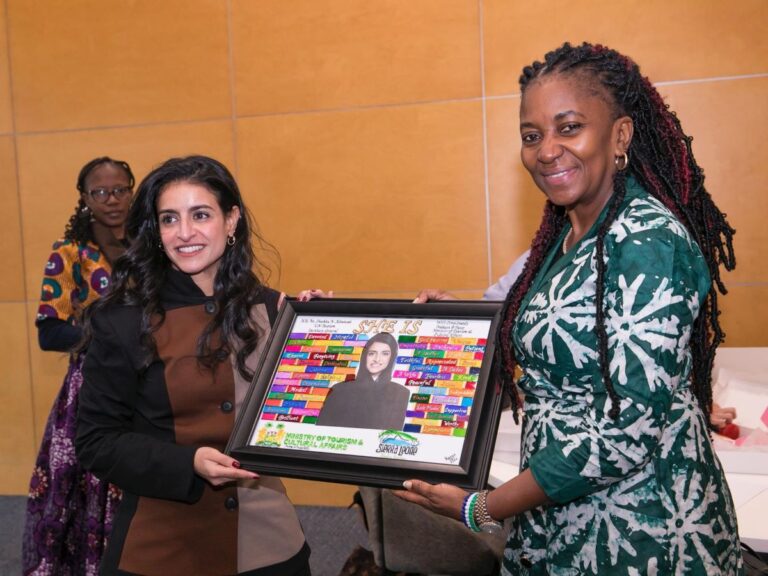
Shaikha Al Nuwais, Secretary-General of UN Tourism, put the risk more sharply: left unaddressed, these changes “risk widening the gap between those shaping the new digital rules and those simply expected to follow them.” Her condition was simple. “Progress only counts if it reaches everyone.”
What Does this Mean for Nigerian Tourism?
The real question is not whether Nigeria embraces AI and digital tourism. We already are. The harder question is how.
- How can technology draw attention beyond the familiar tourist circuits?
- How can digital platforms give visibility to community-based tourism?
- How can AI support the documentation and interpretation of our cultural and archaeological heritage without flattening complex cultures into digital stereotypes?
- How can tourism data help governments read visitor patterns and plan infrastructure more wisely?
- And most importantly, how do the benefits of this transformation reach the communities that own, preserve and sustain the experiences being promoted?
These questions matter because Nigeria’s tourism potential is not housed only in major festivals or established attractions. It lives in community stories, historic landscapes, traditional crafts, foodways, archaeological sites, local celebrations and everyday cultural moments waiting to be documented and shared responsibly.
A Different Way of Celebrating
Perhaps World Tourism Day 2026 in Nigeria should not be measured by the presence or absence of one grand ceremony. The more meaningful measure lies in the conversations and initiatives gathered around it.
FMACCE’s digital direction through Ember to Remember, the NTDA’s emphasis on tourism intelligence and grassroots documentation, and the wider debate over technology and destination marketing all show that tourism’s digital future is already being argued out within Nigeria’s tourism ecosystem.
World Tourism Day thus became an occasion not merely to mark where Nigerian tourism stands, but to ask where it is going. As we take up artificial intelligence and digital platforms, we must ensure innovation does not make tourism less human.
It should instead help us tell our stories better, make our destinations more visible, strengthen the communities behind them, preserve what we inherit — and let more people encounter the remarkable diversity of Nigeria.
The future of Nigerian tourism may be digital, but the heart of the experience will always be human-CHINEKEOKWU, C. M.