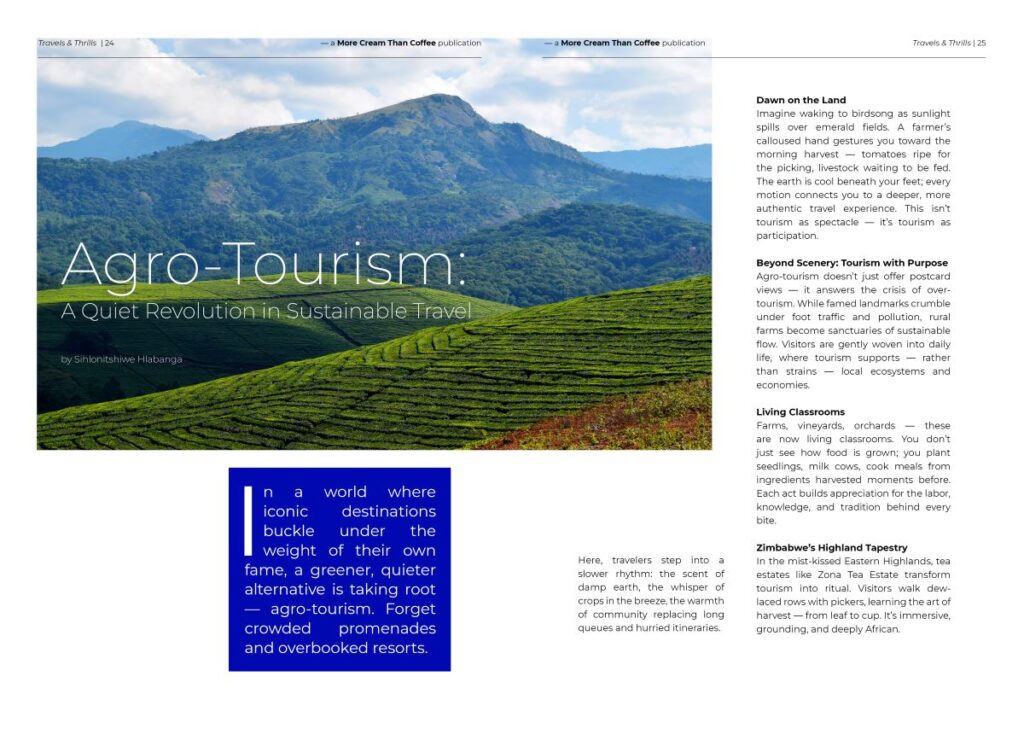
Agro-Tourism: A Quiet Revolution in Sustainable Travel
In a world where iconic destinations buckle under the weight of their own fame, a greener, quieter alternative is taking root — agro-tourism. Forget crowded promenades and overbooked resorts. Here, travelers step into a slower rhythm: the scent of damp earth, the whisper of crops in the breeze, the warmth of community replacing long queues and hurried itineraries.
Dawn on the Land
Imagine waking to birdsong as sunlight spills over emerald fields. A farmer’s calloused hand gestures you toward the morning harvest — tomatoes ripe for the picking, livestock waiting to be fed. The earth is cool beneath your feet; every motion connects you to a deeper, more authentic travel experience. This isn’t tourism as spectacle — it’s tourism as participation.
Beyond Scenery: Tourism with Purpose
Agro-tourism doesn’t just offer postcard views — it answers the crisis of over-tourism. While famed landmarks crumble under foot traffic and pollution, rural farms become sanctuaries of sustainable flow. Visitors are gently woven into daily life, where tourism supports — rather than strains — local ecosystems and economies.
Living Classrooms
Farms, vineyards, orchards — these are now living classrooms. You don’t just see how food is grown; you plant seedlings, milk cows, cook meals from ingredients harvested moments before. Each act builds appreciation for the labor, knowledge, and tradition behind every bite.
Zimbabwe’s Highland Tapestry
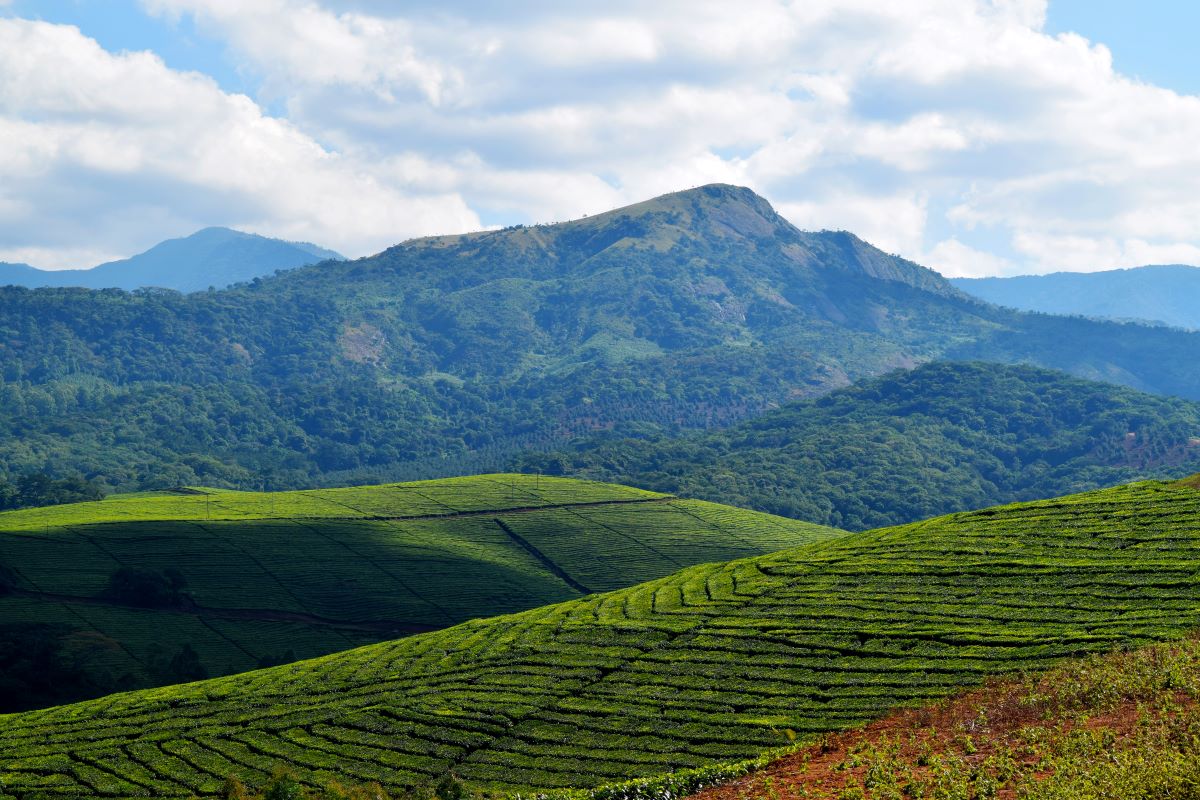
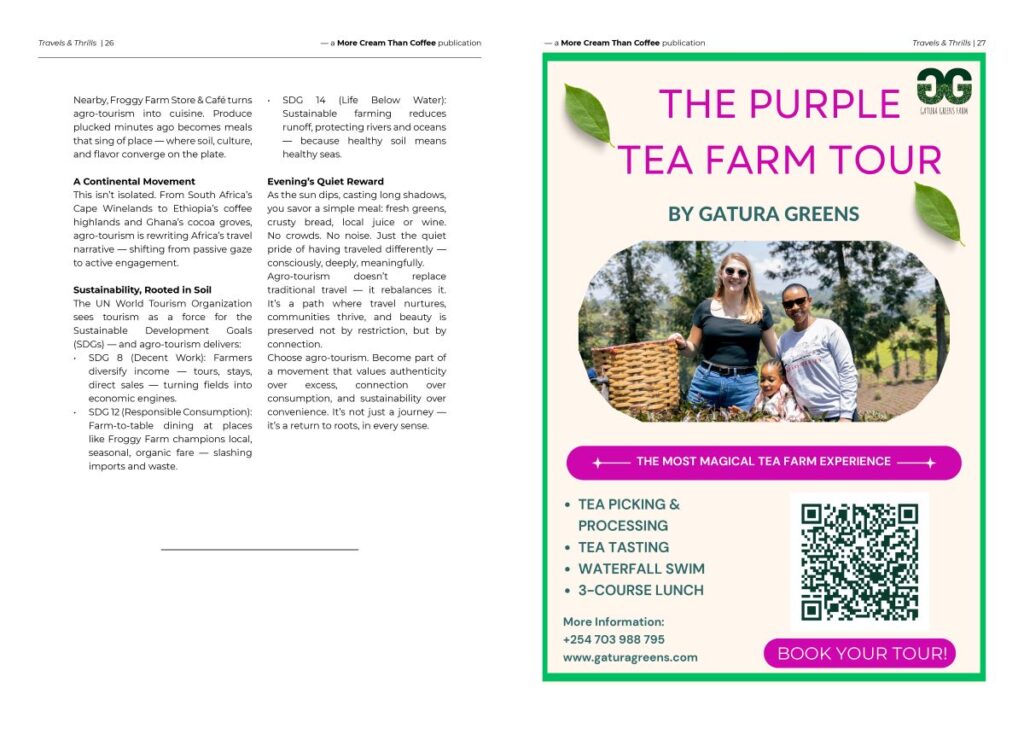
In the mist-kissed Eastern Highlands, tea estates like Zona Tea Estate transform tourism into ritual. Visitors walk dew-laced rows with pickers, learning the art of harvest — from leaf to cup. It’s immersive, grounding, and deeply African.
Nearby, Froggy Farm Store & Café turns agro-tourism into cuisine. Produce plucked minutes ago becomes meals that sing of place — where soil, culture, and flavor converge on the plate.
A Continental Movement
This isn’t isolated. From South Africa’s Cape Winelands to Ethiopia’s coffee highlands and Ghana’s cocoa groves, agro-tourism is rewriting Africa’s travel narrative — shifting from passive gaze to active engagement.
Sustainability, Rooted in Soil
The UN World Tourism Organization sees tourism as a force for the Sustainable Development Goals (SDGs) — and agro-tourism delivers:
- SDG 8 (Decent Work): Farmers diversify income — tours, stays, direct sales — turning fields into economic engines.
- SDG 12 (Responsible Consumption): Farm-to-table dining at places like Froggy Farm champions local, seasonal, organic fare — slashing imports and waste.
- SDG 14 (Life Below Water): Sustainable farming reduces runoff, protecting rivers and oceans — because healthy soil means healthy seas.
Evening’s Quiet Reward
As the sun dips, casting long shadows, you savor a simple meal: fresh greens, crusty bread, local juice or wine. No crowds. No noise. Just the quiet pride of having traveled differently — consciously, deeply, meaningfully.
Agro-tourism doesn’t replace traditional travel — it rebalances it. It’s a path where travel nurtures, communities thrive, and beauty is preserved not by restriction, but by connection.
Choose agro-tourism. Become part of a movement that values authenticity over excess, connection over consumption, and sustainability over convenience. It’s not just a journey — it’s a return to roots, in every sense.
Agro-Tourism: A Quiet Revolution in Sustainable Travel was first published in Travels & Thrills magazine Vol. 2, Issue 2 (May 2026).