
Uganda Brings the Pearl of Africa to Zurich’s Trams in Push for Swiss Tourists
Zurich, Switzerland — The Embassy of Uganda in Switzerland has launched a two-phase advertising campaign across Zurich‘s public transport network, betting that the Swiss — among Europe’s most frequent and highest-spending outbound travelers — can be persuaded to trade alpine slopes for mountain gorillas.
The campaign, split between digital and outdoor media, marks a coordinated push by Kampala to convert visibility into bookings from a market officials describe as small in volume but high in yield.
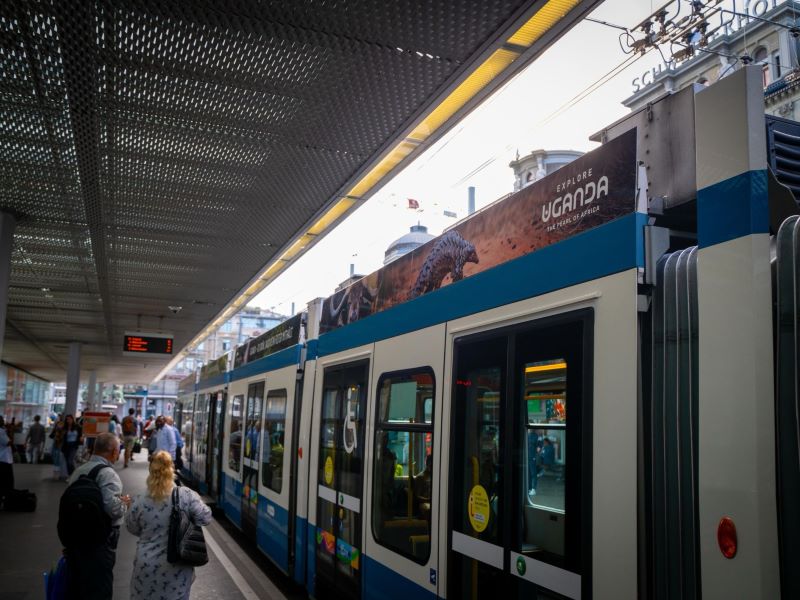
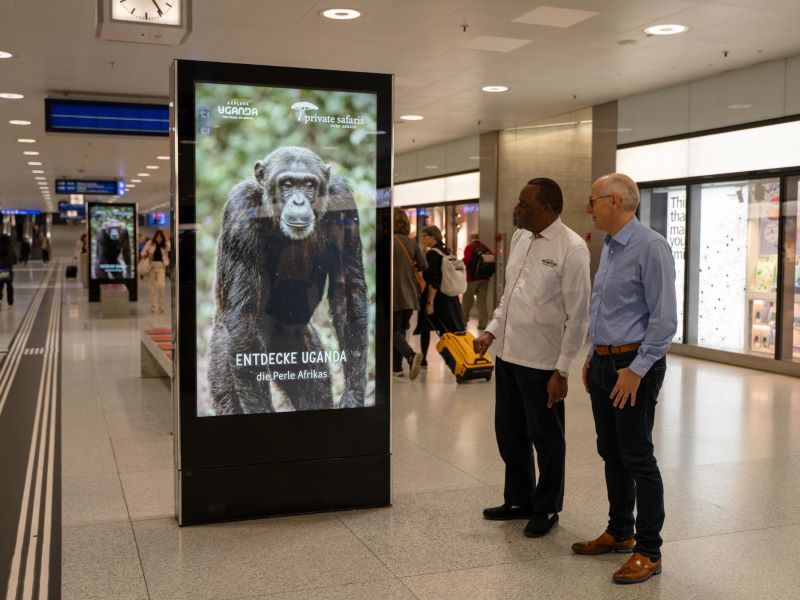
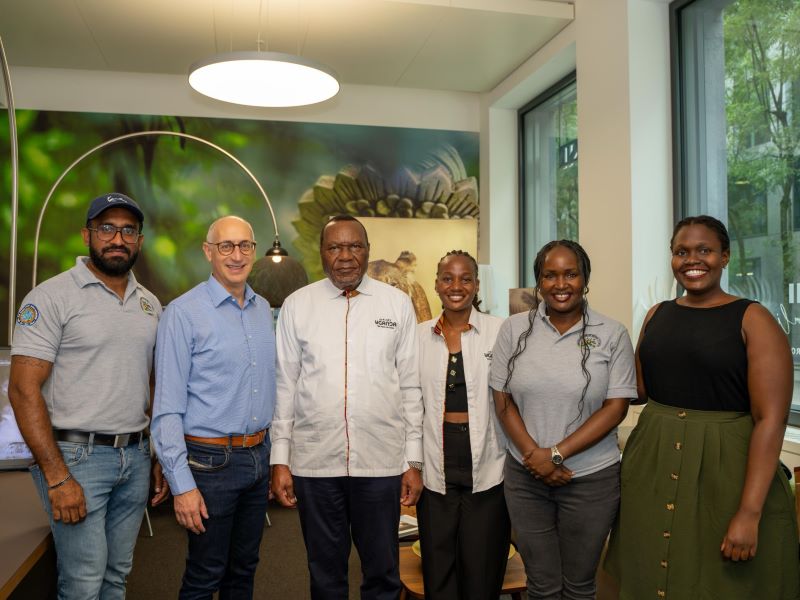
Digital screens at Zürich Hauptbahnhof, the country’s busiest railway station, began running a high-definition video on September 1, 2026. A fleet of trams branded with Uganda imagery followed two weeks later, on September 16, 2026, as part of a launch event at the Embassy. The campaign is run in partnership with Private Safaris, a Swiss tour operator specialising in African travel.
Aimed at Converting Interest into Bookings
According to the Embassy, the initiative forms part of a targeted strategy to grow tourist arrivals from Switzerland — a market officials describe as small in volume but high in yield. Swiss residents rank among the world’s most prolific international travelers, and Ugandan officials see an opportunity to attract visitors inclined toward longer stays and premium experiences.

The partnership with a local operator is central to that aim. Rather than relying on awareness alone, the Embassy has aligned itself with a company Swiss consumers already recognize, giving viewers a direct route from advertisement to itinerary.
“We are bringing Uganda to Switzerland as a unique tourism destination, and inviting the Swiss people to explore and discover the authentic experience our country has to offer,” said Ambassador Marcel R. Tibaleka at the launch. “We look forward to translating this increased visibility into more Swiss tourists visiting Uganda.”
Trams as Moving Billboards
Zurich’s tram network carries hundreds of thousands of passengers daily and was chosen, the Embassy said, for the city’s concentration of high-income households and its role as Switzerland’s economic hub. Since September 16, passing trams have displayed images drawn from Uganda’s flagship attractions: the mist-covered Bwindi Impenetrable National Park, which holds nearly half of the world’s remaining mountain gorillas; the savannahs of Queen Elizabeth National Park; and Murchison Falls, where the Nile forces itself through a gap seven metres wide.
The digital component began two weeks earlier, on September 1. A high-definition film showcasing Ugandan destinations runs every 20 to 30 minutes on screens inside the main station, targeting commuters and international transfers alike — travelers the Embassy regards as already primed to plan a trip.
Pitching Exclusivity Over Volume
The creative direction leans less on spectacle than on scarcity. Uganda markets fewer gorilla permits than many competitors, positioning primate trekking as an intimate rather than mass-market pursuit — a distinction the campaign places front and centre.
That exclusivity carries a price. A standard permit costs USD 800 for foreign non-residents, falling to USD 600 during the April, May and November low season. Groups are capped at eight trekkers per habituated family, with a single hour spent alongside the animals.
Beyond the apes, the material promotes white-water rafting on the upper Nile, multi-day treks in the Rwenzori range, and birding across more than 1,000 recorded species, one of the richest avifaunas in Africa. Cultural offerings, spanning the traditions of over 50 ethnic groups, feature more subtly.
Tourism as Economic Diplomacy
For Kampala, the calculus is straightforward. Tourism is a leading source of foreign exchange and employment, and permit and park fees flow directly into conservation financing. Targeting wealthy European markets allows Uganda to raise revenue per visitor rather than visitor numbers alone — an approach consistent with national sector goals of lifting arrivals, spending and average length of stay simultaneously.
The Zurich push also reflects a wider pattern of Ugandan missions in Europe investing in visibility once reserved for larger tourism boards. Public transport placements and high-traffic digital screens offer reach that a diplomatic budget would struggle to buy through conventional media.
From Awareness to Arrivals
September timing is deliberate: European travel agents report the autumn window as a peak period for booking winter escapes and the following summer season. Whether impressions convert into departures will depend on what follows the billboards. Trade workshops, familiarization trips for journalists and agents, and closer links between Ugandan lodges and Swiss agencies are the customary next steps in campaigns of this kind.
A Template Worth Copying
For smaller tourism economies, the structural lesson may matter more than any single advertisement. Diplomatic missions possess something commercial operators cannot easily buy: official standing, access to government counterparties and the ability to convene. What they usually lack is distribution. Pairing that standing with a private operator’s sales network lets a modest budget do disproportionate work, and shifts the mission’s role from ceremonial hosting to something closer to export promotion.
Several African embassies in Europe have begun testing similar arrangements, though few have committed to fixed media inventory in a single city. If Zurich’s trams produce measurable arrivals, the model invites replication — in Munich, Milan or London — with the same arithmetic: state credibility, private-sector conversion, and a target market narrow enough to speak to directly.
For now, the measure of success is simpler. Every morning, commuters stepping onto a tram in Zurich’s financial district are met with the sight of a silverback gorilla gazing back at them — and, if the Embassy has its way, beginning to plan a flight to Entebbe.